
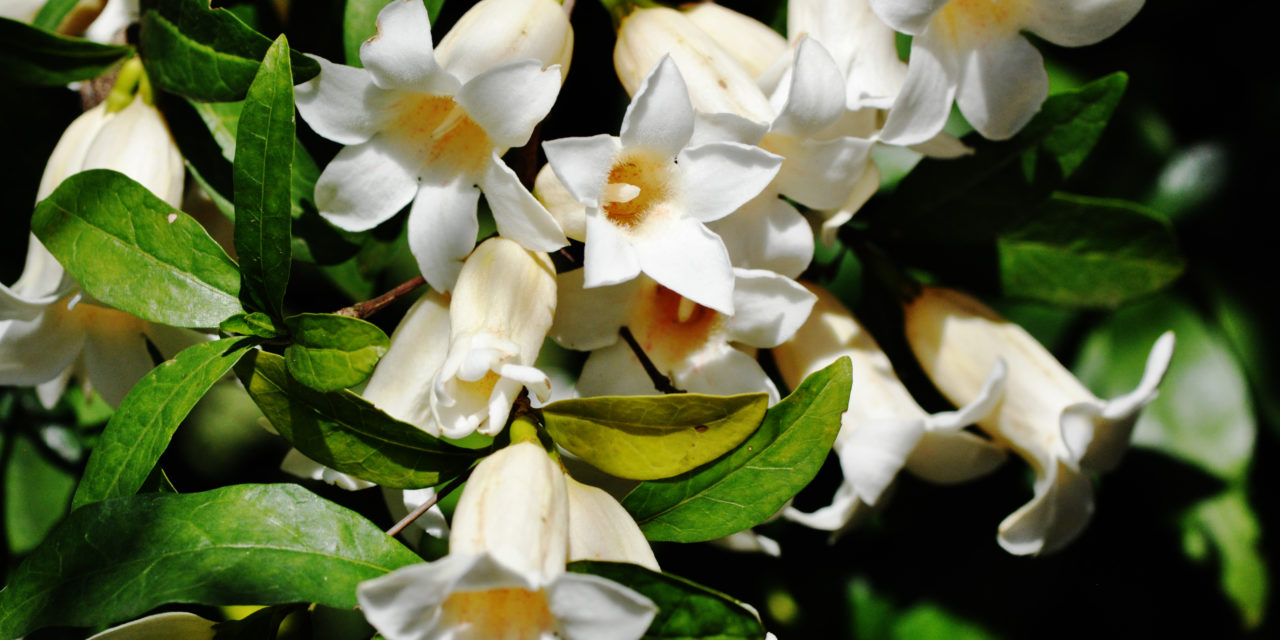
Rothmannia globose
General Info – Summary
Small spineless shrub or small Tree is up to 7m high, & low-down branches remain. Smooth bark becomes rough. Simple, usually elliptic, shiny Leaves are entire and may have domatia. White, strongly scented, regular, bisexual Flowers have a short calyx, a white bell-shaped corolla tube, 5 long sessile anthers, an inferior ovary, with many ovules and one stigma. The brown, woody Fruit contains many flattish seeds.
Description
Previous Names: Gardenia globose.
SA Tree No. 695.
Common names: (Afr) Klokkisekatjiepiering, Klokkisvalskatjiepiering, Klokkies-alskatjiepiering, Septemberklokkies. (Eng) Bell Gardenia, September Bells, September-bells Rothmannia. (isiXhosa) Umgubhe, Umsugusu, Umzukuza. (isiZulu) Imbhikihla, Isiqhoba, Isicathangobe, Umphazane. (siSwati) Sikoba. (Tshivenda) Thudwane.
Family: Rubiaceae (Coffee/Gardenia family). This family of dicotyledonous plants has in excess of 600 genera and about 13 000 species and members include trees, shrubs and herbs. The plants are terrestrial and predominantly woody and sometimes Scandent (climbing without the aid of tendrils). Local genera with trees on this website include Afrocanthium, Canthium, Coddia, Gardenia, Pavetta, Rothmannia and Vangueria. Leaves are simple, opposite or whorled and have interpetiolar stipules. The 4 or 5 merous, usually regular Flowers are bisexual or unisexual. The calyx has sepals that are at least partly united. Petals are joined – at least at the base. Stamens are usually as many as corolla lobes and alternating with them. The Ovary is inferior. Fruit is a drupe, berry or capsule.
Name derivation: Rothmannia: named by Carl Peter Thunberg after his friend: Dr Goran Rothman (1739-1778) a Swedish botanist, physician, translator, African explorer and pupil of Linnaeus. globosa – spherical shape (fruit). The genus Rothmannia has 3 species in southern Africa.
Conservation: National Status: L C. (least concern). Assessed: 2005 (W. Foden and L. Potter).
Tree
This small Tree may be multi-stemmed. Spines are absent and the plant is usually 4-7m but may reach 12m high. It is tall and slender or a spreading plant. The Crown is narrow. The short Main stem has low down branches (photo 421). The Bark is smoothish, brown or dark grey when young and becomes slightly rough with rectangular segments (photo 813). Leaf scars are present on young branches (photo 713). Lenticels (a usually raised corky oval or elongated area on the plant that allows the uncontrolled interchange of gases with the environment) are visible (photo 512). Light grey Lichen (composite organism arising from a mutualistic relationship between fungi or cyanobacteria and algae species) are visible on the bark (photos 813 & 512).
-
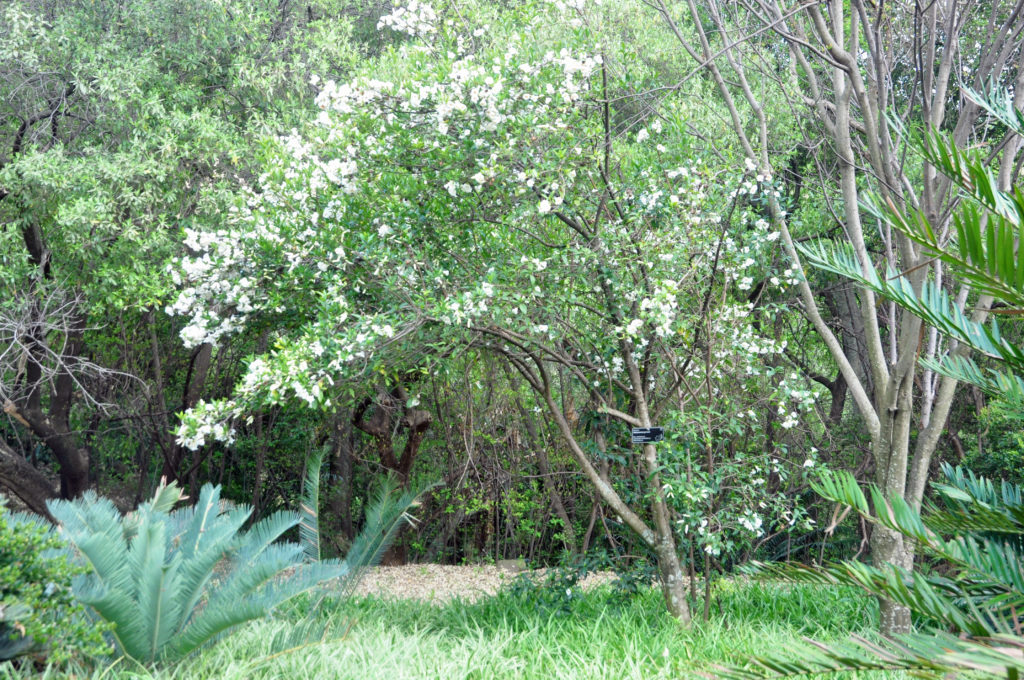
- 421. 2016/09/20. Walter Sisulu NBG. Photo: David Becking.
-
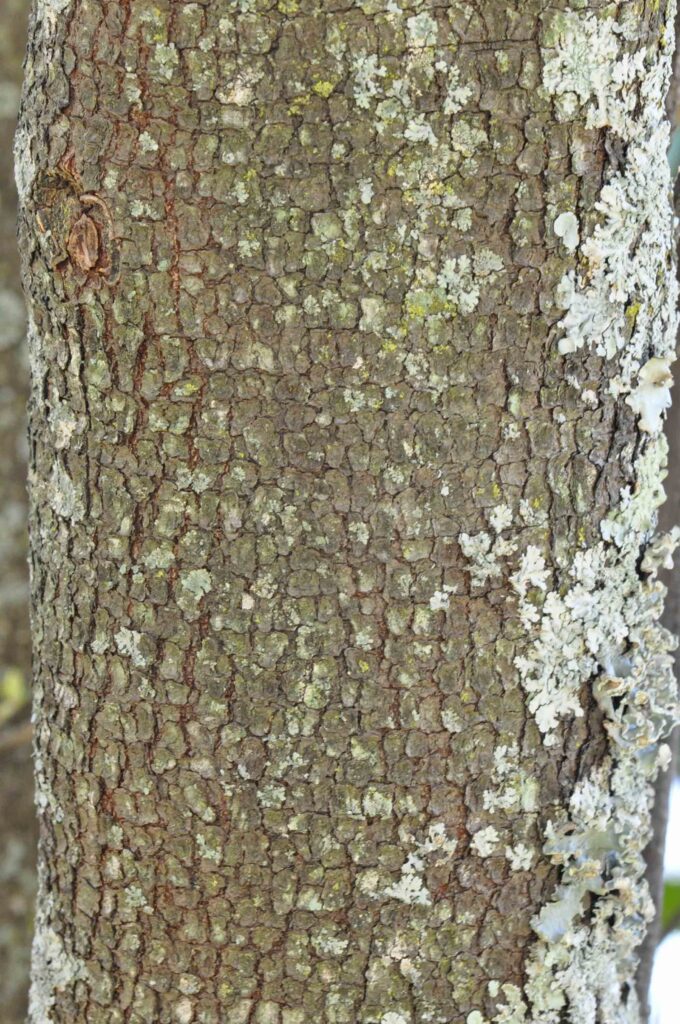
- 813. 2016/08/30. Walter Sisulu NBG. Photo: David Becking.
-
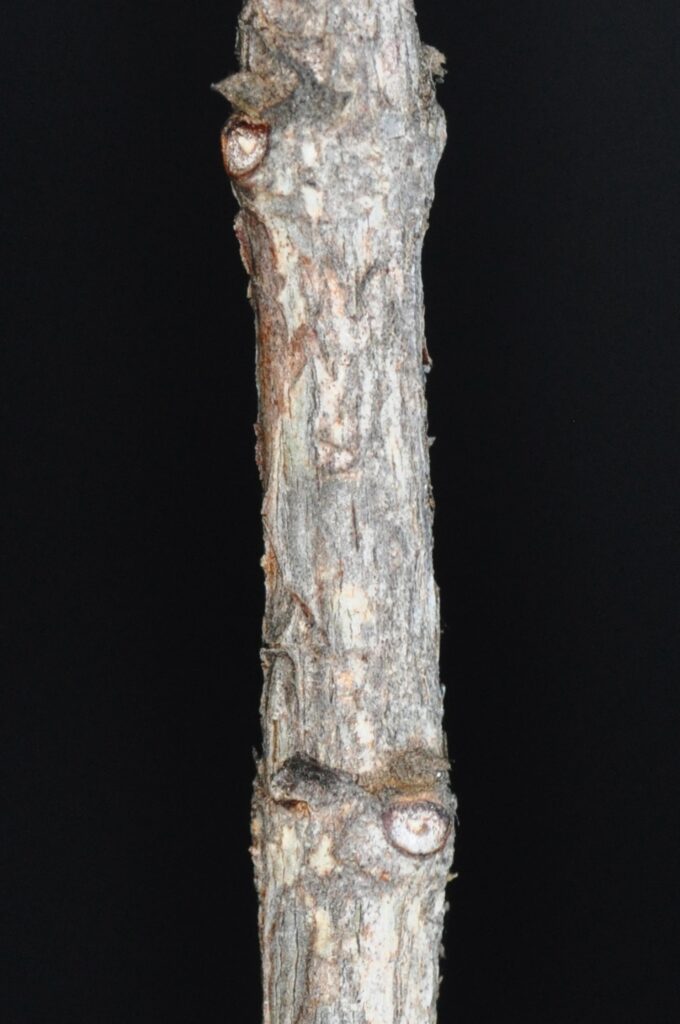
- 713. 2017/09/06. Walter Sisulu NBG. Photo: David Becking.
-
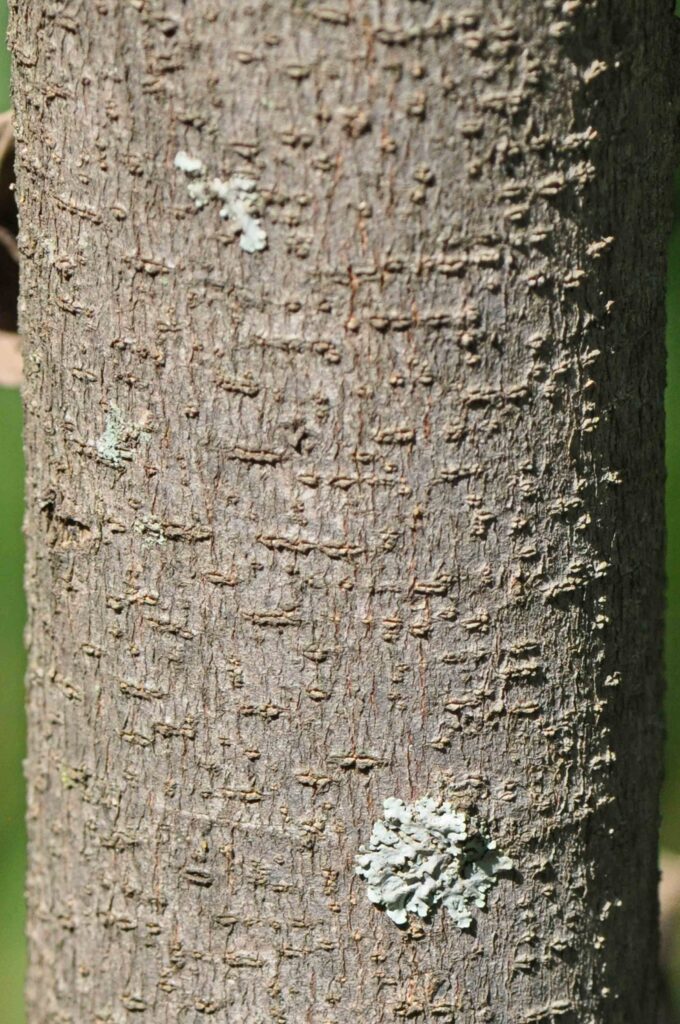
- 512. 2016/02/16. Walter Sisulu NBG. Photo: David Becking.
Leaves
In this evergreen or briefly deciduous plant, the elliptic to lanceolate or oval Leaves are opposite (photo 740) and Simple (have a single blade that may have incisions that are not deep enough to divide the blade into leaflets – photo 970). Each shiny, down pointing (photo 740) leaf is thinly leathery, up to 14 x 5cm and dark or mid green and glossy above. Below it is a dull, paler green (photo 970). Domatia are present (hair-tuft domatia – a tiny chamber produced by plants that house arthropods. To the naked eye, they appear as small bumps in the axils of the main veins – photo 328). Apart from domatia, leaves are hairless when mature. The Midrib and Side Veins are pale green, yellow or red and are distinctly raised below (photo 970). The leaves are slightly translucent when held against a strong light (photo 622). This photo shows the side veins running outwards and looping together prior to reaching the margin. In this view, the network of veins becomes more clearly visible. The wavy Margins are entire (with a continuous margin, not in any way indented). The Apex is sharply pointed, bluntly pointed or rounded. The Base tapers. The Petioles (leaf stalks – photo 328) may be reddish and are up to 1cm long. The ovate Stipules (basal appendage of the petiole) are short, triangular, hairy and fall early.
-
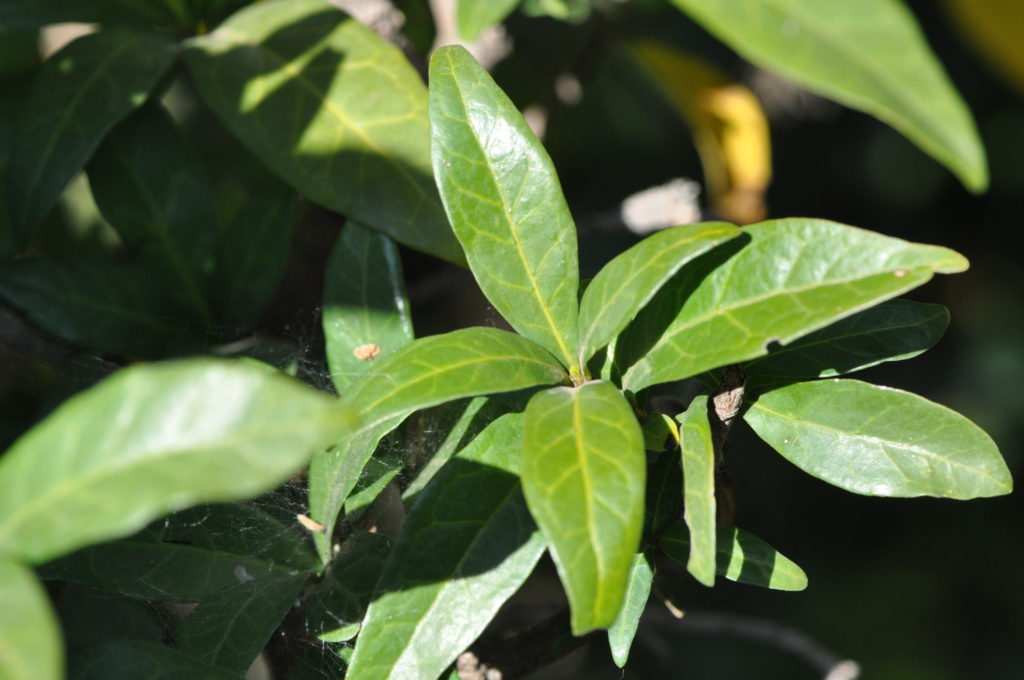
- 740. 2016/08/30. Walter Sisulu NBG. Photo: David Becking.
-
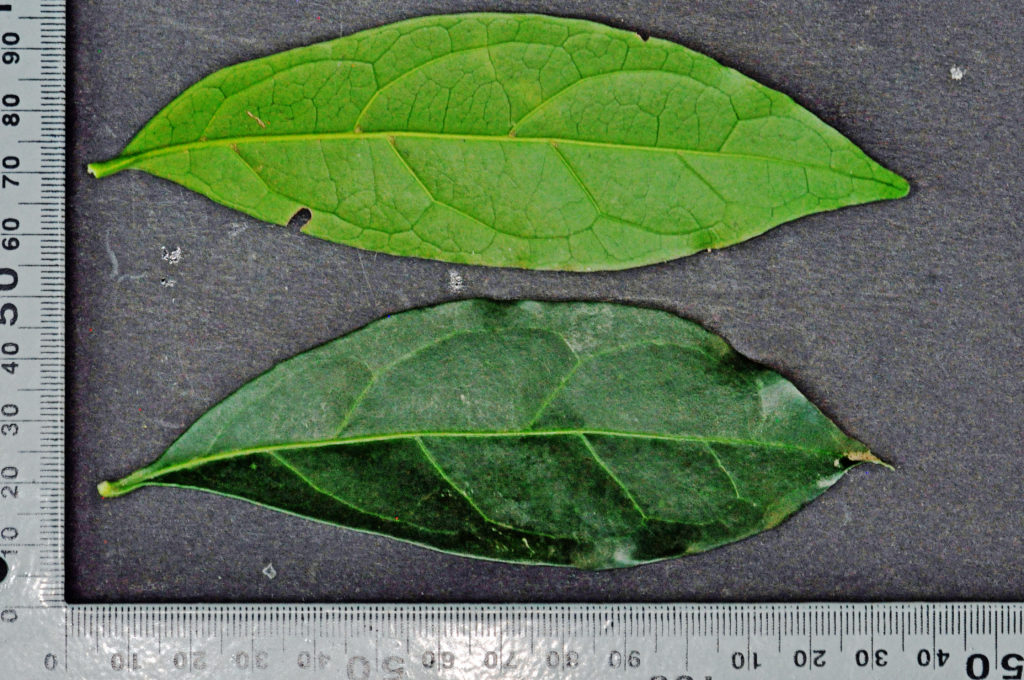
- 970. 2014/09/15. Lowveld NBG. Photo: David Becking.
-
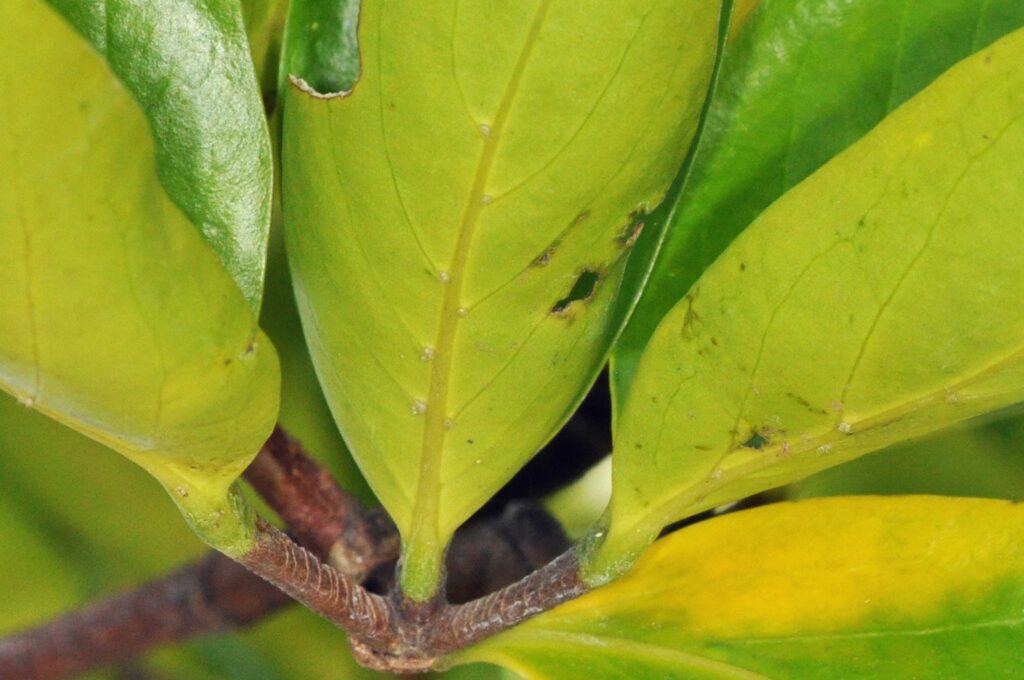
- 328. 2015/09/15. Walter Sisulu NBG. Photo: David Becking.
-
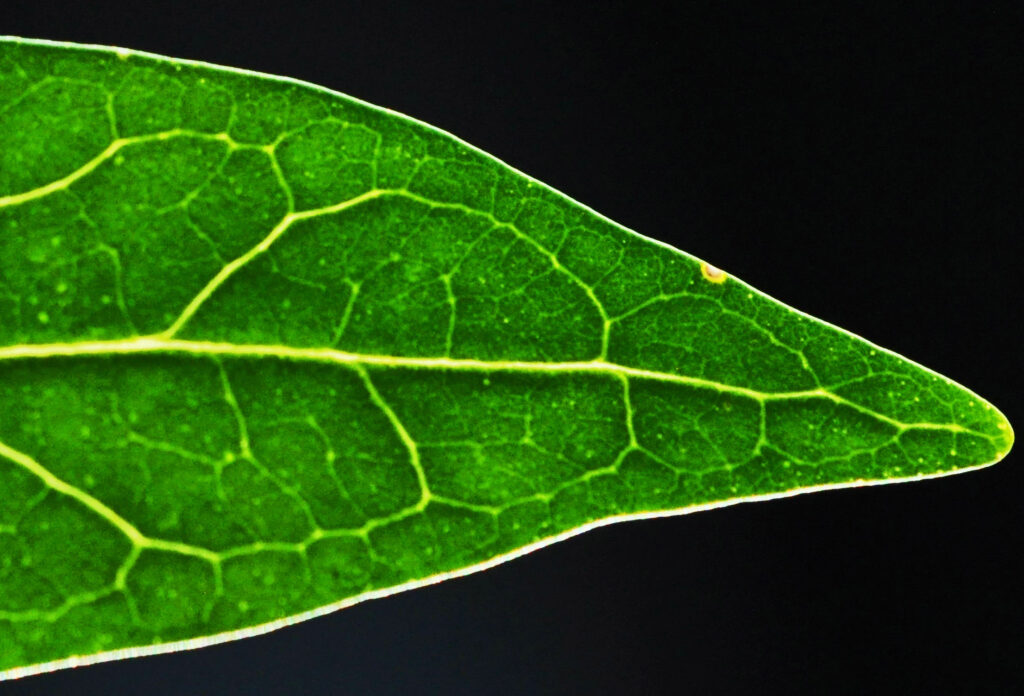
- 622. 2019/09/18. Lowveld NBG. Photo: David Becking.
Flowers
During spring the creamy white Flowers may appear in impressive profusion (photo 296). Each flower is actinomorphic (Regular, symmetrical. They appear from (Aug-Nov) but mostly in September – hence common name “September Bells”. Flowers are vertically divisible into similar halves by more than 1 plane passing through the axis). They develop in leaf axils and have a strong sweet lingering smell. Flowering time is brief and usually occur before the new leaves. Flowers may appear singly or in clusters and each is narrowly bell-shaped (not cylindrical shaped as in Gardenia). In young flowers, the originally green petal lobes turn white and remain curled up until the flower opens (photo 966). Once open they often have pink to maroon flecks in the yellowish throat and on the base of the lobes (photo 490). Flowers are solitary or in 2 to 4-flowered fascicles (bundles or clusters). Each flower is about 2,5cm long, 3,8cm in diameter and rest on a short Pedicel (stalk of a single flower – photo 413). Flowers are bisexual, and borne on short side branches. The Calyx (outer whorl of floral envelopes) is green, and its short tube ends with irregularly positioned and pointed lobes of Sepals which are attached to the Corolla (second whorl of the floral envelopes) tube (photo 413). Close to the base, the Corolla tube is cylindrical. Thereafter it becomes bell-shaped. It ends with up to 5, overlapping white Petals (photo 413). These petals are often internally hairy (photo 618), yellowish and marked with maroon speckles. These are easier to see in the dissected flowers (photos 490 & 618). The open petal lobes are recurved (bent backwards – photo 298). The 5 Stamens lack filaments (the usually long slender stalk that supports the anther). They alternate with the corolla lobes and are attached directly to the cylindrical corolla tube (photo 490). The long, sessile Anthers develop below the hairy corolla mouth (photos 490 & 618). They have 2 long Thecae (pollen sacs) that dehisce through longitudinal slits (photo 619). There is a single Pistil (a unit of the Gynoecium, the female element of the flower, composed of the Ovary, Style and Stigma). The Ovary is inferior and contains many ovules. The hairless, exserted (sticking out) Style extends just beyond the petal mouth and ends with a bilobed apex (photo 490). Flowers are pollinated by carpenter bees (which build their nests in dead wood). The flowers have a Pollen presenter (although situated close to the stigma, its function to aid cross-fertilization. Here, most avoid self-pollination by dispersing the pollen first – while the stigma is still covered).
-
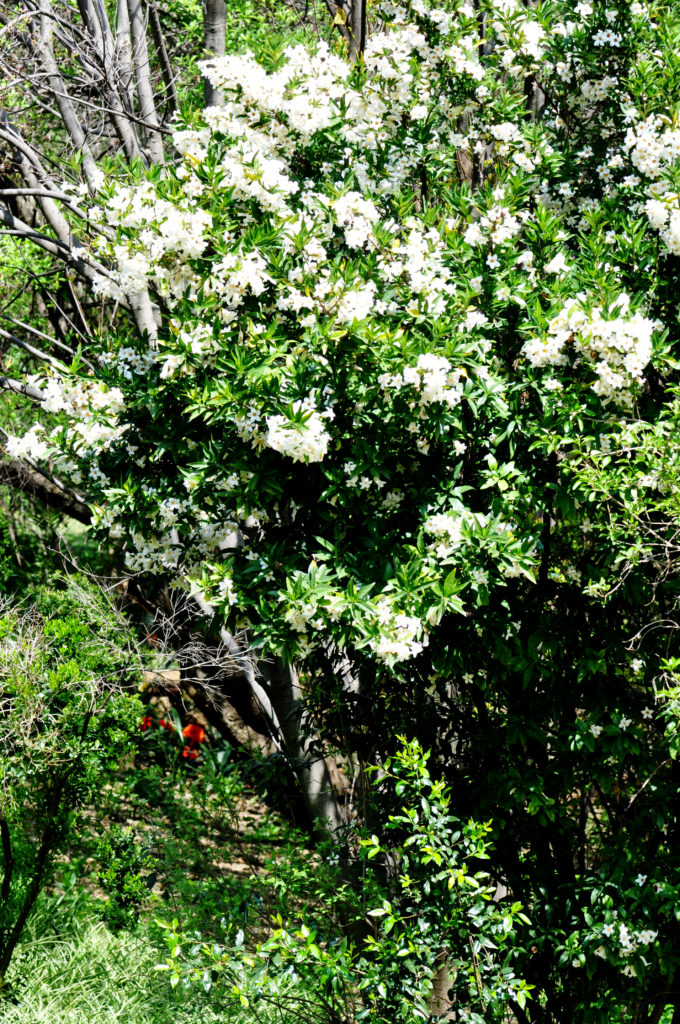
- 296. 2015/09/15. Walter Sisulu NBG. Photo: David Becking.
-
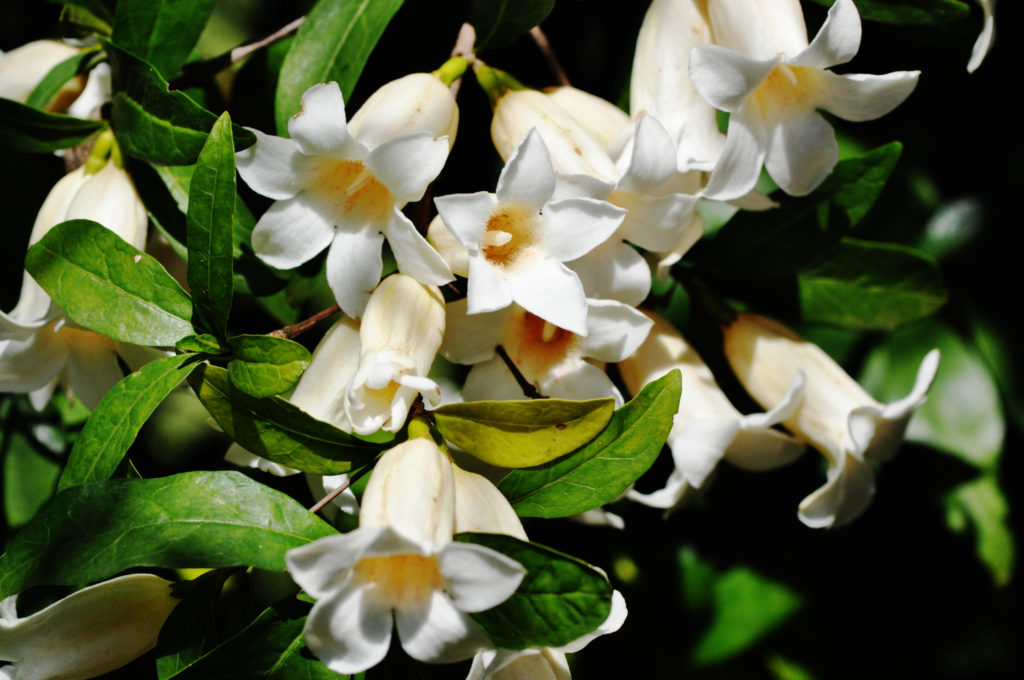
- 298. 2015/09/15. Walter Sisulu NBG. Photo: David Becking.
-
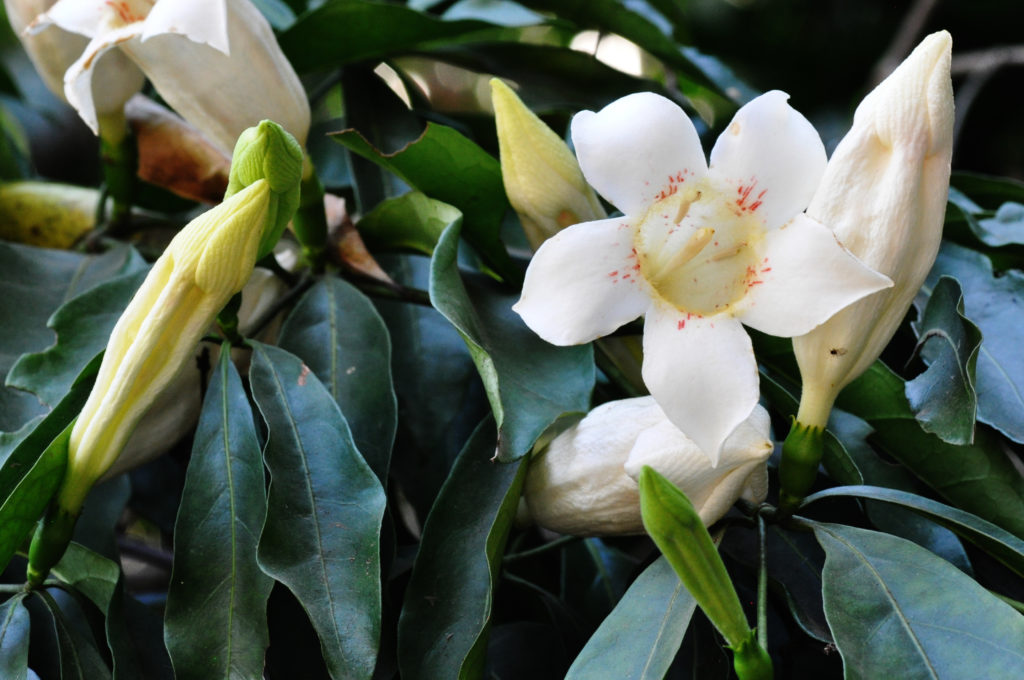
- 966. 2014/09/15. Lowveld NBG. Photo: David Becking.
-
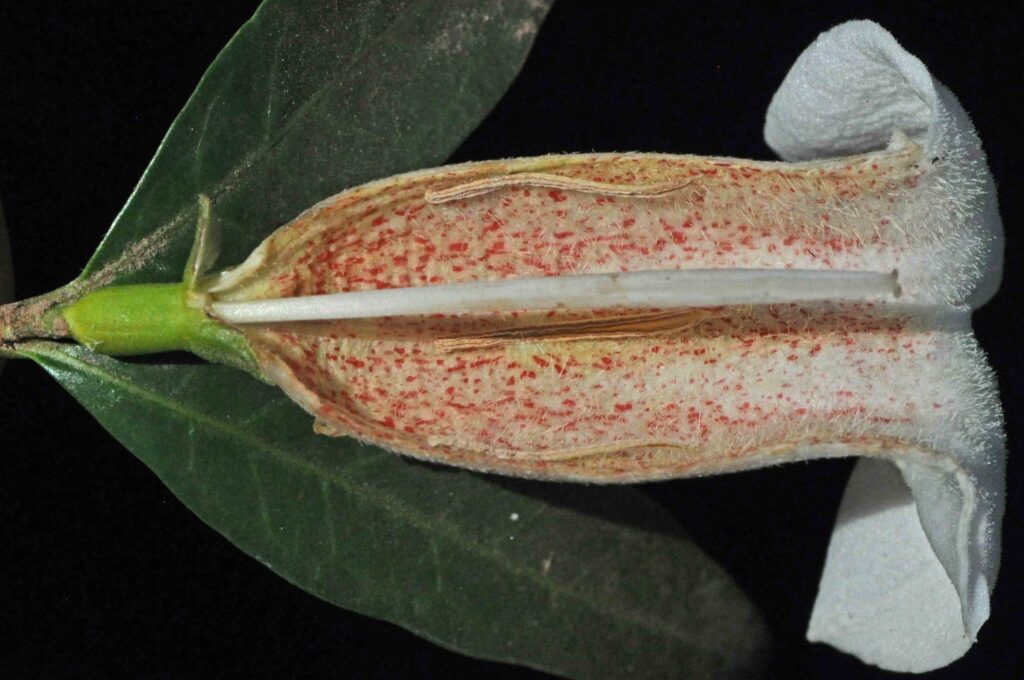
- 490. 2019/09/04. Walter Sisulu NBG. Photo: David Becking.
-
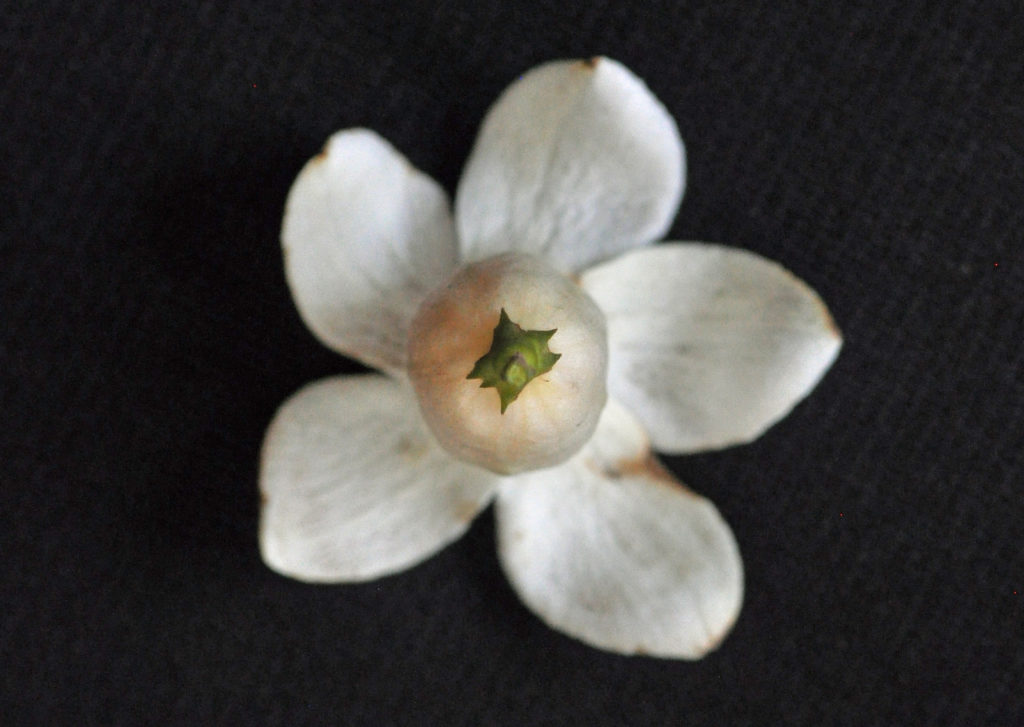
- 413. 2016/09/20. Walter Sisulu NBG. Photo: David Becking.
-
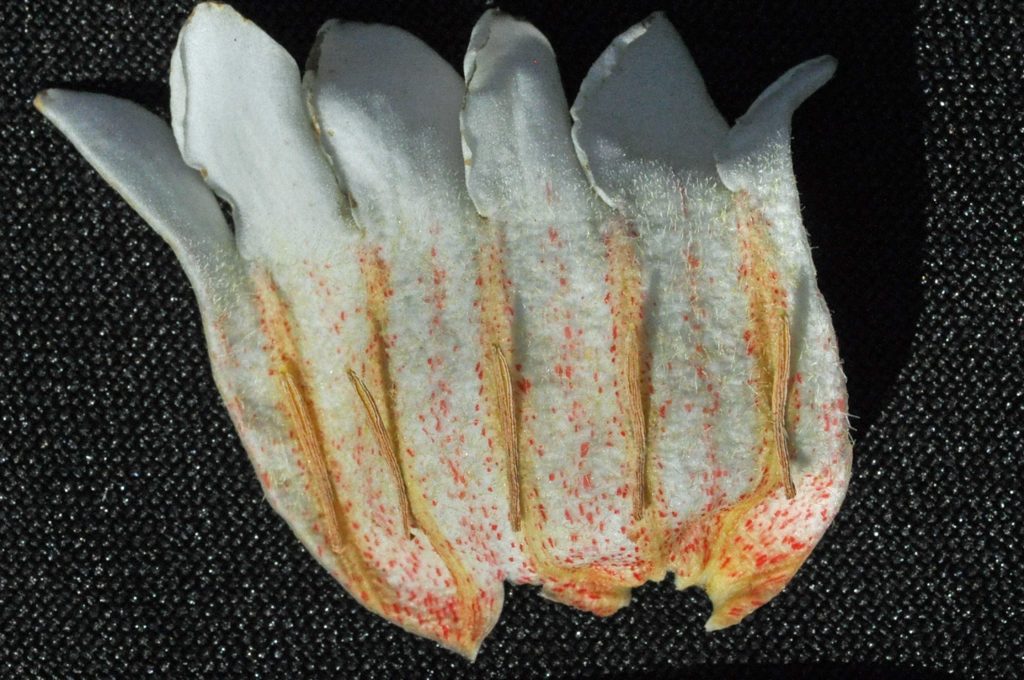
- 618. 2019/09/18. Walter Sisulu NBG. Photo: David Becking. Dissected.
-
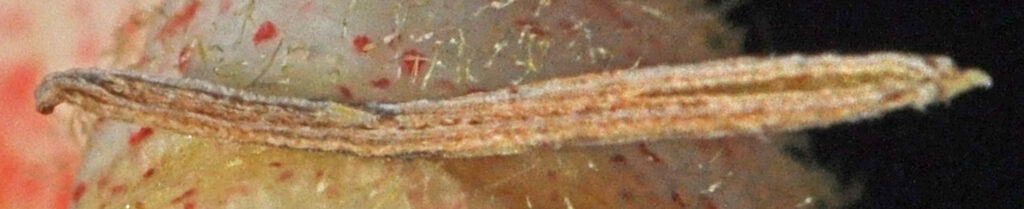
- 619. 2019/09/18. Walter Sisulu NBG. Photo: David Becking.
Fruit
The almost spherical, initially green Fruit is up to 2,5cm in diameter and ends with a persistent initially protruding calyx (photo 594). The initially soft fruit becomes brown, dry, hard, woody and dark brown (photo 717). Seeds. The fruit develops many flattish seeds embedded in a pulpy placental tissue (photo 1003). (Dec-July).
-
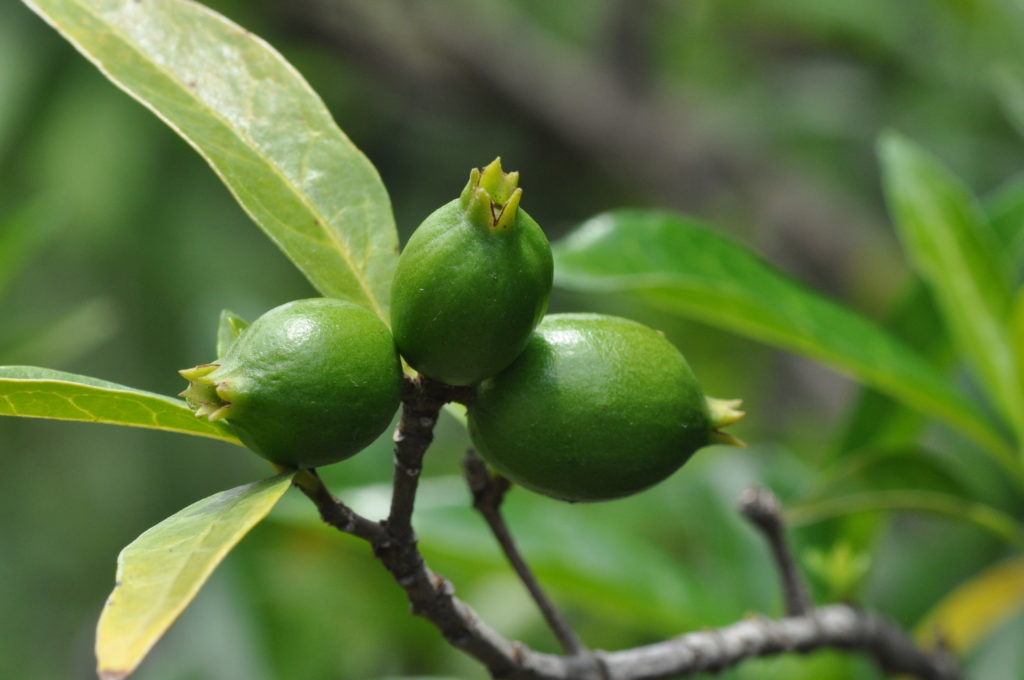
- 594 2012.12.23 Walter Sisulu NBG. Photo: David Becking.
-
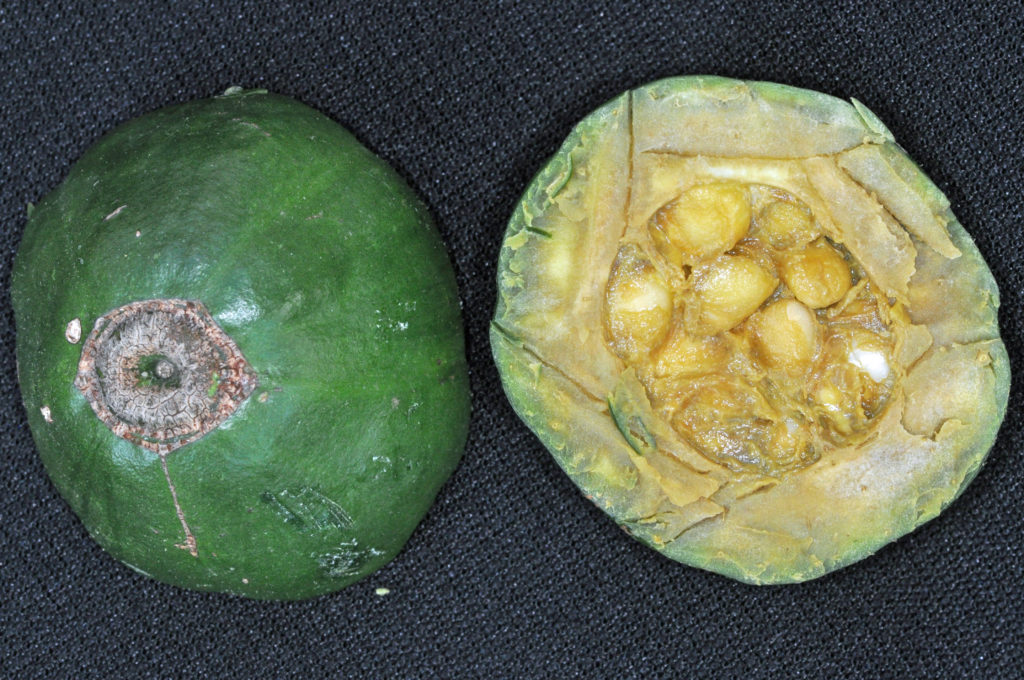
- 1003. 2017/03/17. Walter Sisulu NBG. Photo: David Becking.
-
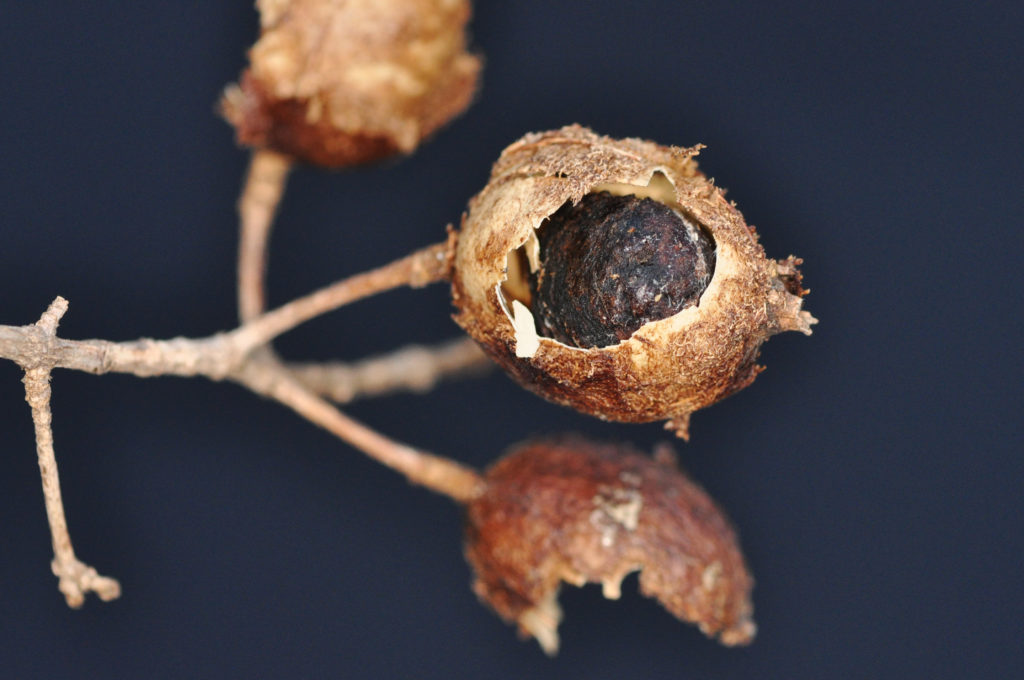
- 717. 2017/09/06. Walter Sisulu NBG. Photo: David Becking.
Distribution & Ecology
Rothmannia globosa is Endemic (restricted to a particular geographic location) in southern Africa. Plants tolerate some frost and are common in coastal dune bush, evergreen forests and forest margins up to an altitude of 1 500m. Location: Eastern Cape, KwaZulu-Natal, Limpopo, Mpumalanga, and Eswatini (Swaziland). Monkeys, baboons and birds eat the Fruit and aid with seed dispersion.
Ethnobotany
The Wood is pale grey, dense and hard. It is used for instrument handless and makes good firewood. Dried Flowers retain their scent. The Fruit may be edible. Dried fruit is used to make necklaces. Local medicine makes some use of the plant. In well-drained soil, this reasonably fast-growing plant is easy to grow from Seeds. The plant grows best in slightly acidic soil. This attractive tree has a short flowering period and is suitable for small gardens. These plants are cultivated in gardens.
References
Coates Palgrave, M. 2002. Keith Coates Palgrave Trees of Southern Africa, edn 3. Struik, Cape Town.
Foden, W. & Potter, L. 2005. Rothmannia globosa (Hochst.) Keay. National Assessment: Red List of South African Plants version . Accessed on 2025/08/08.
Lawrence, G. H. M, 1951. Taxonomy of Vascular Plants. The Macmillan Company, New York. Tenth Printing 1965.
Palmer, E. & Pitman, N. 1972. Trees of southern Africa. Balkema, Amsterdam, Cape Town.
Schmidt, S. Lotter, M. & McCleland, W. 2002. Trees and Shrubs of Mpumalanga and the Kruger National Park. Jacana, Johannesburg.
van Wyk, B. & van Wyk, P. 1997 Field guide to Trees of Southern Africa. Struik, Cape Town.
https://en.wikipedia.org/wiki/Rothmannia_globosa
http://plantzafrica.com/plantqrs/rothmanglob.htm
http://www.gardensonline.com.au/GardenShed/PlantFinder/Show_1919.aspx
http://toptropicals.com/catalog/uid/rothmannia_globosa.htm
http://posa.sanbi.org/flora/browse.php?src=SP
https://en.wikipedia.org/wiki/Rubiaceae
https://www.sciencedirect.com/science/article/pii/S0024407484710400


What an excellent and informative article supported by excellent photography! Thank you for sharing David!
Thank you. It keeps me busy! Still lots to do.