
Greyia sutherlandii
General Info – Summary
This Tree with brittle branches may reach 10m high + a wide rounded crown. Simple, ovate to circular & deciduous Leaves are thin + many veins arising at the base. Showy red Flowers are in racemes. Each has 10 red protruding stamens. The 5-locular superior ovary has many ovules + a simple style. Fruit: a capsule +many small dark seeds.
Description
SA Tree No. 446.
Common names: (Afr) Baakhout, Blinkblaarbaakhout, Meideboom, Natal-baakhout, Natalse baakhout. (Eng) Beacon Tree, Glossy Bottlebrush, Mountain Bottlebrush, Natal Bottlebrush, Wild Bottlebrush. (isiXhosa) Indalu, Umbere-bere, Usinga-lwamaxhegokazi. (isiZulu) Indalu, Indulo, Isidwadwa (“the apron leaf”), Ubande, Umbande, Umbunge. (siSwati) Inhlazane, umwatsawatsa.
Family: Melianthaceae. (Honey bush family). All members of the family Melianthaceae are trees or shrubs. Leaves have stipules and the flowers are zygomorphic – (irregular flowers with the corolla divisible into 2 equal halves in one plane only – making them bilaterally symmetrical). The great majority are located in southern and topical Africa. The 3 genera included in this website are Bersama, Francoa and Greyia. The genus Greyia has 3 species that differ from other members of the Melianthaceae in that the leaves are simple and not pinnately compound and the flowers have 10 stamens and not 4.
Name derivation: Greyia named after the Governor of the Cape Colony: Sir George Grey (1812-1898). He was a British explorer, colonial administrator and writer. Before moving to South Africa as governor in 1854, he was the Governor of New Zealand and the 11th Premier of New Zealand. The genus Greyia has 3 species: G. flanaganii, G. radikoferi, and G. sutherlandii. sutherlandii – named after Dr Peter Cormac Sutherland 1822-1900. He was a doctor and government geologist in Natal in 1854 and Surveyor-general of Natal in 1856. He was the first to send to send a specimen to England.
Conservation: National Status: L C. Least Concern. Assessed: 2005 (W. Foden and L. Potter)..
Tree
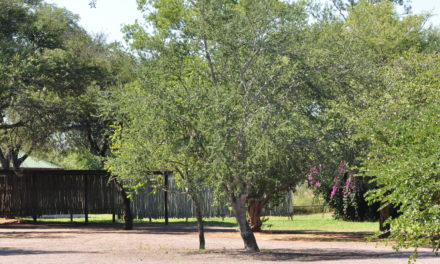
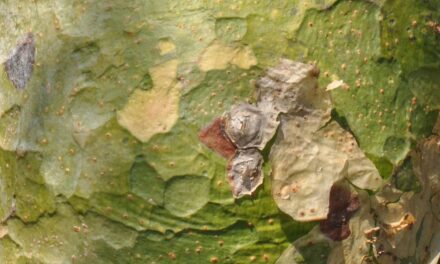
This large shrub or small, deciduous twisted Tree (photo 456) is up to 8m high in older trees. It has a rounded crown that tends to spread 10m or more. The Bark is initially smooth and a reddish grey to black (photo 462). As it ages, the trunk becomes rough, a darker brown to black and flaky (photo 461). The brittle Branches are green to yellowish.
-
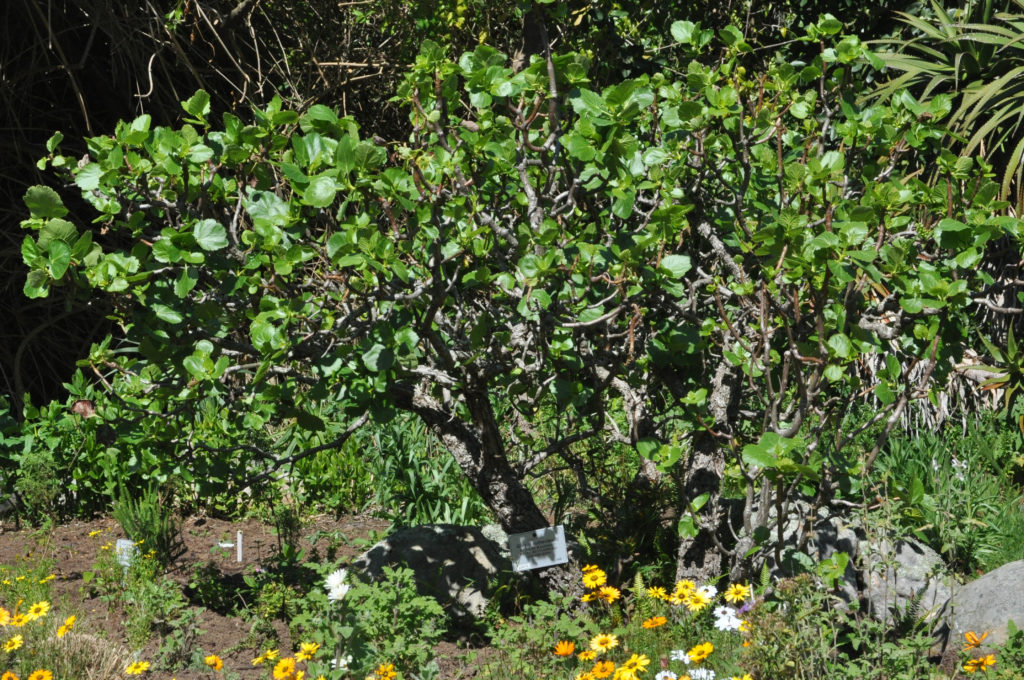
- 456. 2018/09/16. Kirstenbosch NBG. Photo: David Becking.
-
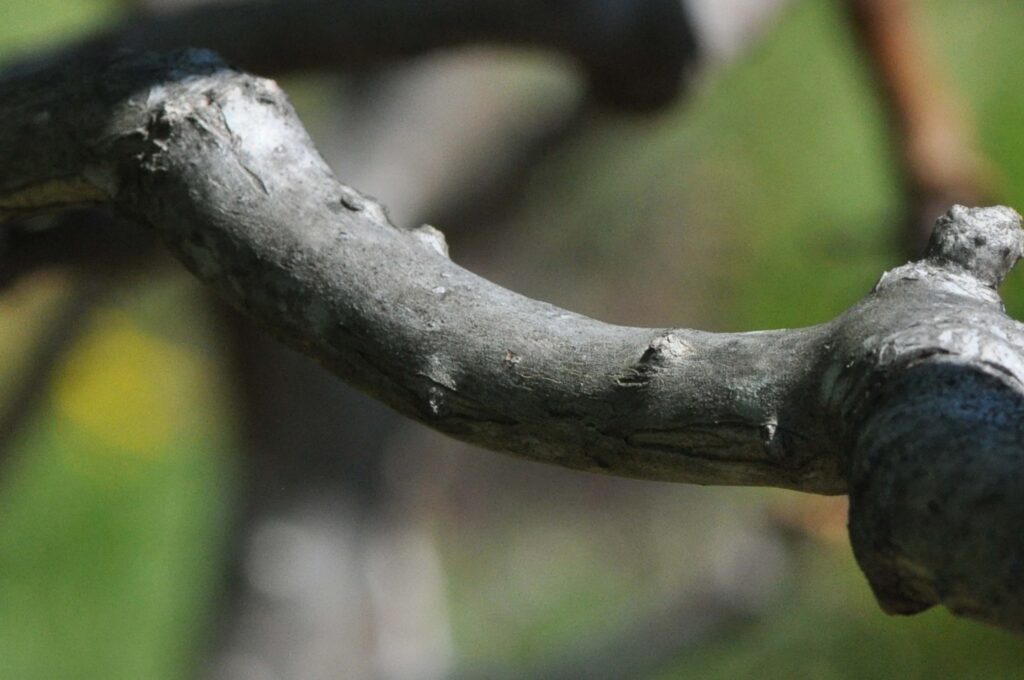
- 462. 2018/09/16. Kirstenbosch NBG. Photo: David Becking.
-
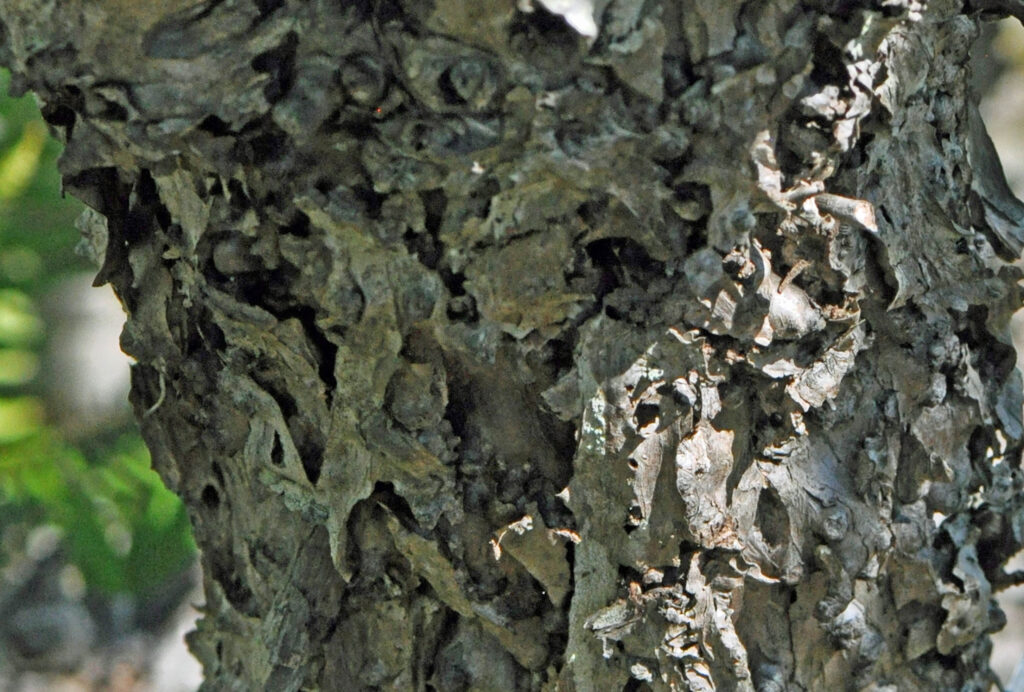
- 461. 2018/09/16. Kirstenbosch NBG. Photo: David Becking.
Leaves
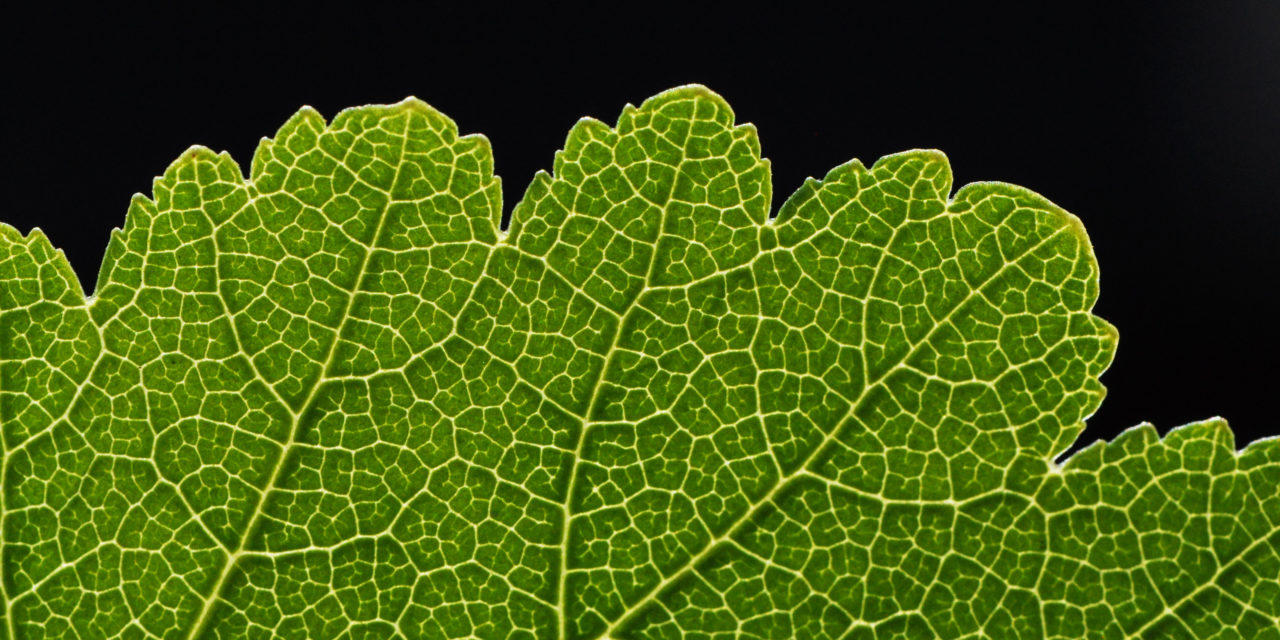
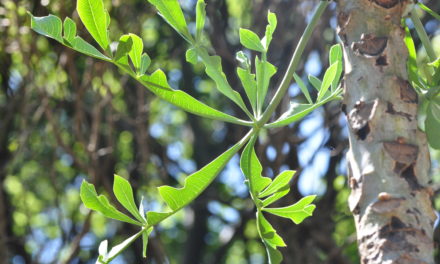
In this deciduous plant, the spirally arranged, alternate, ovate to almost circular and shiny Leaves (photo 457F) are leathery, rough and simple (have a single blade, which may have incisions that are not deep enough to divide the leaf into leaflets). Fine hairs may be present on the nearly straight leaves that occur near branchlet ends. The Petiole (stalk that attaches the leaf blade to the stem: (photo 468), may reach 7cm in length and has a sheathing base (photo 457F). The leaf Apex is rounded (photo 468). In this photo the Base is cordate (heart shaped with deep indents where the leaf meets the midrib), making it look like the top of a heart. The Blade is usually hairless or with very fine hairs and is up to 13cm wide. Initially sticky and folded young leaves flatten as they grow (photo 457F). They are similar to those of geraniums. The thin smooth leaves have a leathery feel, are sized up to 12 x 10cm and clustered at branch ends (photo 456 – under Trees). The leaf Margin has many small lobes that appear scalloped (having the margin with segments of circles – usually less than a semi-circle – photo 466). Many prominent Veins arise from the leaf base (photo 468) and are clearly visible on both sides. Vein details are best observed holding the leaf against a strong light (photo 466). The upper side of the leaf is dark glossy green and the lower side a lighter green (photo 468). Stipules (basal appendage of the petiole) are absent. Before falling late autumn, the leaves turn shades of bright red or yellow.
-
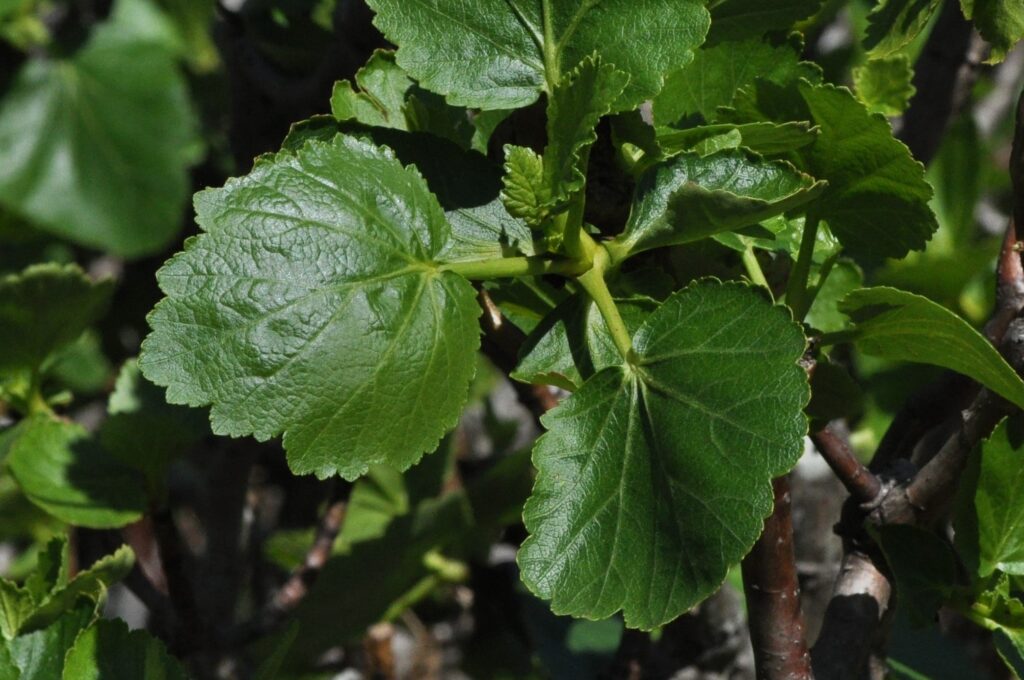
- 457F. 2018/09/16. Kirstenbosch NBG. Photo: David Becking.
-
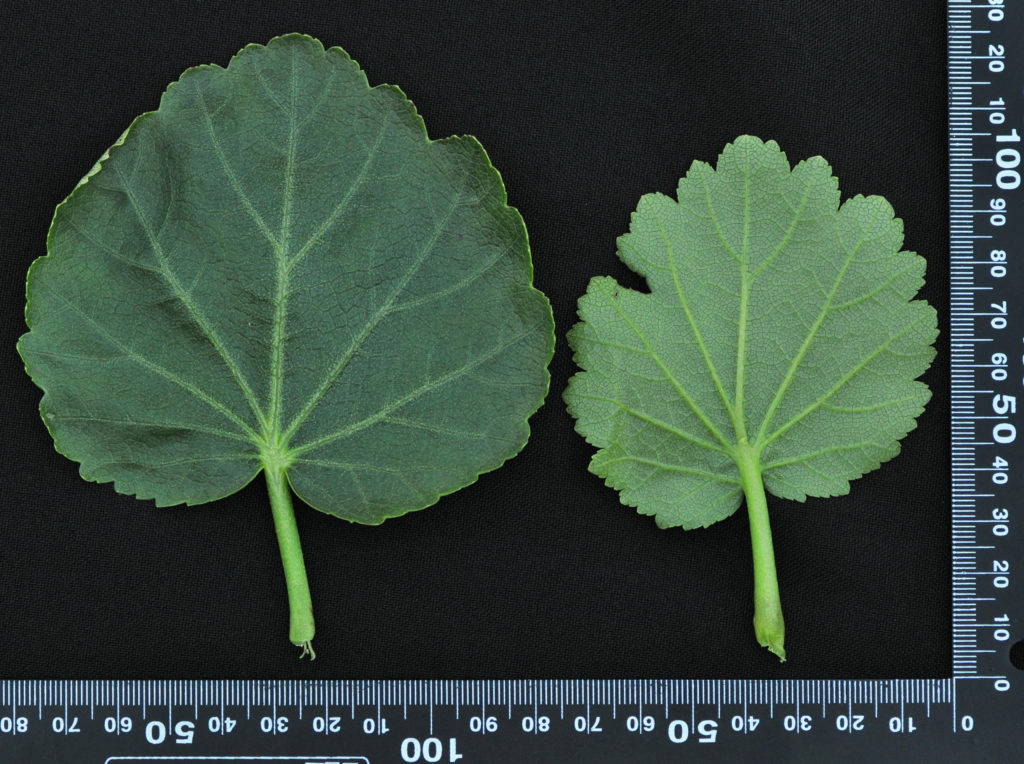
- 468. 2018/09/16. Kirstenbosch NBG. Photo: David Becking.
-
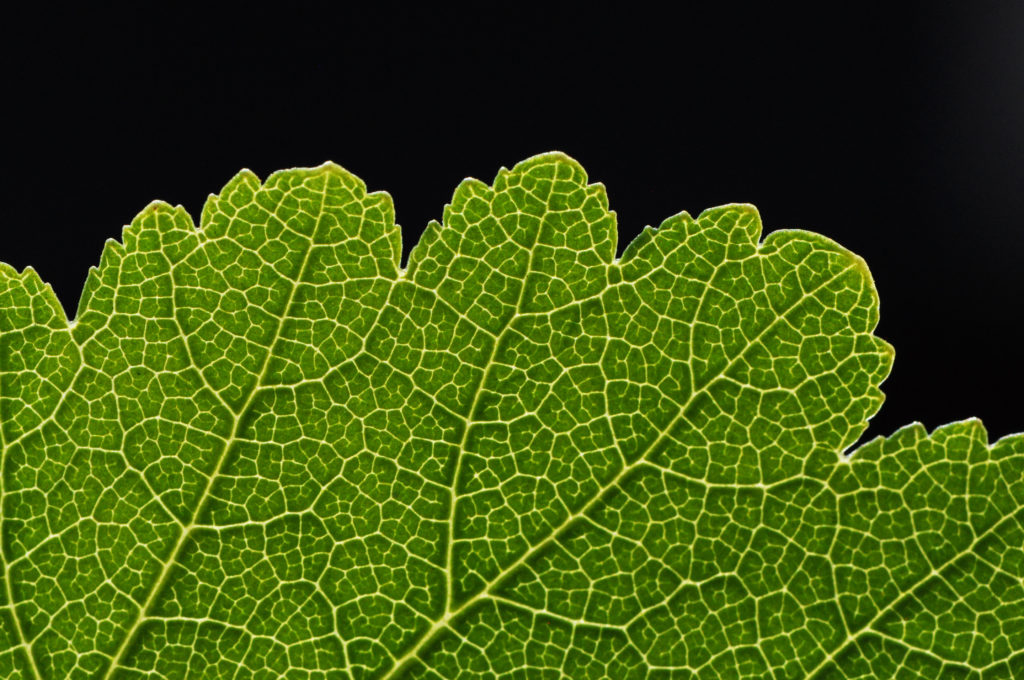
- 466. 2018/09/16. Kirstenbosch NBG. Photo: David Becking.
Flowers
The attractive, brilliant red/scarlet and bisexual spring Flowers are contained in dense, bottlebrush-like and almost horizontal Racemes (a simple elongated inflorescence with stalked flowers that open in succession towards the apex), which are up to 15cm long. They develop at ends of branches and tend to be concentrated in the upper half of racemes and may precede or develop with the new leaves in spring. The individual flowers are bell-shaped and about 2cm long. The Pedicles (stalks of single flowers) are straight and up to 1cm long. The Calyx consists of 5 persistent Sepals that are divided nearly to the base. The Corolla has 5 regularly arranged, free, oblong and spreading Petals that that are smooth, have overlapping edges and do not taper at the base. The 10 Stamens (4 in other genera of the family Melianthaceae) have long red filaments that are in 2 rows and protrude beyond the petals. The Anthers have 2 thecae (pollen sacs – microsporangia of an anther. They produce microspores – pollen grains in seed plants). The stamens are inserted between the disc (a more or less fleshy or elevated development of the receptacle) and the superior, 5-locular and oblong Ovary, which is deeply grooved and contains many Ovules. A simple Style extends from the ovary. (Aug-Oct).
Fruit
The cone-shaped or cylindrical Fruit is up to 2cm long. It is a grooved Capsule (a dry fruit resulting from the maturing of a compound ovary, which usually opens at maturity by one or more lines of dehiscence). It matures to a grey-brown. The ripe fruit dehisces longitudinally between the carpels from the top of the capsule, into 4-5 parts. It finally releases the small dark elongated Seeds, each with copious Endosperm (the starch and oil-containing tissue of many seeds; often referred to as the albumen). (Sep-Dec).
Distribution & Ecology
This plant is Endemic (restricted to a particular geographic location) in southern Africa. It occurs on mountainous slopes and rocky areas in the Eastern Cape, the Drakensberg: Free State, KwaZulu-Natal e.g., Oliviershoek and Royal Natal National Park, Limpopo and Mpumalanga. It also occurs in Lesotho and Eswatini (Swaziland). The plant is frost tolerant, reasonably drought resistant and can survive at altitudes of 2 100m – especially in moist areas. Flowers produce much Nectar, and this attracts many insects and birds.
Ethnobotany
The low-density Wood is soft and pale pink. Some use is made of it for household implements like dishes, bowls and cups and the wood can be used for carvings. Plants do best in well-drained soil. The plant is fairly hardy and fast growing – especially in well-drained soils. It is an attractive garden addition and propagation is from seeds, cuttings or suckers. In hot, dry times, it needs to be watered. Local medicine makes some use of this plant. Apparently, beer can be brewed from the plant.
References
Boon, R. 2010. Pooley’s Trees of eastern South Africa. Flora and Fauna Publications Trust, Durban.
Coates Palgrave, M. 2002. Keith Coates Palgrave Trees of Southern Africa. Edn 3. Struik, Cape Town.
Foden, W. & Potter, L. 2005. Greyia sutherlandii Hook. & Harv. National Assessment: Red List of South African Plants version 2024.1. Accessed on 2026/03/19.
Ginn P, McIlleron W. Milstein P. 1991. The Complete Book of Southern African Birds. Struik, Cape Town.
Palmer, E. & Pitman, N. 1972. Trees of southern Africa. Balkema, Amsterdam, Cape Town.
Schmidt, S. Lotter, M. & McCleland, W. 2002. Trees and Shrubs of Mpumalanga and the Kruger National Park. Jacana, Johannesburg.
van Wyk, B. & van Wyk, P. 1997 Field guide to Trees of Southern Africa, Struik, Cape Town.
https://en.wikipedia.org/wiki/Melianthaceae
http://www.strangewonderfulthings.com/202.htm
http://treeco-treeco.blogspot.com/2011/11/greyia-sutherlandii-natal-bottlebrush.html
https://en.wikipedia.org/wiki/George_Grey
http://posa.sanbi.org/flora/browse.php?src=SP
http://pza.sanbi.org/greyia-sutherlandii


Dear David. I wonder how frost hardy this tree is. I saw it in the Botanic Garden of Ghent (Belgium) in a pot. Could it be grown in full ground in our climate? I also saw that it now belongs to the Francoaceae, probably due to recent DNA research.
Hi Tom
The plant is able to tolerate light frost but may need some protection from very cold conditions. It grows naturally in the Eastern Cape at a highish altitude and summer rains and the plant on the website was growing in the winter rainfall Mediterranean climate of the Western Cape so these plants are relatively hardy. It is probably worth a try!
If you do try please let me know the result.
Take care and stay safe.
David