Macphersonia hildebrandtii
General Info
Shrub or mall Tree to 8m, with grey to dark brown bark. Alternate, imparipinnate and bipinnate Leaves lack stipules, are up to 25cm long and have small leaflets with asymmetric bases. Very small whitish Flowers are dioecious. Male has conspicuous stamens in 2 whorls arising from the disc. Female has a single pistil and superior ovary. Staminodes are present. Fruit is a berry. Small seeds lack endosperm.
Description
Previous Name: Macphersonia gracilis var. hildebrandtii.
SA Tree No. n/a
Common Name: Macphersonia
Family: Sapindaceae: (Soapberry and Litchi family). This family has 135 genera and about 1 800 species including lianas, herbs and trees. The alternate, usually pinnately compound Leaves often lack stipules (leaf stalks) and have a swollen base. The small, usually unisexual, Flowers may be regular or irregular, develop in racemes or panicles and usually insect pollinated. The Calyx has 4-5 lobes and, when present, the Corolla has 3-5 petals. There are between 5 and 24 Stamens, which have free Filaments and the Anthers have 2 pollen sacs. The superior Ovary usually has 1 style with a stigma. There are 27 species in 14 genera in southern Africa. Local genera with trees on this website include Allophylus, Atalaya, Dodonaea, Erythrophysa, Filicium, Hippobromus, Macphersonia hildebrandtii, Pappea, Smelophyllum and Stadmannia.
Name derivation: Macphersonia – slender, graceful – referring to the branches. hildebrandtii – named after J.M. Hildebrandt (1847-1881), German Botanist and collector in East Africa and Madagascar.
Conservation Status: Least concern.
Tree
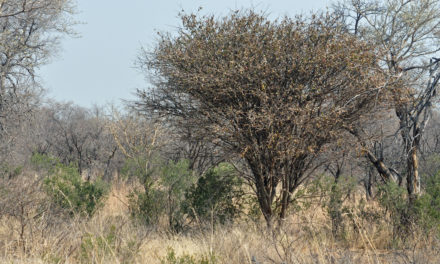
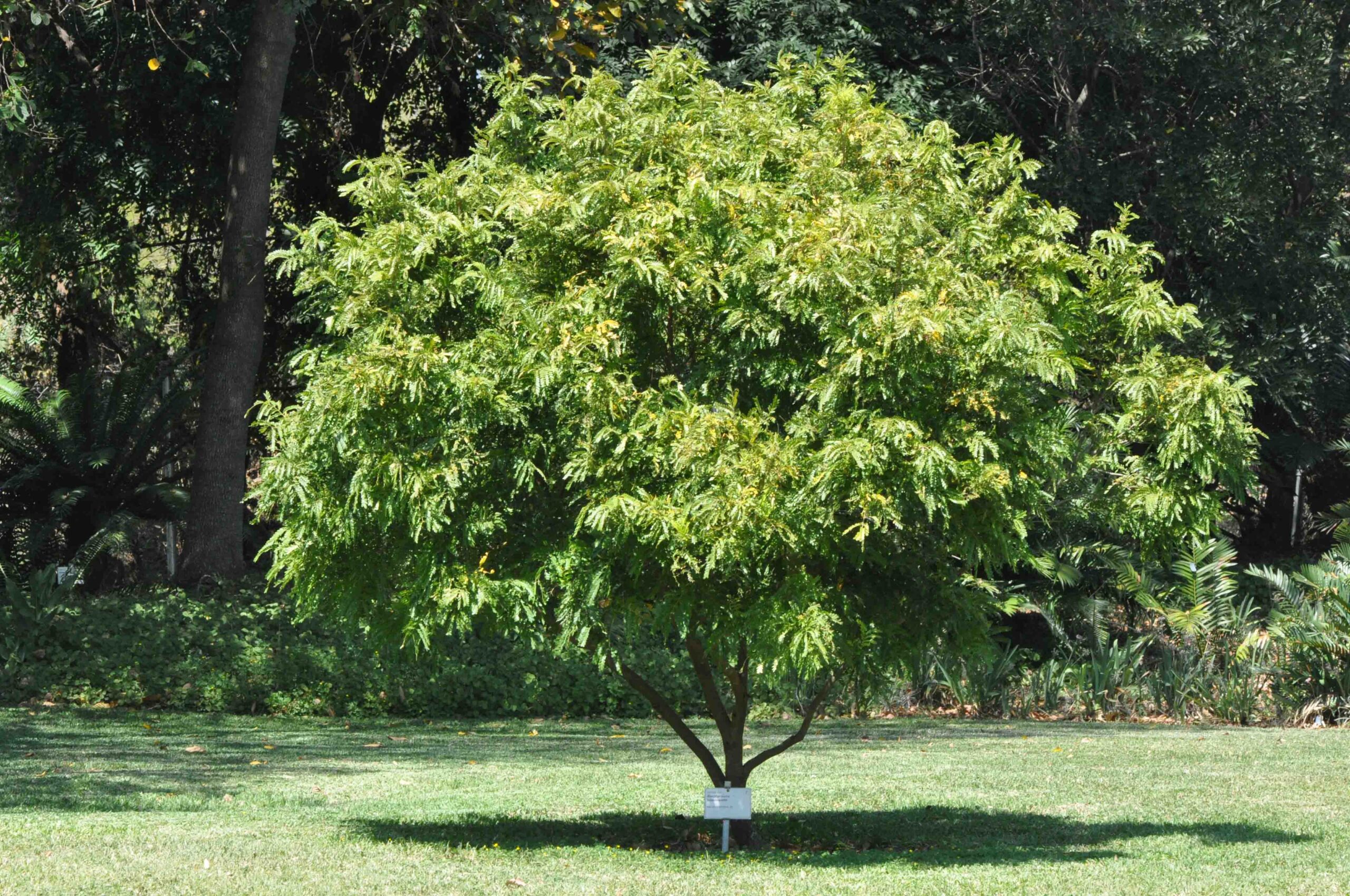
This Tree is up to 8m high (usually less), or it may be a shrub. The Bark is grey to brownish or black and Lenticels (usually raised corky elongated areas on the plant that allows the uncontrolled interchange of gases with the environment) are present – photo 888). Golden hairs cover the young branches.
-
- 889. 2014/09/15. Lowveld NBG. Photo: David Becking.
-
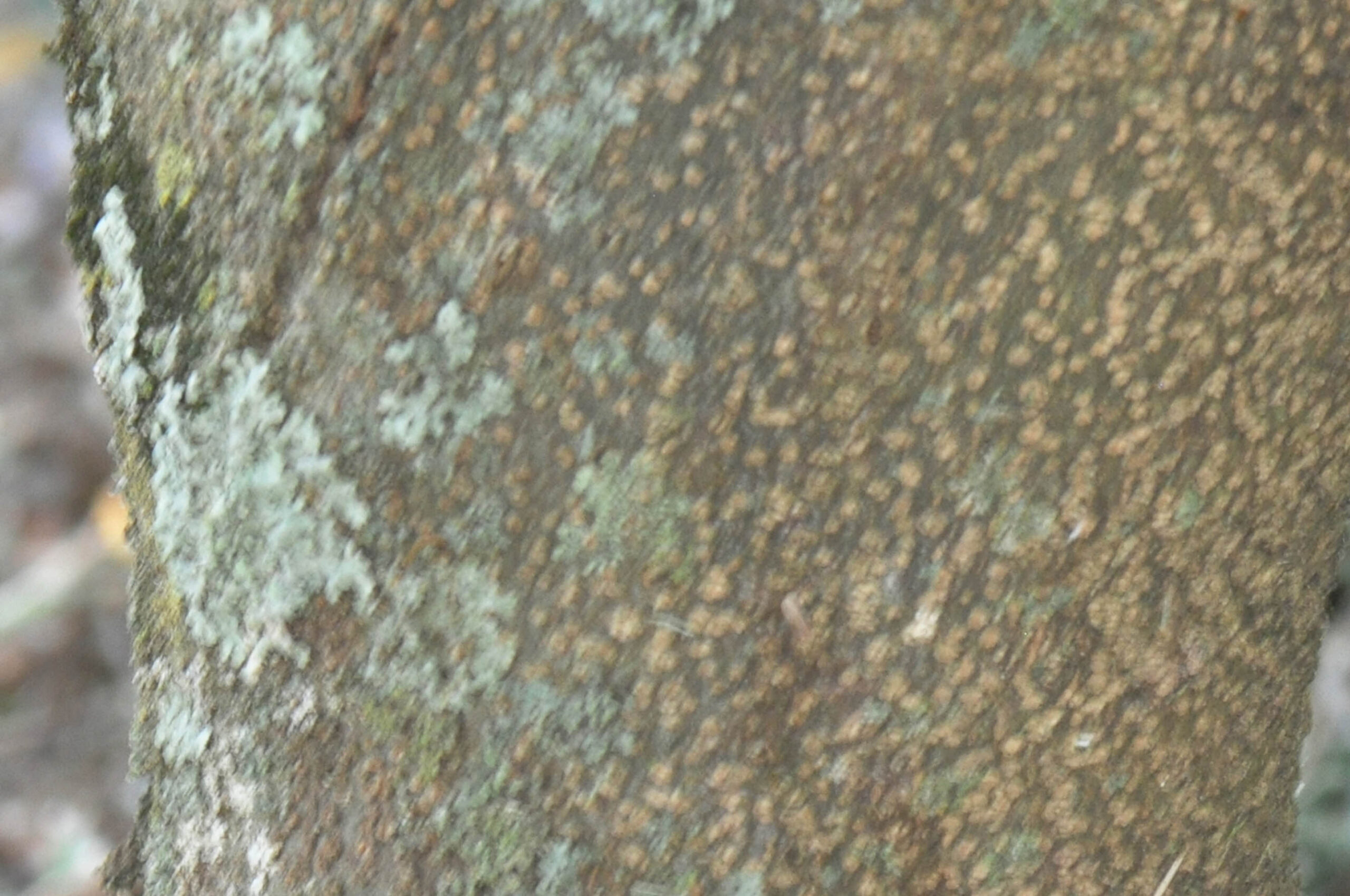
- 888. 2014/09/15. Lowveld NBG. Photo: David Becking.
Leaves
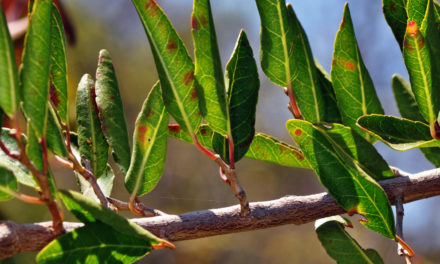
The alternate shiny Leaves are up to 25cm long and the Petiole (leaf stalk) is up to 5cm long. Petiolules (leaflet stalks) are very small (photo 887) and Stipules (basal appendage of the petiole) are absent. Leaves are bipinnate (compound: twice-pinnate leaves. The rachis – central axis, has lateral pinnae “branches” not leaflets and the pinnules “leaflets” are on these “side branches” – photo 885). The Rachis (an extension of the petiole of a compound leaf that eventually bears the leaflets) is up to-20cm long, has short soft hairs and lateral branches (not leaflets – photo 885). The Pinnules (leaflets of bipinnate or tripinnate leaves) are on these lateral branches (photo 885). Each lateral branch has between 10 and 30 leathery, closely spaced apart leaflets that are not quite opposite. Leaves are Imparipinnate (pinnately compound leaf ending in a single leaflet (photo 887). Frequently a leaflet closest to the rachis is at right angles. The single terminal leaflet is not always clearly visible. The obliquely oblong Leaflets are up to 13 x 6mm (photo 885). The leaflet Base is markedly asymmetric (photo 887). The Apex is rounded or notched (photo 887) and obliquely tapering. The rolled under leaflet Margin is entire (with a continuous margin, not in any way indented).
-
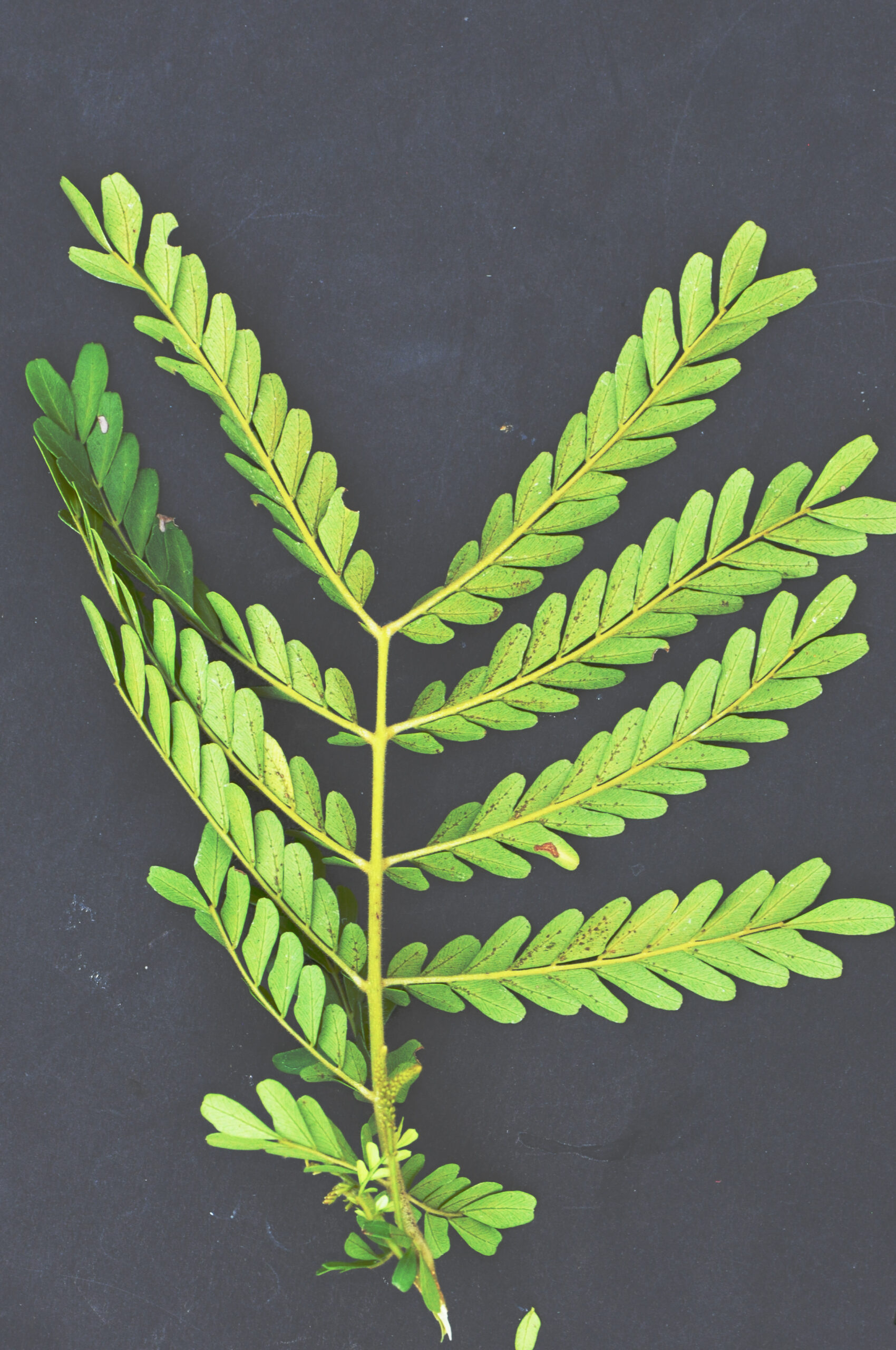
- 885. 2014/09/15. Lowveld NBG. Photo: David Becking.
-
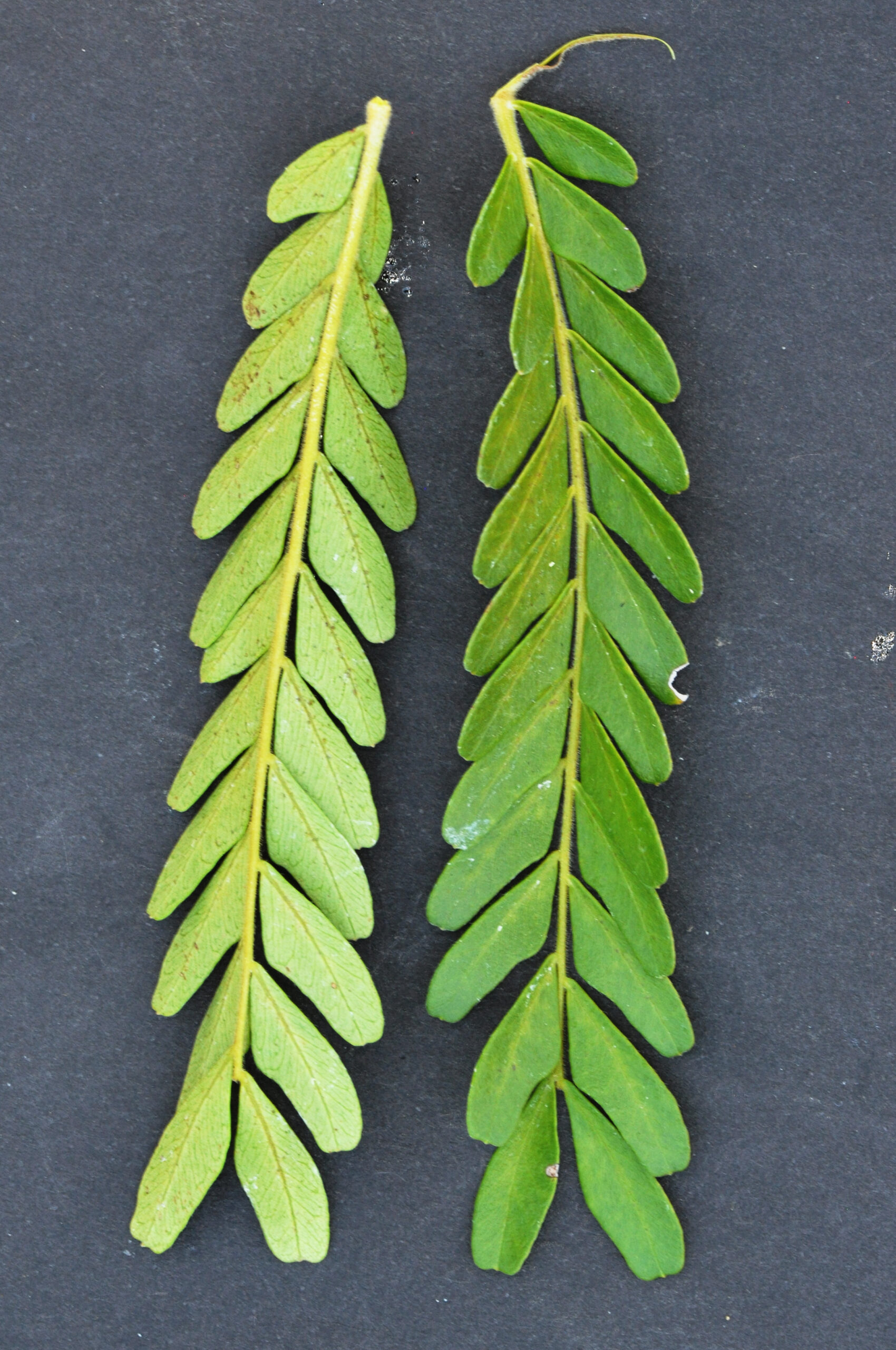
- 887. 2014/09/15. Lowveld NBG. Photo: David Becking.
Flowers
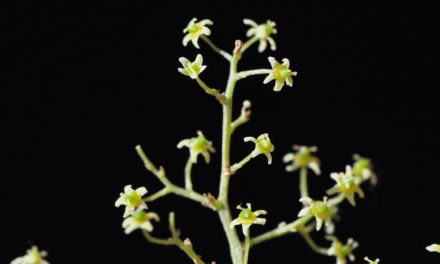
The small (up to 4mm long) whitish Flowers are Dioecious (unisexual floral structures with male and female parts on separate plants). The length of each Inflorescence is 10 – 30cm (Photo 883R). It occurs is a spike like head or racemose thyrse (a panicle-like cluster with the main axis intermediate and the lateral axis determinate) up to 15cm long. Flowers develop in leaf axils and floral parts are in 5’s. Each smooth and nearly hairless Pedicel (the single stalk of a flower) is 2-3cm long. The petal like Sepals (2mm) are free almost to the base and petal-like. The small (1 x 1mm) Petals are spurred (of a flower – having a slender tubular projection from the base, typically containing nectar). The Male flowers have 7-8 conspicuous Stamens in two whorls. The stamens are in 2 whorls and arise within the disc (more or less fleshy or elevated development of the receptacle). The 4mm long, hairless Filaments (the anther bearing stalk of a stamen) are free and the o,9mm long Anthers are 2- thecous (with 2 pollen sacs). Here the ovary is vestigial (imperfectly developed). In the Female flower, stamens are reduced to very small sterile staminodes (sterile stamens). There is a single, simple Pistil (a unit of the Gynoecium, the female element of the flower, composed of the Ovary, Style and Stigma) and the superior Ovary has 2-3 chambers. (Sep-Oct).
-
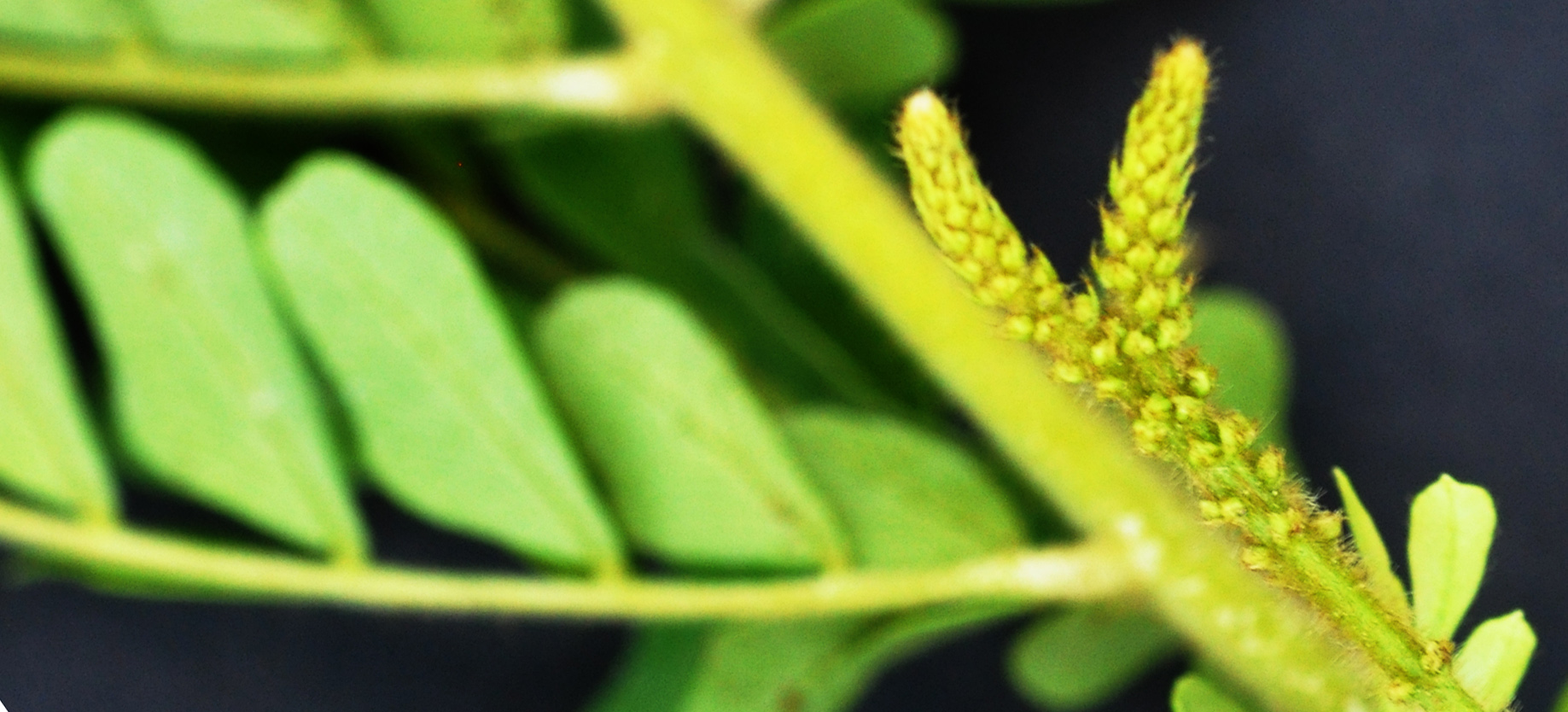
- 883R. 2014/09/15. Lowveld NBG. Photo: David Becking.
Fruit
The Fruit is a spherical or ovoid, hairless and reddish to purple Berry (pulpy, indehiscent fruit like a grape or tomato) that is up to 1,5cm long and may be sharp tipped. The Seeds lack endosperm (the starch and oil-containing tissue of many seeds; often referred to as the albumen). (Sep-Nov).
Distribution & Ecology
This plant grows primarily in the seasonally dry tropical biome: along stream banks, coastal woodlands, on sand and dry forests. Countries include Mozambique, Zanzibar and northwards to Tanzania and Southeast Kenya. This coastal plant also occurs in Madagascar, Aldabra and the Comoros.
References
Burrows, J.E., Burrows, S.M., Lotter, M.C. & Schmidt, E. 2018. Trees and Shrubs Mozambique. Publishing Print Matters (Pty) Ltd. Noordhoek, Cape Town.
Coates Palgrave, M. 2002. Keith Coates Palgrave Trees of Southern Africa, edn 3. Struik, Cape Town.
http://www.biodiversityexplorer.org/plants/sapindaceae/index.htm
http://www.missouribotanicalgarden.org/Portals/0/staff/PDFs/callmander/Buerkietal._2010_1.pdf
http://www.tropicos.org/Name/28601004?projectid=17
https://www.worldfloraonline.org/