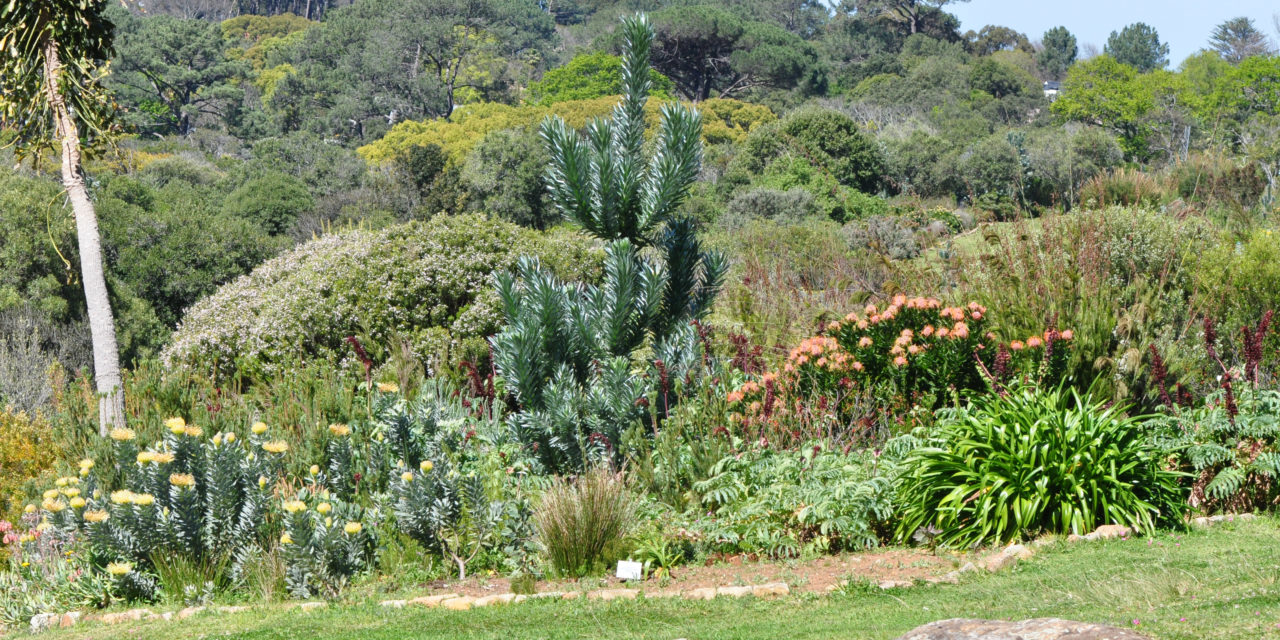
Leucadendron argenteum
General Info – Summary
This dioecious, evergreen Tree with its soft, spongy wood and grey bark is usually up to 5m high. Simple impressive, long Leaves have lengthy, silky silvery, hairs that cause a glistening sheen. Petioles are absent or obscure. Wind pollinated Flowers have bracts and are in an inflorescence. Fruit is a heavy, woody cone with many small, black and ovate nuts. Hairs attached to seeds act like a parachute for wind dispersal.
Description
Previous Name: Protea argentea.
SA Tree No. 77.
Common names: (Afr) Brandhout, Silwerboom, Witteboom. (Eng) Cape Silver Tree, Silver Tree, Silver leaf tree.
Family: Proteaceae (Protea family). Members of this family occur mainly in the southern hemisphere. Universal characteristics are few. All are woody trees or shrubs. Anthers are basifixed and the superior Ovary is sessile. Flowers are contained in a compound inflorescence and 4 Tepals are present. There are about 80 genera and at least 1 600 species including the Australian Macadamia. (South Africa has now become one of the biggest producers of Macadamia nuts). In South Africa, there are 16 genera and 300 species. 6 genera (examples on this website) have species that are trees. These are Brabejum, Faurea, Leucadendron, Leucospermum, Mimetes and Protea. Currently the genus Protea has the most species. Protea gaguedi is the only species found in Namibia. The South African Protea flowers all have a superior Ovary containing a single ovule. The Stigma is a tiny groove resting on the top of the pollen presenter. The Style is long and thin. The silky appearance of the wood is due to the presence of medullary rays (are pith rays used for the radial conduction of water, minerals and organic substances). Leaves are Sclerophyllous (type of drought resisting vegetation adapted to prevent water loss with hard, leathery, evergreen leaves that that develop on narrowly spaces nodes). This family has similar Leaves to the Glossopteridales whose fossil leaf remains resemble the modern protea. These fossils were prevalent more than 200 million years ago. This was a time before the breakup of the super continent – Gondwanaland – due to continental drift.
Name derivation: Leucadendron – leukos – white (Greek) and dendron – tree (Greek). argenteum – silvery – referring to the leaves.
Conservation: National Status: Vulnerable. Assessment Date: 2020/04/29 (A.G. Rebelo, H. Mtshali, R. Koopman & D. Raimondo). Problems are exotic squirrels, invasive Alien Species – including plantations, and habitat loss due to agriculture and building, Fungi-like organisms in the genus Phytophthora are a problem worldwide and one species attacks the roots of the Leucadendron argenteum. This organism is different from other fungi in that the cell wall is composed of cellulose whereas in the fungi, the cell walls usually contain chitin.
Tree
This giant protea (photo 278) is actually a small, evergreen, erect Tree that may reach 5m and occasionally 15m high. It is often a conical shaped when young and develops a more spreading crown as it matures. The thick, grey Bark (photo 275) has very distinctive horizontal leaf scars (photo 276); otherwise, it is generally smooth and grey. Branches are upright (photo 277).
-
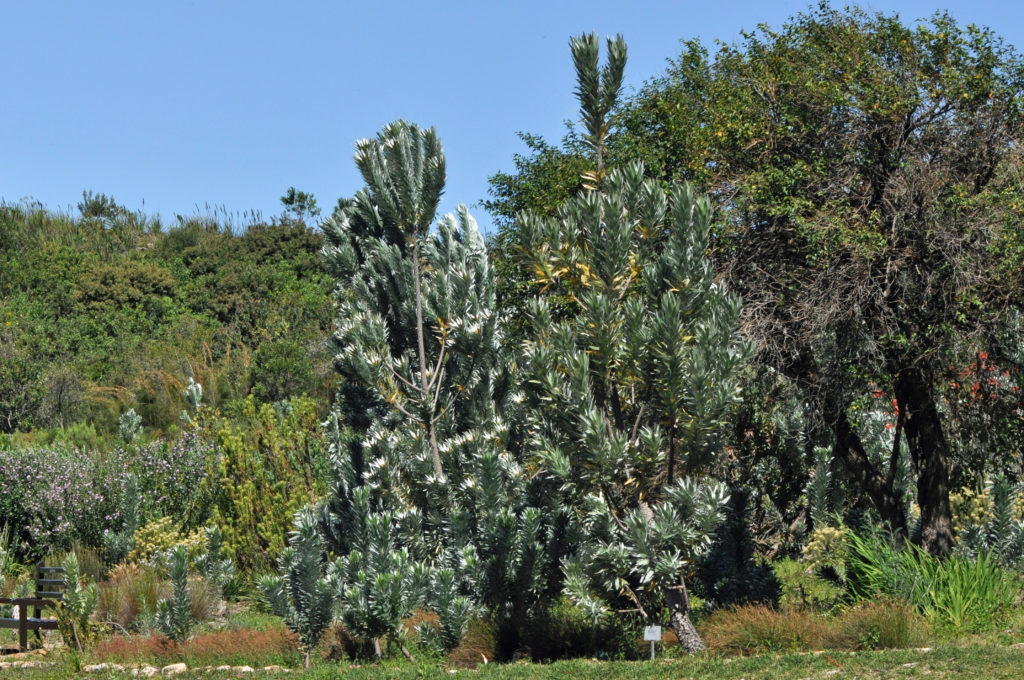
- 278. 2108/09/11. Kirstenbosch NBG. Photo: David Becking.
-
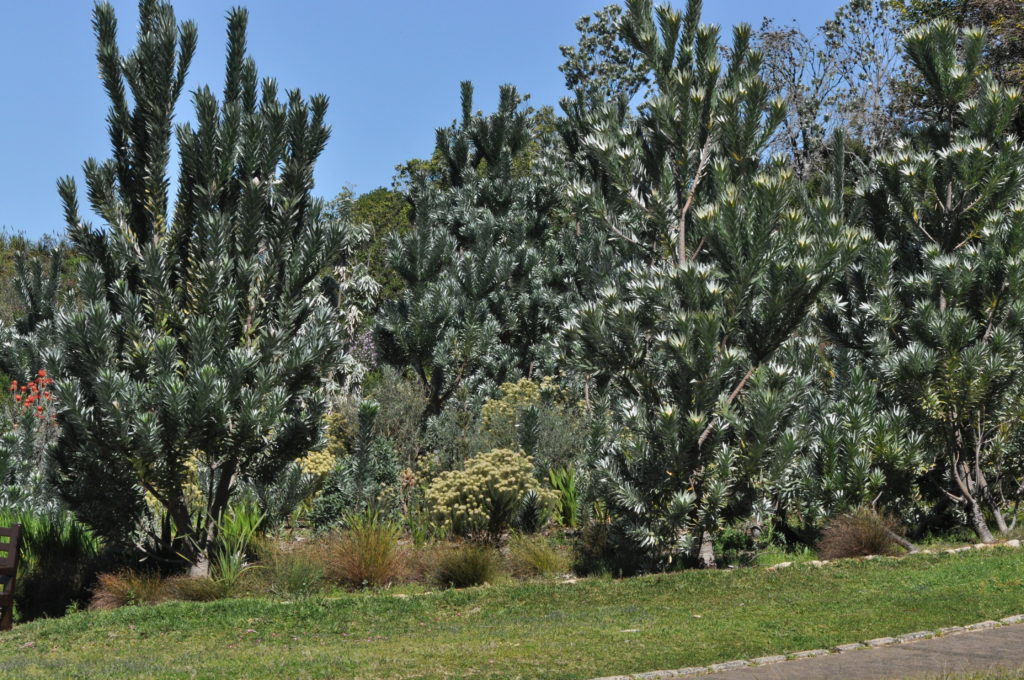
- 277. 2108/09/11. Kirstenbosch NBG. Photo: David Becking.
-
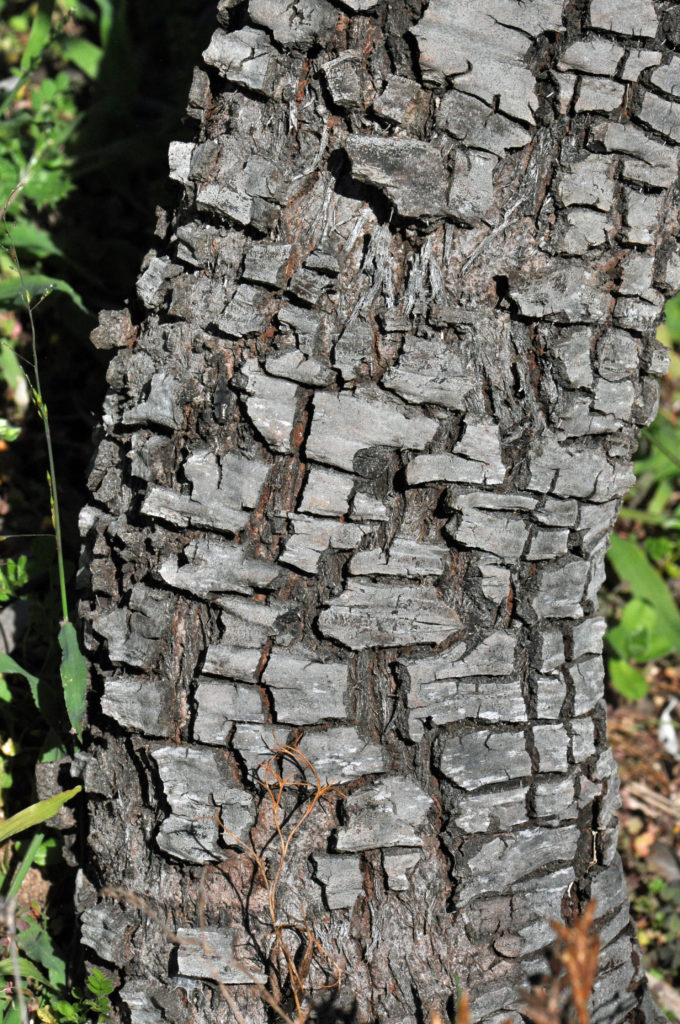
- 275. 2108/09/11. Kirstenbosch NBG. Photo: David Becking.
-
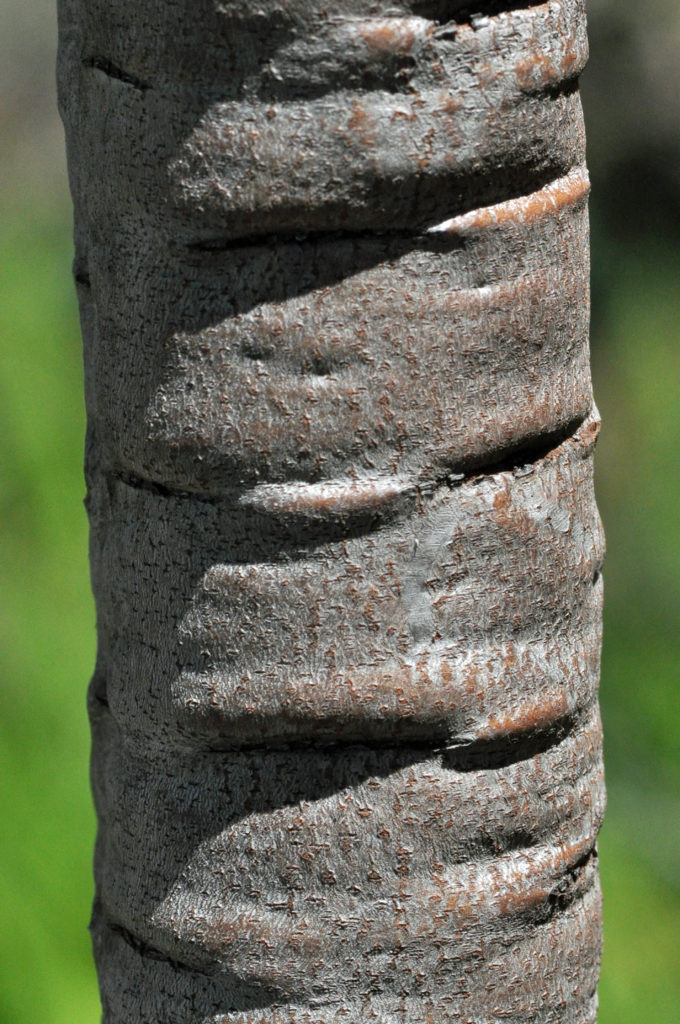
- 276. 2108/09/11. Kirstenbosch NBG. Photo: David Becking.
Leaves
The silky, silver-white foliage is the most distinctive characteristic of this tree. The elliptic to narrowly obovate or lanceolate Leaves are simple (have a single blade which may have incisions that are not deep enough to divide the leaf into leaflets). Leaves tend to be concentrated towards branch ends and are usually spirally arranged. They may reach 18 x 3cm and are usually wider than 1cm (photo 279). Leaves on the Male plant tend to be smaller. The Margin is entire (with a continuous margin, not in any way indented). Long, silky, silvery hairs cover the margin (photo 281) and blade, providing an impressive glistening sheen (photo 274). The shine is more prevalent in the dry summer when the hairs collapse against the surface to prevent water loss. These hairs occur on both sides of the leaves. Leaf Veins are best seen when the leaf is held against a strong light (photo 281). The leaf Base tapers, and the Apex is narrowly tapering (photo 279). Petioles (leaf stalks) are obscure or absent (photo 279). The involucral leaves (one or more whorls of small leaves or bracts standing underneath a flower or flower-cluster) tend to hide the flowers, which are usually higher up in the female flowers.
-
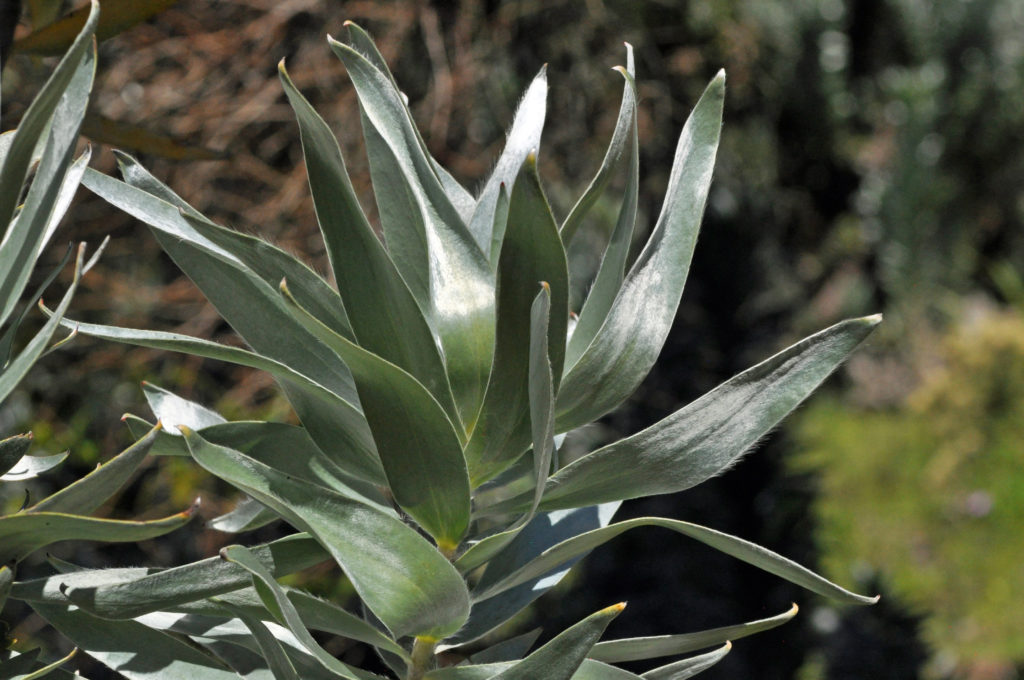
- 274. 2108/09/11. Kirstenbosch NBG. Photo: David Becking.
-
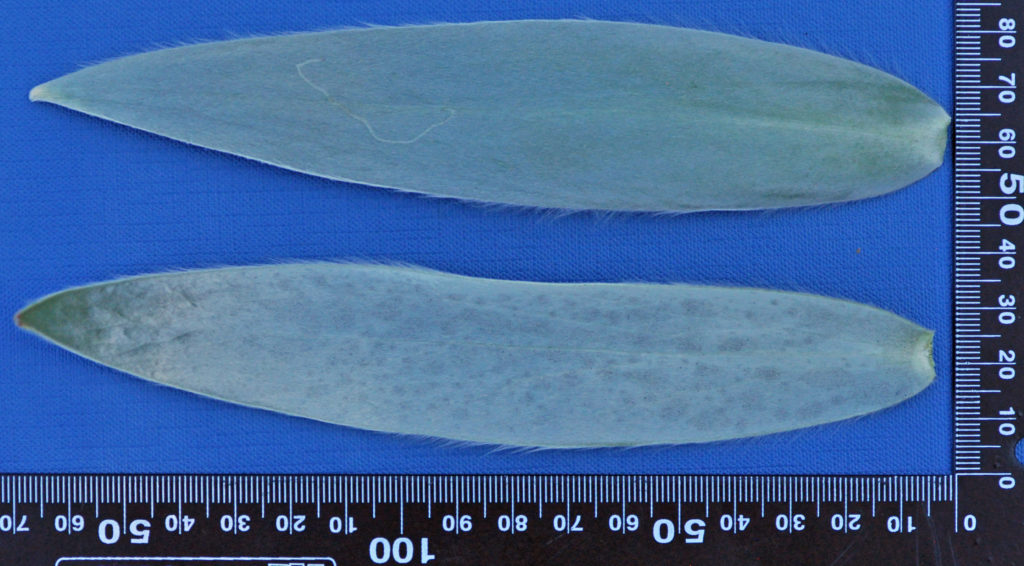
- 279. 2108/09/11. Kirstenbosch NBG. Photo: David Becking.
-
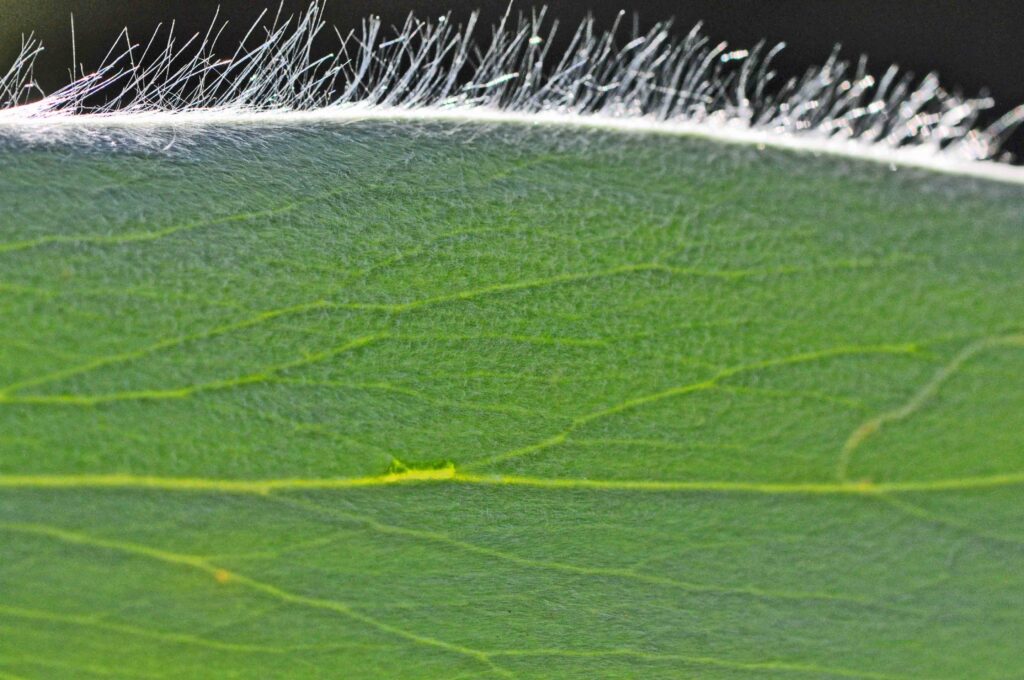
- 281. 2108/09/11. Kirstenbosch NBG. Photo: David Becking.
Flowers
Of the entire tree Proteaceae in South Africa, only the genus Leucadendron has all species Dioecious (unisexual floral structures with male and female parts on separate plants). What may appear to be a single Flower is actually an inflorescence (the complete flower head of a plant including stems, stalks, bracts, and flowers) containing many small, only male or female flowers. The tiny slightly scented flowers are contained in the compound inflorescence that develops at branch ends. In both male and female flowers, the Perianth (the 2 floral envelopes considered together; a collective term for the calyx and corolla) is cylindrical. Small brown inconspicuous Bracts (much-reduced specialised leaves, particularly the small scale like leaves in a flower cluster or associated with flowers) are present in sessile apricot Male Flower heads. Here the cone shaped, shiny, solitary, inconspicuous and silvery cones are hidden by leaves and are in short, compact capitula (globose or knoblike part, as in particular a dense flat cluster of small flowers or florets). Flower heads are about 5cm long, slightly less wide and have a slightly attractive scent. A circle of leaves surrounds the bracts. Female Flowers are in beautiful, silvery cone-like heads with pinkish and conspicuous semi-circular bracts. Here Staminodes (sterile stamens) are present, and the hairless Style is filiform (thread or filament like). The Ovary contains a single Ovule.
Fruit
The Female Flower heads develop into an impressive Fruit that is a dense, upright, woody and silvery. It is a terminal Nut (an indehiscent, 1-seeded hard bony fruit). The mature fruit is up to 10 x 6cm. At this stage, the bracts are conspicuous. The mature woody cones are heavy and contain many small, black and ovate (egg-shaped) nuts enclosed within the cone scales. When the bracts finally open the Hairs that are attached to each old style on each flower, now act like a parachute forming a wind dispersal mechanism for the seeds. In some cases, the process takes a fire to initiate. The fruit may remain on the tree for several years prior to dispersal. When the seeds germinate two green leathery cotyledons, (seed leaves; primary leaf or leaves in the embryo) initially emerge above the ground.
Distribution & Ecology
This very attractive ornamental tree is possibly the best known of the Leucadendron genus. This tree is Endemic (restricted to a particular geographic location) in winter rainfall areas of the Western Cape. It grows in part of the fynbos (a belt of natural shrubland or heathland in the winter rainfall area within the distinctive vegetation of the Western Cape) below the Table Mountain (peak: 1 o86m) sandstone on the eastern slopes of Table Mountain. In these environments it is confined to heavy gravel soils (derived from Malmesbury shales and granite. In this, its own area, it is remarkable resilient against dry times and strong winds. Here it even survives some mountain fires. The trees provide a nectar source for birds, including Honey birds. In the process they aid pollination of this plant. Vast Hairs on the Leaves are a protection against excessive transpiration (photo 281 under Leaves). During rain (usually winter), the hairs stand out allowing air to circulate between them. During dry and windy periods, the hairs lie flat against the blade considerably reducing water loss. Seeds remain viable for more than 75 years. Trees occur naturally from somewhat above sea level to an altitude of 330m. Problems include habitat loss due tree plantations, agriculture and building. The Protea borer insect: Jewel Beetle (Sphenoptera) sp. bore into the tree and may cause considerable damage. The larvae also spread a fungus to the plant. Fungi-like organisms in the genus Phytophthora are a problem worldwide and one species attacks the roots of the Leucadendron argenteum. This organism is different from other fungi in that the cell wall is composed of cellulose whereas in most fungi, the cell walls usually contain chitin. The introduced small eastern grey squirrels (Sciurus carolinensis) are replacing the local squirrels. These squirrels have now grown a taste for the Leucadendron argenteum cones and are becoming a problem.
Ethnobotany
The Leaves are much sought after for floral arrangements and everlasting bouquets. Plants grow easily from Seeds. Outside the winter rainfall area, the tree should be planted on a slope in an open “windy” area in acidic soil. Water the plants in the dry times. As early as 1693, this plant was successfully grown in England. It is thus able to survive beyond the winter-rainfall area. Here it does best in acidic soil with good drainage. For Seed production, both male and female trees are necessary. Do not disturb the roots once they are established. After germination, trees take up to 7 years to Flower. Trees initially grow about 1m per year and last for about 20 years. Wood is soft and spongy and has been used for beams in thatched homes, box manufacture and as fuel. It is now a protected tree in South Africa.
References
Coates Palgrave, M. 2002. Keith Coates Palgrave Trees of Southern Africa, edn 3. Struik, Cape Town.
Palmer, E. & Pitman, N. 1972. Trees of southern Africa, Balkema, Amsterdam, Cape Town.
Rebelo, A.G., Mtshali, H., Koopman, R. & Raimondo, D. 2020. Leucadendron argenteum (L.) R.Br. National Assessment: Red List of South African Plants version 2024.1. Accessed on 2025/12/12.
https://en.wikipedia.org/wiki/Leucadendron_argenteum
http://pza.sanbi.org/leucadendron-argenteum
https://en.wikipedia.org/wiki/Phytophthora
https://en.wikipedia.org/wiki/Eastern_gray_squirrel