Searsia chirindensis
General Info – summary
These dioecious and semi deciduous shrubs or erect Trees may reach 25m high – usually much less. A cut stem may yield blood red sap. Trunk is up to 1,3m wide. Trifoliate Leaves have large initially reddish leaflets. Tiny, 5-merous, regular Flowers develop in panicles. Male: 5 anthers. Female 5 staminodes, single pistil + superior ovary and 3 styles. The small, shiny, spherical Fruit is a thinly fleshy edible drupe.
Description
SA Tree No. 380.
Previous Names: Rhus acuminata, Rhus chirindensis, Rhus laevigata, Rhus legatii, Searsia legatii.
Common names: (Afr) Bosganna, Bostaaibos, Rooitaaibos, Westelike-essenhout. (Eng) Red Currant. (isiXhosa) Umhlakothi omkhulu, Intlokotshane-enkulu, incakotshi. (isiZulu) Ikhathabane, Inhlokoshiyane-enkulu, Umhlabamvubu, Umdwendwelengcuba. (Northern Sotho), Motha-thaa, Mpatha-Kgogo. (siSwati) Inhlangushane. (Tshivenda) Muvhadelaphanga.
Family: Anacardiaceae. (Mango family), which has about 83 genera and 850+ species – including Cashew). About 80 species occur in South Africa. Hunting arrows have been made from straight stems. Resin canals are present and woolly stellate hairs cover all young parts. Leaves lack stipules. They may be deciduous or evergreen and usually alternate. Leaves are simple, trifoliate or digitally compound and imparipinnate. Leaflets are usually opposite. Crushed leaves may smell of turpentine. Trees are monoecious or dioecious with occasional bisexual Flowers. Flowers are small, greenish or yellowish white and usually regular. The Calyx has 4-7 sepals and there are 4-7 Petals. The number of Stamens is the same as, or twice the number of petals and the Anthers are versatile. The superior Ovary has up to 4 locules, each with a single ovule. The 1-5 Styles are free or connate and separated at the base. Fruit is usually an indehiscent fleshy drupe that provide food in dry areas. They contain a single quick growing Seed. The southern Africa genera containing trees on this website include Harpephyllum, Lannea, Loxostylis, Ozoroa, Sclerocarya and Searsia.
Name derivation: Searsia: Named after Paul Bigelow Sears a highly qualified American ecologist (December 17, 1891 – April 30, 1990). He pioneered the study of fossil pollen in the USA. chirindensis – of the Chirinda Forest in Zimbabwe: named by Swynnerton from a specimen he collected in 1906. There are many species of the genus Searsia in southern Africa. DNA research has confirmed difference between the European Rhus and our Searsia.
Conservation: National Status: L C. (Least Concern). Assessed: 2018/11/06 (L. von Staden).
Tree
This is the largest member of the genus Searsia in southern Africa. When growing in the open, the Tree has a spreading crown (photo 668) rising to a nearly rounded tip. The height is usually 3-5m but may reach 25m or more in Zimbabwe. It may be a multi-stemmed shrub (photo 449). The erect Trunk has a diameter of up to 1,3m and the initially brown smooth Bark becomes grey, rough and darkens with age (photo 16). Young stems and recently cut shoots may exude a deep red sap. Young branches have distinctive Lenticels (a usually raised corky oval or elongated area on the plant that allows the uncontrolled interchange of gases with the environment – photo 99). Young and coppice branches may have woody spines, but mature branches are spineless. (Coppice growth. When stems are cut or burned, it causes regrowth from the stump or roots).
-
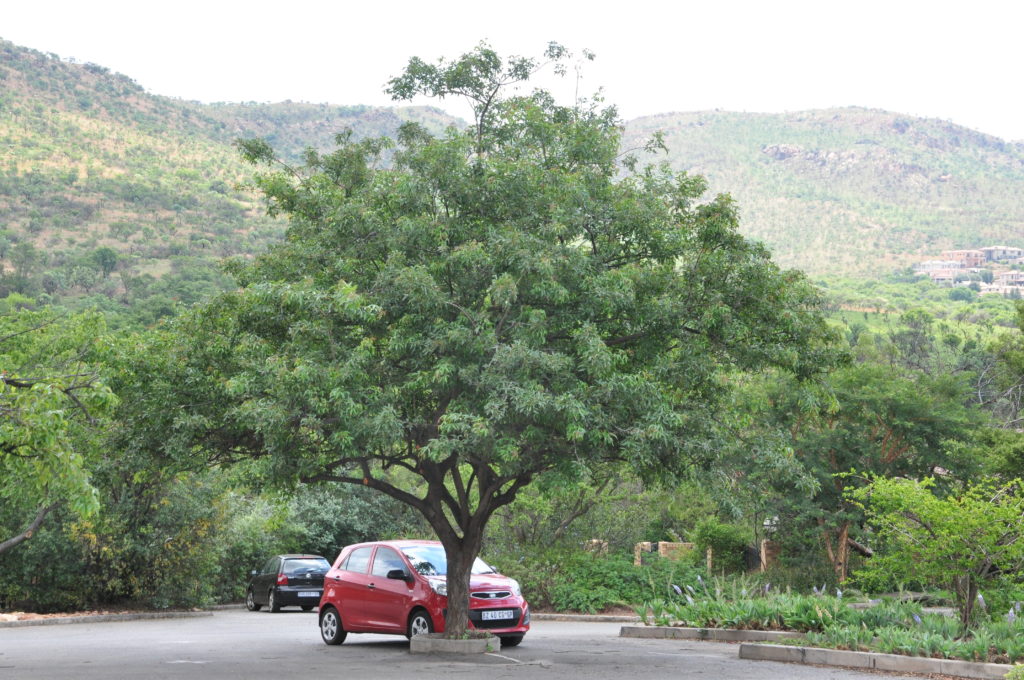
- 668. 2014/11/18. Walter Sisulu NBG. Photo: David Becking.
-
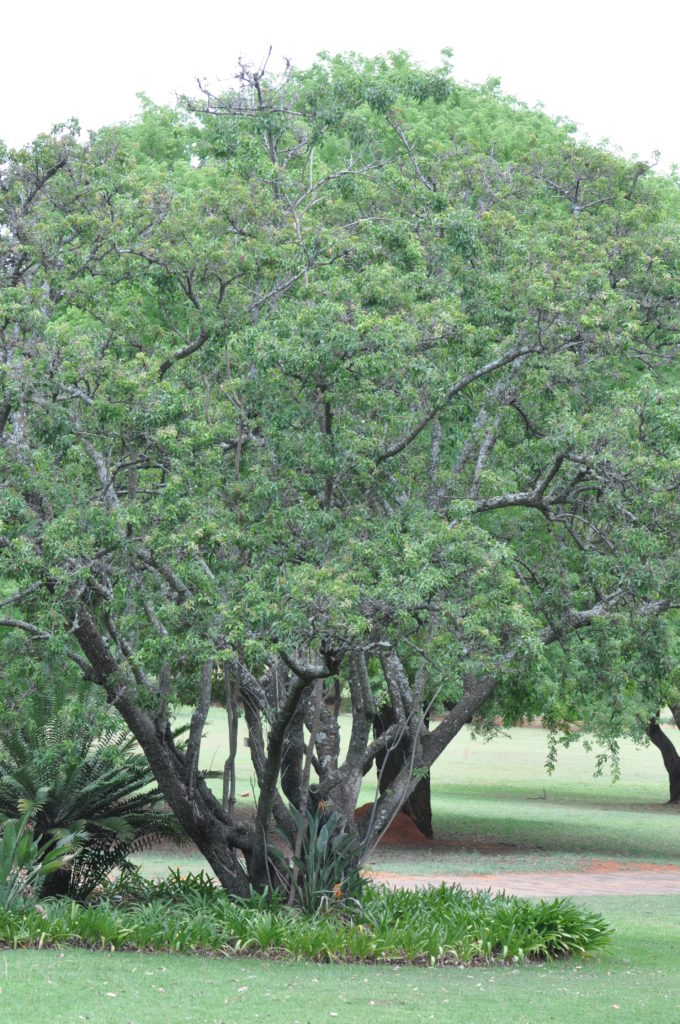
- 449. 2016/11/08. Pretoria NBG. Photo: David Becking.
-
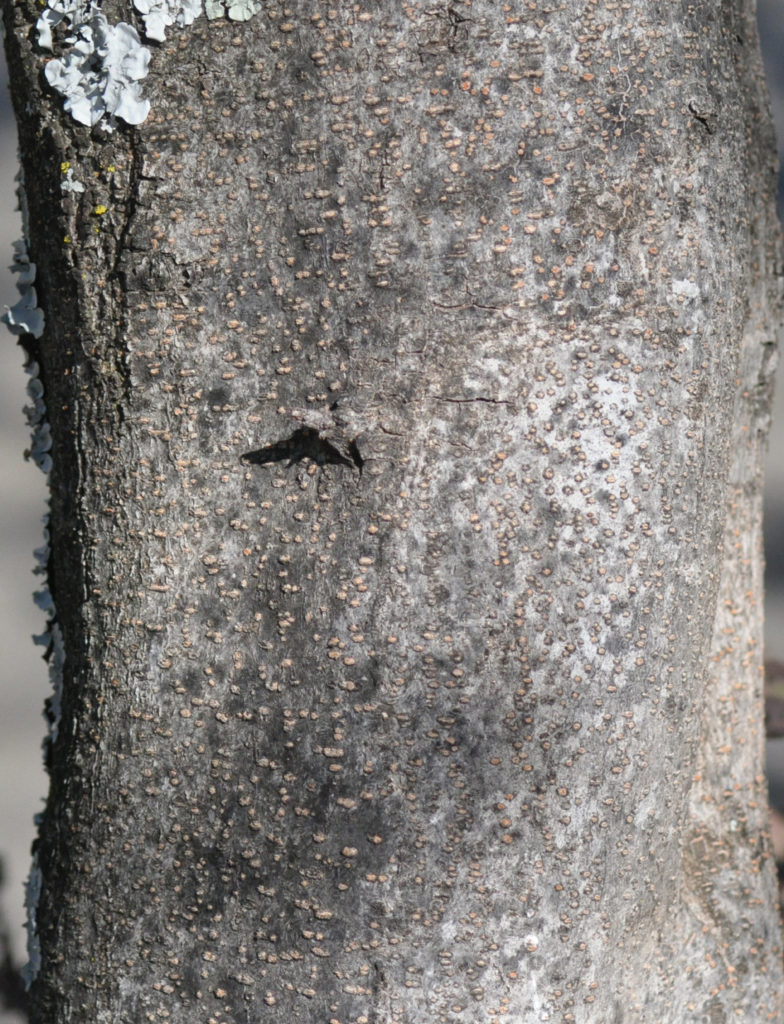
- 16. 2014/04/29. Walter Sisulu NBG. Photo: David Becking.
-
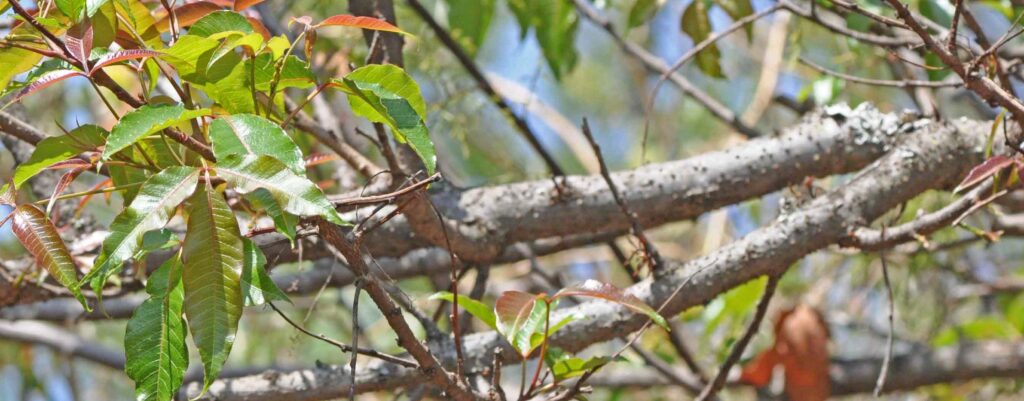
- 99. 2014/09/03. Walter Sisulu NBG. Photo: David Becking.
Leaves
The relatively large Leaves are up to 20cm long. They are Trifoliate (compound leaves with 3 Leaflets). Leaves are usually hairless but fine hairs may only appear along the veins. The tree is usually briefly deciduous, and leaves may turn reddish before falling (photo 20). Young leaves are reddish (photos 1019 & 981) and when mature, become glossy dark green above (photo 981). In this photo the lower side of a mature leaf is a lighter green. Domatia (occur in axils of principal side veins. To the naked eye, the domatia appear as small bumps. They are intended to be used by organisms that have a symbiotic relationship with the plant and are developed by plants to form a shelter for insects, fungi or mites). Domatia usually occur on the lower side of the leaflets. Mature thinly textured Leaflets are large and the middle one is the largest – up to 13 x 5cm. Leaflets are ovate (egg shaped) to lanceolate, (simple longish leaf with a lance-like head) narrowing to both ends but more pronounced and pointed, even forming a drip-tip, near the apex (photo 981). Lateral veins are visible on both sides, but net veining is slightly clearer below. Veins details are best viewed against direct sunlight (Photo 987). In this photo, the lateral veins do make contact with the margins. In the field, a hand lens will help. On the upper surface of each leaflet, the Midrib is raised and may be a reddish or pink colour – especially close to the base (photo 981). The Apex may become curved (photo 20). The Base is broadly tapering. Margins are usually wavy (photo 592) and entire (with a continuous margin, not in any way indented – photo 981) but may be minutely serrate. The slender Petiole (leaf stalk) may be reddish (photo 20) and is 4-9cm long (photo 981) but is not winged. Leaflet blades may bend around the midrib (photo 20) and become reddish before falling in winter. The often-reddish Petiolules (leaflet stalks – photo 981) are very short.
-
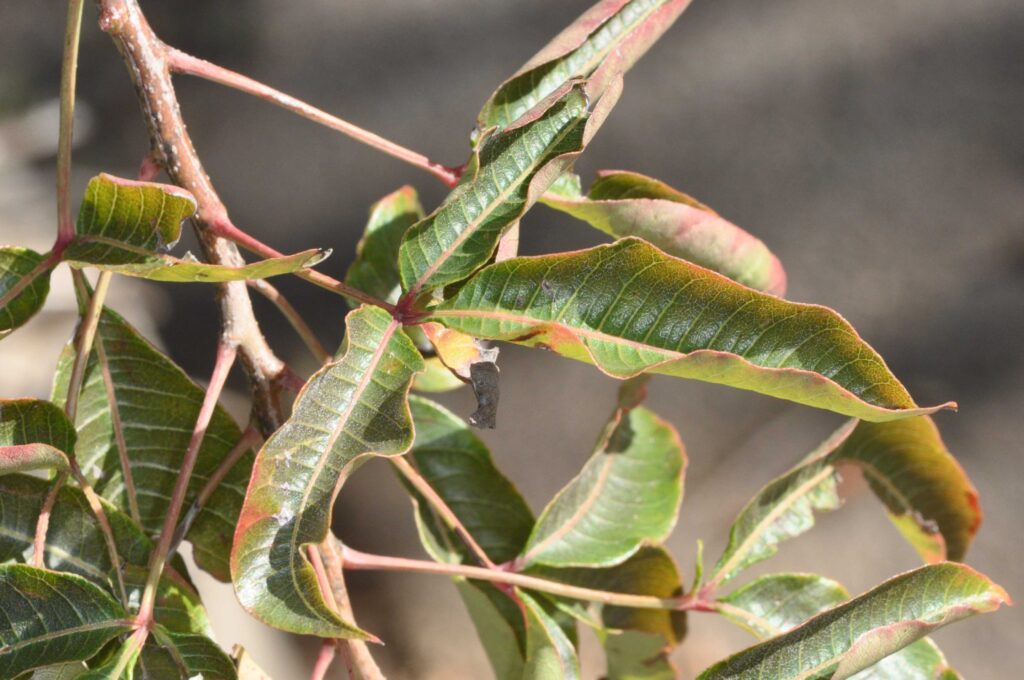
- 20. 2014/04/29. Walter Sisulu NBG. Photo: David Becking.
-
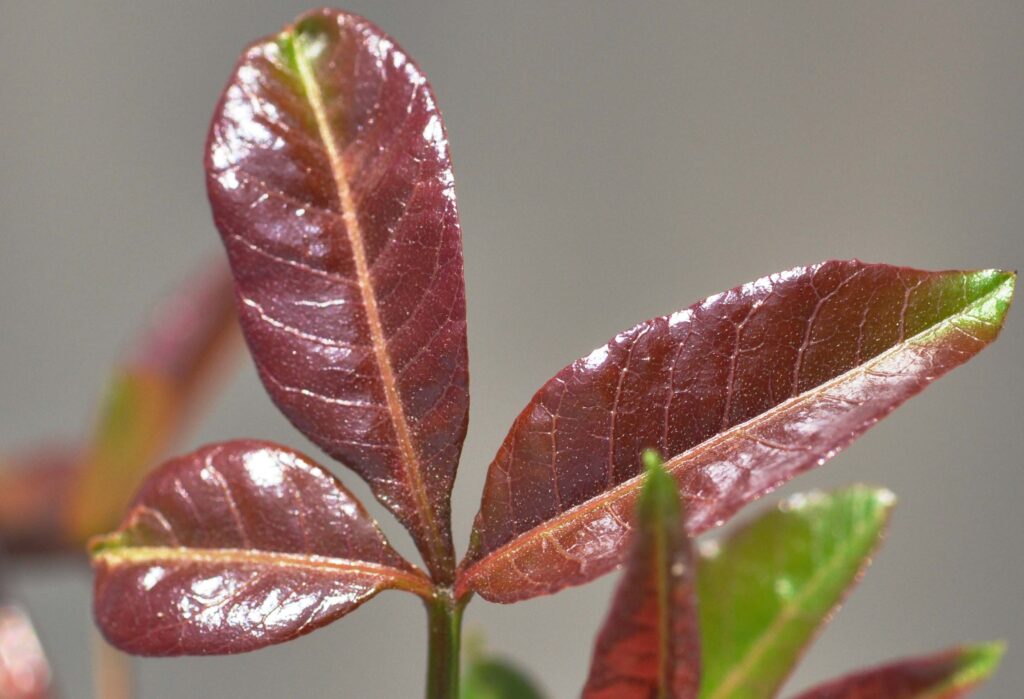
- 1019. 2014/08/19. Walter Sisulu NBG. Photo: David Becking.
-
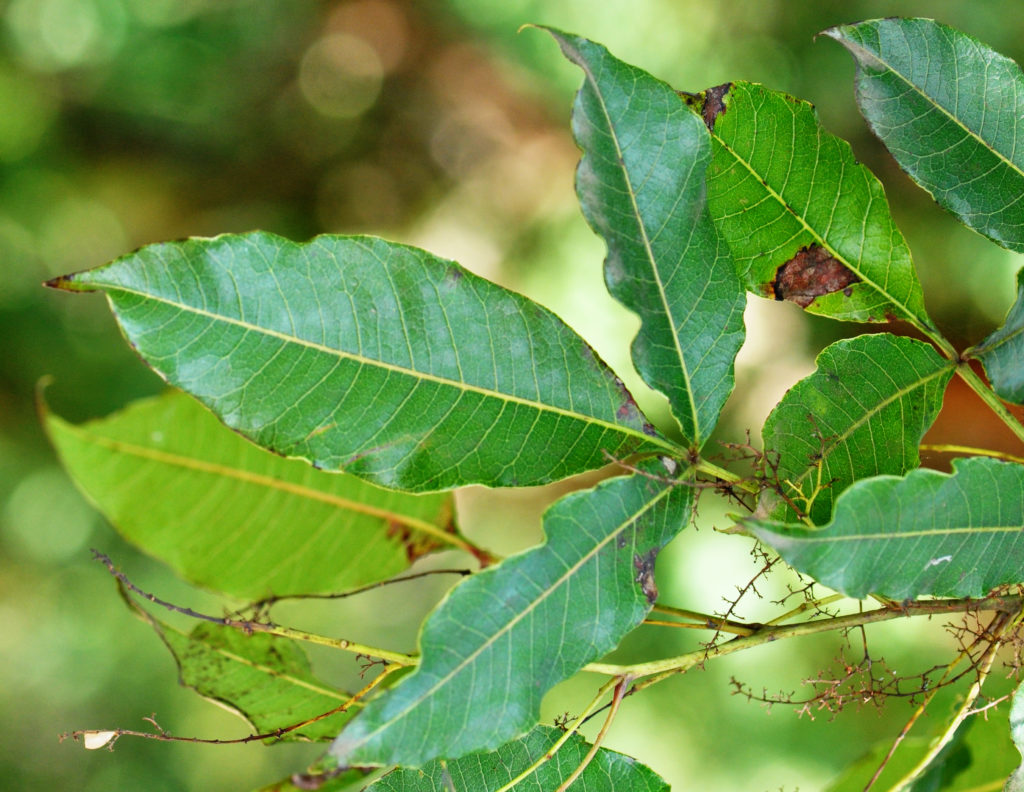
- 592. 2014/03/06. Walter Sisulu NBG. Photo: David Becking.
-
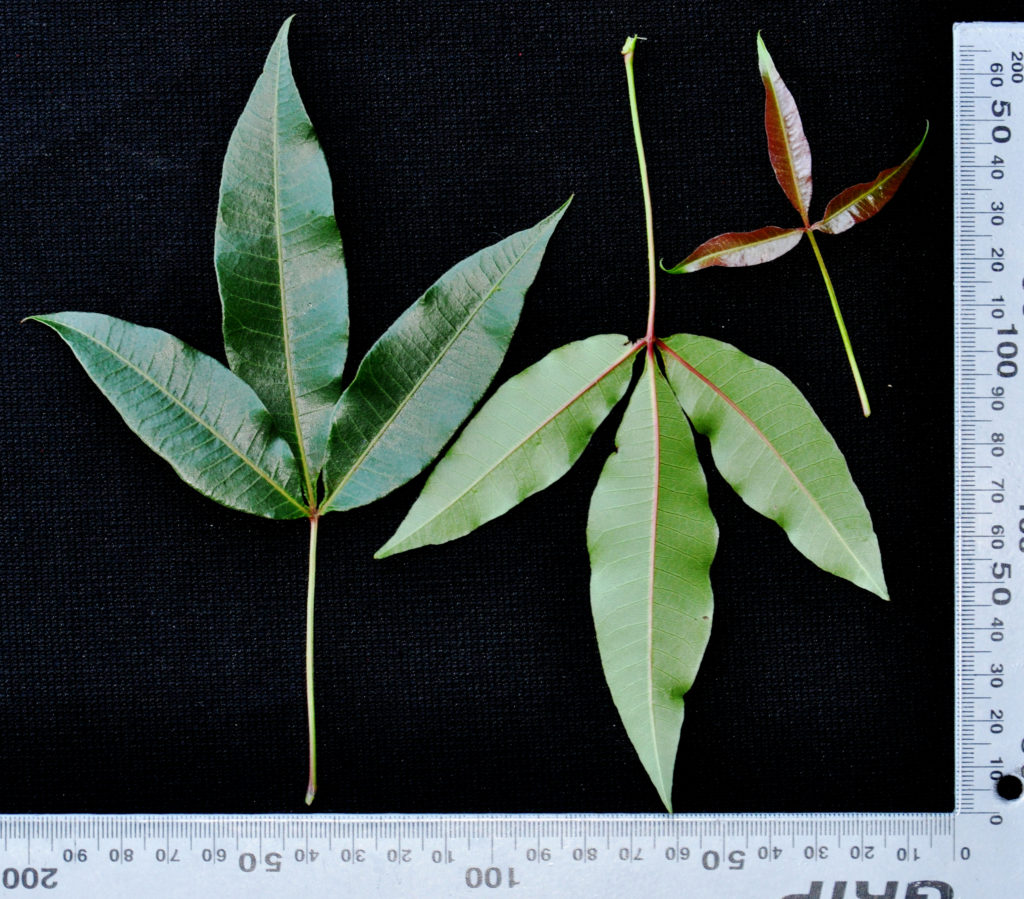
- 981. 2015/11/24. Walter Sisulu NBG. Photo: David Becking.
-
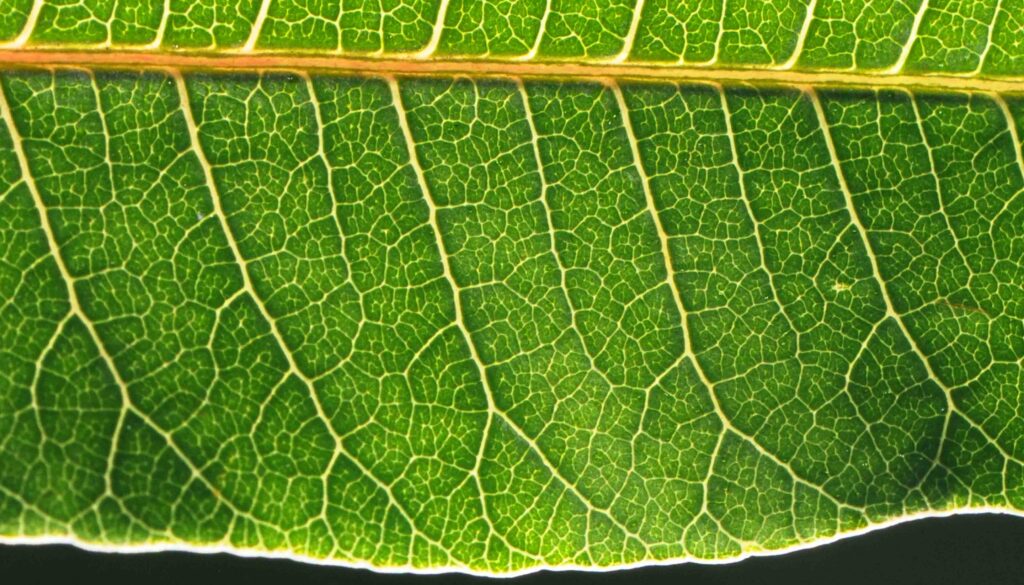
- 987. 2015/11/24. Walter Sisulu NBG. Photo: David Becking.
Flowers
The tree is Dioecious (unisexual floral structures with male and female parts on separate plants). The small yellow, yellowish-green, or green flowers are actinomorphic (Regular, symmetrical. Flowers are vertically divisible into similar halves by more than 1 plane passing through the axis). Flowers develop in up to 20cm long Panicles (indeterminate, branched inflorescence with stalked flowers – photo 99 (2)). They are and located in branched axillary and terminal heads. Panicles occur near the ends of the branchlets. The individual flowers are minute. The small flowers are only conspicuous because of the large numbers (photo 35). The 5 Sepals are joined at the base. The 5 Petals are free.
In Male Flowers, the 5 Stamens have free Filaments (the usually long slender stalk that supports the anther). Their Anthers (are initially yellow/orange where the pollen grains are formed – photo 955) have 2 thecae (pollen sacs) present that dehiscence longitudinally to release the pollen. A rudimentary pistil is present. In the Female Flowers, there are usually 5 Staminodes (sterile stamens) present and there is a single Pistil (a unit of the Gynoecium, the female element of the flower, composed of the Ovary, Styles and Stigmas). The superior Ovary has 3 carpels (each is one of the foliar units of a compound pistil or ovary) and there are 3 Styles present (photo 138). (Aug-Mar).
-
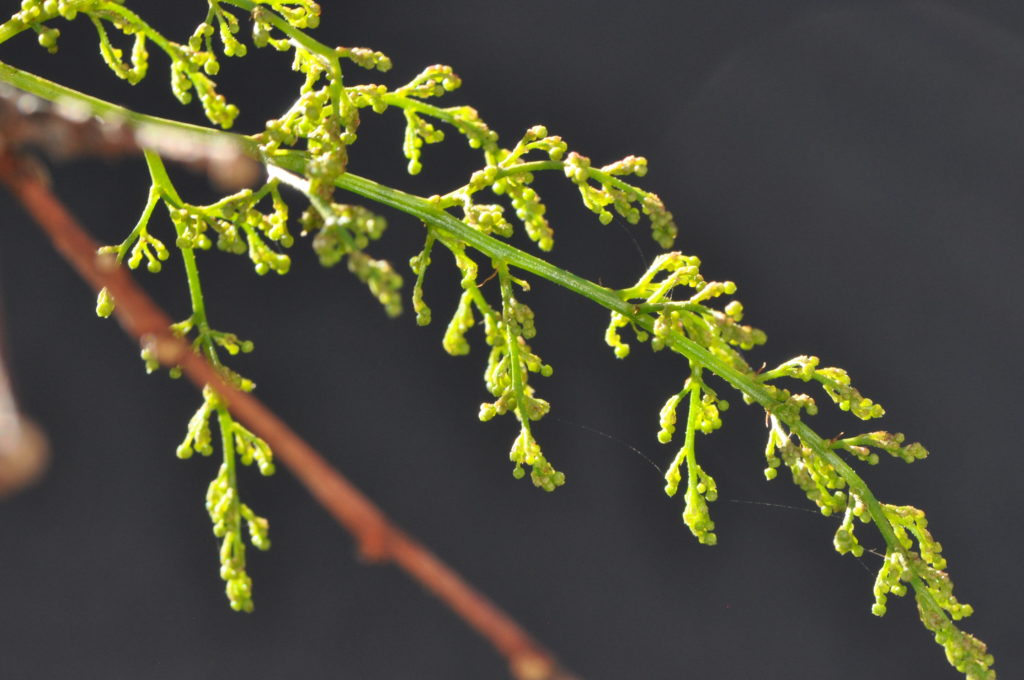
- 99 (2). 2014/09/30. Walter Sisulu NBG. Photo: David Becking.
-
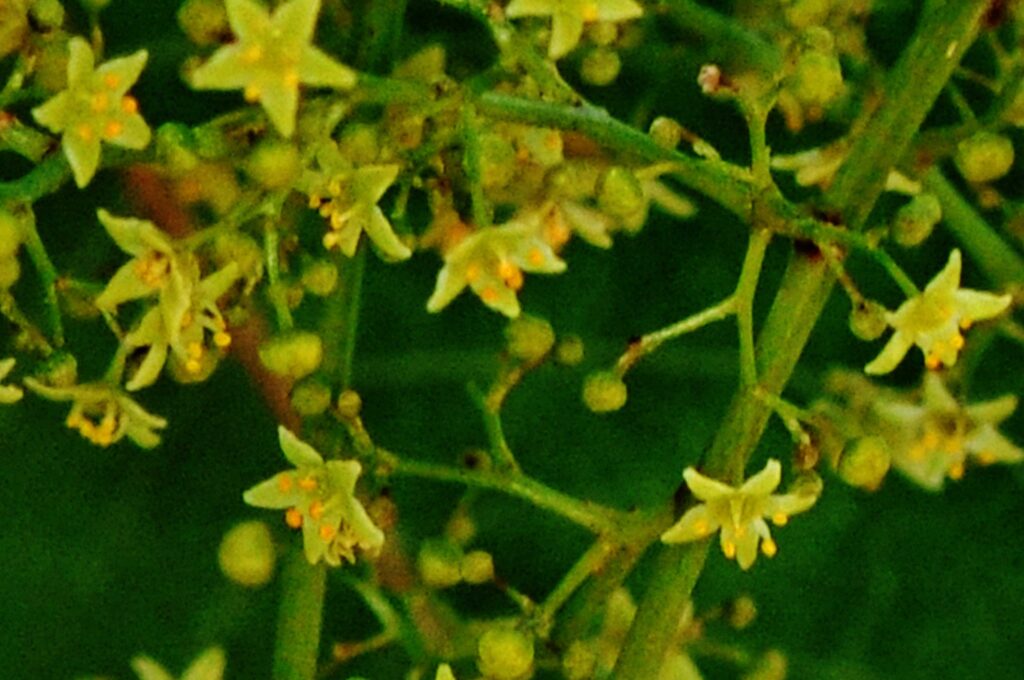
- 955. ♂ 2014/10/14. Walter Sisulu NBG. Photo: David Becking.
-
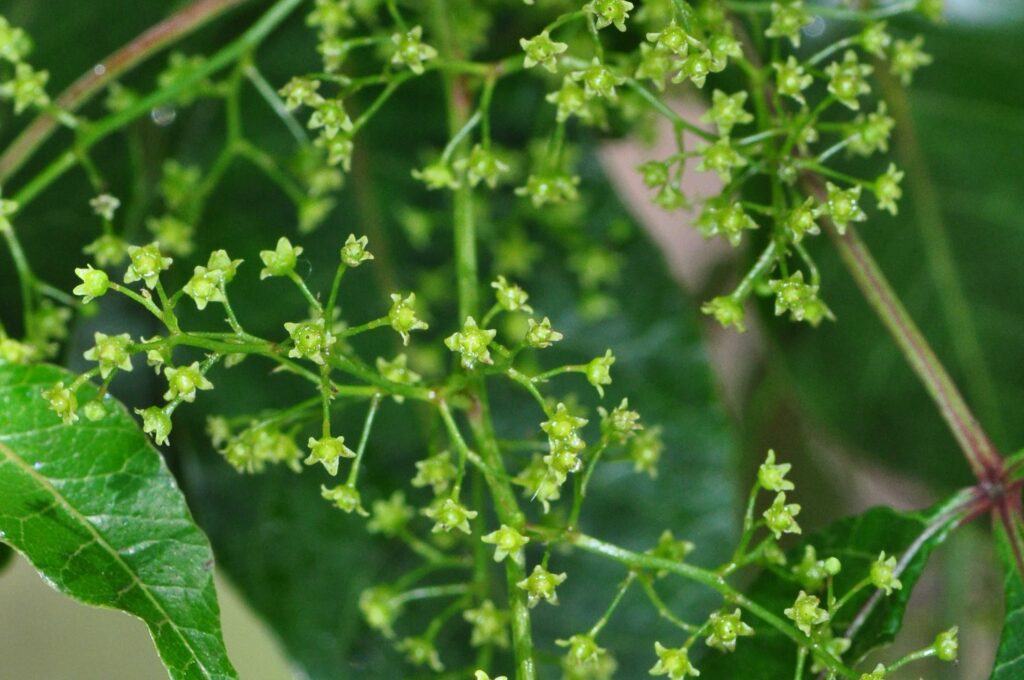
- 35. 2014/09/30. Walter Sisulu NBG. Photo: David Becking.
-
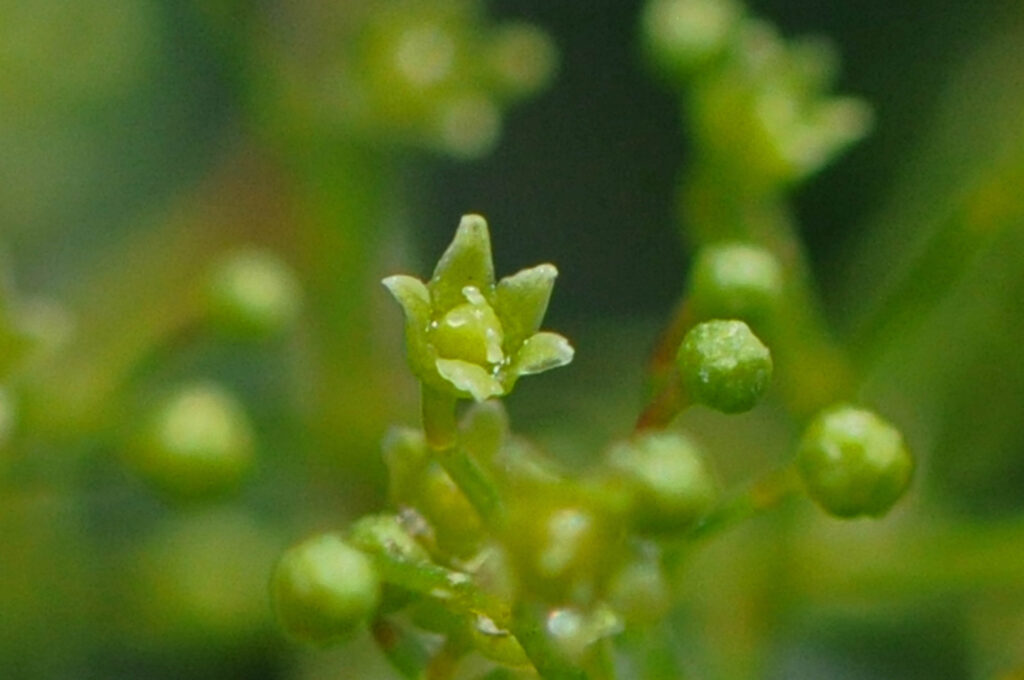
- 138. ♀ 2014/09/23. Walter Sisulu NBG. Photo: David Becking.
Fruit
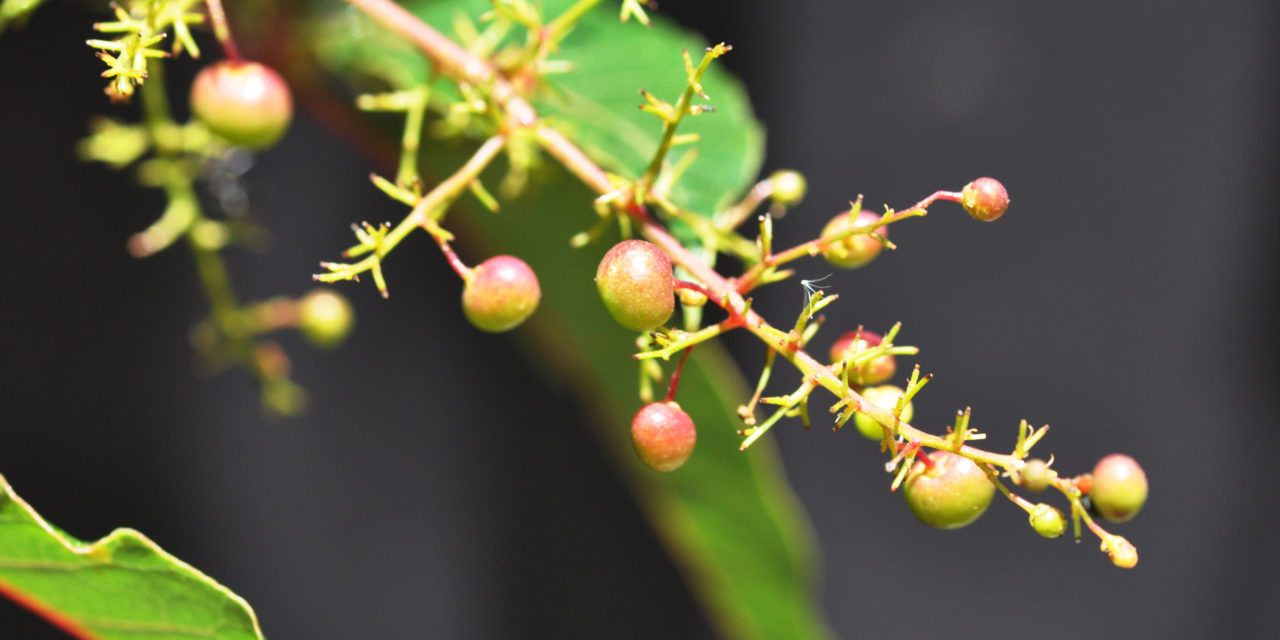
The almost spherical Fruit is a small Drupe (a fleshy, 1-seeded indehiscent fruit with the seed enclosed in a stony endocarp; stone fruit like a peach) which is up to 7mm in diameter and occurs in large groups. These hairless drupes are initially green and turn shiny red when ripe (photo 158). In this photo, the Pedicles (flower stalks) and remains of the calyx are visible. Fruit develops near the ends of branches and the mass of many fruit bends down the branches on which they grow. (Oct-Mar).
-
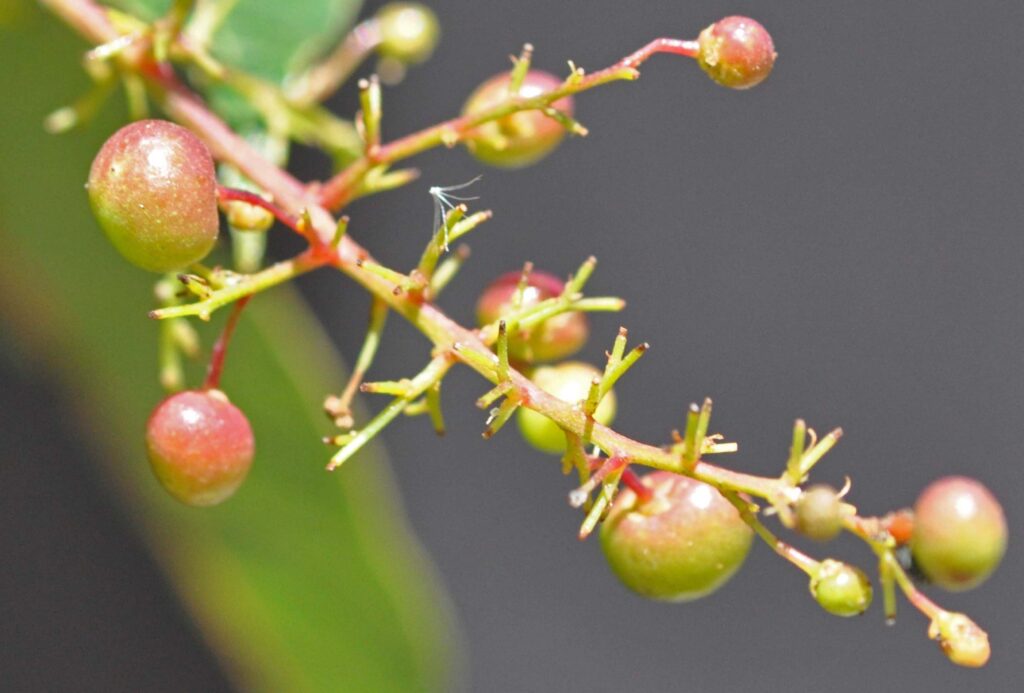
- 158. 2014/10/21. Walter Sisulu NBG. Photo: David Becking.
Distribution & Ecology
This tree is plentiful in the moister eastern parts of South Africa, in mountains, coastal and inland forests, forest margins, kloofs and scrubs. It is often located in close to rivers, on rocky hillsides and along the escarpment – up to 2 000m. The tree can be found from Swellendam in the Western Cape, through the Eastern Cape, Kwazulu-Natal and Mpumalanga to Limpopo e.g. Soutpansberg mountains. It also occurs in Siswati (Swaziland), Mozambique – central west and southern, Zimbabwe and possibly northwards. The tree can tolerate mild frost and is drought resistant. Coppicing is common. Black Rhino eat the Bark and leaves. The bark may contain lichen (composite organism arising from a mutualistic relationship between fungi or cyanobacteria and algae species (top left of photo 16 under Tree). Elephants, including the Knysna elephants, bushbuck, nyala, kudu, and red duiker consume the Leaves. Monkeys, turacos (loeries), bulbuls, barbets, Cape white-eyes, and pigeons eat the Fruit. The fruit juice attracts fruit piercing and sap sucking moths. This plant may Hybridise (crossbreed with individuals of two different species or varieties) – here with Searsia dentate.
Ethnobotany
The sweetish, edible Fruit is thinly fleshy (all indigenous Searsia species in South Africa have edible fruit that is rich in carbohydrates). For fruit development, both male and female trees are required. The strong dense Wood makes good furniture. Sapwood is yellowish to reddish and the dense heartwood has an impressive sheen. Research on the possible benefits of this tree on prenatal stress is being carried out at the University of KwaZulu-Natal. Bark extracts may be useful in the treatment of convulsions and epilepsy. Local medicine makes use of the bark. The tree provides valuable fodder in dry areas. It is an attractive shade tree – grown in gardens. This tree is quick growing from seeds or cuttings and the roots are not invasive. Using select male and female cuttings will help in this respect. This is a good shade tree.
References
Boon, R. 2010. Pooley’s Trees of eastern South Africa. Flora and Fauna Publications Trust, Durban.
Burrows, J.E., Burrows, S.M., Lotter, M.C. & Schmidt, E. 2018. Trees and Shrubs Mozambique. Publishing Print Matters (Pty) Ltd. Noordhoek, Cape Town.
Coates Palgrave, M. 2002. Keith Coates Palgrave Trees of Southern Africa. edn 3. Struik, Cape Town.
Ginn P.J. Mcilleron W.G. and Milstein P. le S, 1989. The Complete Book of Southern African Birds. Struik, Cape Town.
Palmer, E. & Pitman, N. 1972. Trees of southern Africa. Balkema, Amsterdam, Cape Town.
Schmidt, S. Lotter, M. & McCleland, W. 2002. Trees and Shrubs of Mpumalanga and the Kruger National Park. Jacana, Johannesburg.
van Wyk, B. & van Wyk, P. 1997 Field guide to Trees of Southern Africa. Struik, Cape Town.
von Staden, L. 2018. Searsia chirindensis (Baker f.) Moffett. National Assessment: Red List of South African Plants version . Accessed on 2025/07/25.
http://www.plantzafrica.com/plantqrs/searsiachirind.htm
http://witbos.co.za/plant.aspx?plant=searsia-(rhus)-chirindensis
http://operationwildflower.org.za/index.php/albums/genera/searsias/searsia-chirindensis-red-currant-bostaaibos-il-1-1509
http://www.sciencedirect.com/science/article/pii/S0168010215002230
https://en.wikipedia.org/wiki/Rhus_chirindensis
http://posa.sanbi.org/flora/browse.php?src=SP
https://en.wikipedia.org/wiki/Paul_Sears