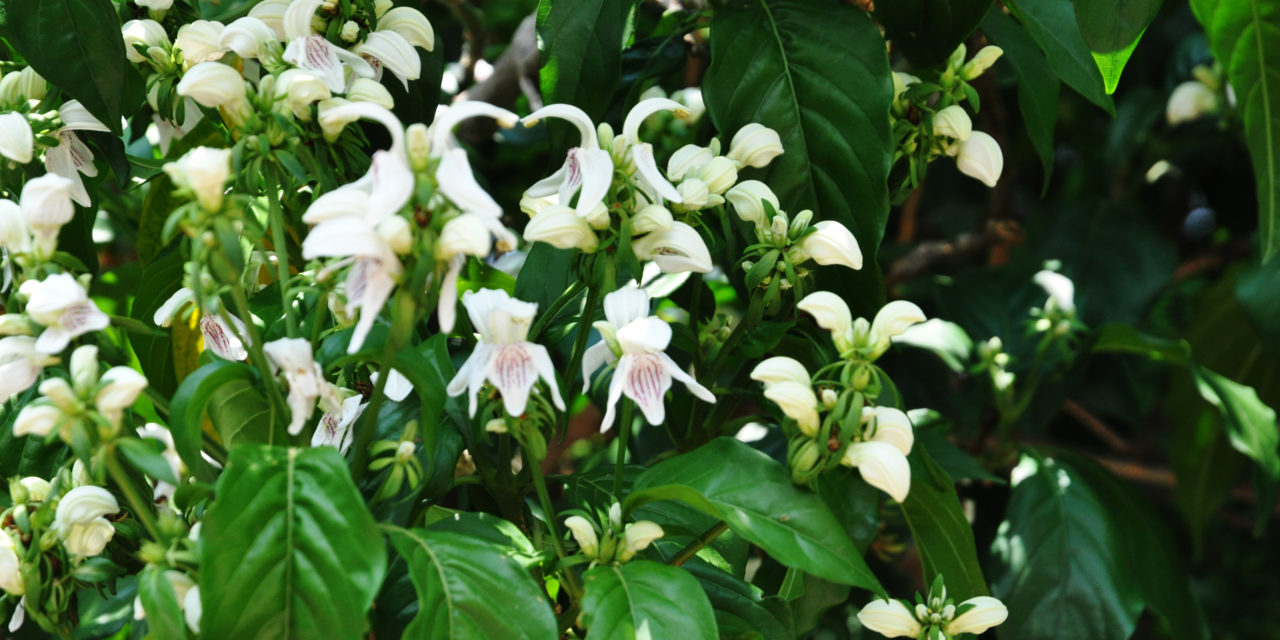
Justicia adhatodoides
General Info – Summary
This sturdy shrub or Tree to 6m has brittle branches. Simple, decurrent Leaves to 23 x 15cm + entire margins. Many white large zygomorphic bisexual 5-merous Flowers in racemes: have long peduncles. Two stamens, no staminodes. The superior ovary has 2 equal branched styles. Pollinated by carpenter bees. Fruit is an explosively dehiscent, club-shaped capsule. Flat disc shaped seeds, each with 1 or more ridges.
Description
Previous Names: Adhatoda duvernoia, Duvernoia adhatodoides.
SA Tree No. 681.
Common names: (Afr) Bastergeelhout, Pistoolbos, Pistoolbossie. (Eng) Lemon pistil-bush, Pistol Bush. (isiXhosa) Isepheka, Ihlwehlwe, ihlwehlwe, isipheka. (isiZulu) Isiisibika, Ihlwalane, lothabe , Ulothaba, Umavutha, Usilwayo, Uthabe.
Family: Acanthaceae. (The Acanthus family). This diverse family has exceptionally taxonomic diversity with 250 genera and about 2 500 species. Most of these are shrubs, herbs and occasional climbers. All members have branched tap roots and simple Leaves without stipules. In southern Africa, there are about 191 genera and 2 000 species. All members have simple opposite petiolate Leaves and lack stipules. Most have Cystoliths (large cell wall outgrowth of calcium carbonate with a silicon containing stalk – occurring mainly in the epidermis). Leaves are mostly entire. Inflorescences are mostly with bracts – subtending each flower. The Flowers are usually zygomorphic, (irregular flower with the corolla divisible into 2 equal halves in one plane only – making them bilaterally symmetrical). Flowers are bisexual with a nectariferous (flower producing nectar) disc. The calyx is usually shorter than the corolla, which has 1-2 lips. The Androecium has 3 or more Stamens usually included in a staminal tube arising on the corolla. The anthers open by longitudinal slits. In the Gynoecium the superior 2-many locular Ovary contains a large embryo. Each locule has 1 to many ovules. The thin single Style has with a bilobed Stigma. The explosive dehiscent and stalkless Fruit is a 2-locular Capsule and Seeds lack endosperm. Local tree genera on this website include Barleria, Justicia and Mackaya.
Name derivation: Justicia – named after a Scottish horticulturalist/gardener James Justice, 1698-1763. This genus has many species but only some are in southern Africa. adhatodoides like the Asian plant Justicia adhatoda (in the same family) which is largely used in their local medicine. Jean François Drege (1794 – 1881) first collected this plant near Umtata in the Eastern Cape.
Conservation Status: L C. (Least Concern). Assessment Date: 2006/01/19. Assessor (D. A. Kamundi).
Tree
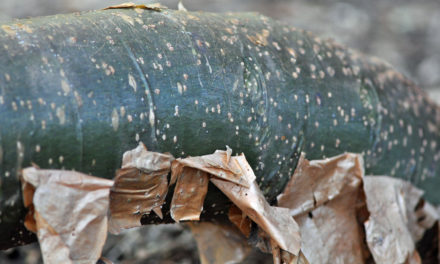
This usually small Tree (photo 731) is between 3 and 6m high and has a trunk that may reach 26cm in diameter. It is often a sturdy, a multi-stemmed, shrub. It was first discovered near Umtata in the Eastern Cape by Johann Frantz Drège. The Bark is brown, becomes rough and fissured. Longitudinal, orange Lenticels (a usually raised corky oval or elongated area on the plant that allows the uncontrolled interchange of gases with the environment) are visible (photos 575 & 976). Brittle young branches may be velvety green or pinkish and quite flattened at nodes (photo 976). These brittle, velvety branchlets may be glandular and grooved. They are often square in cross-section (photo 46 under Fruit). New growth is dark blue/green (photo 976).
-
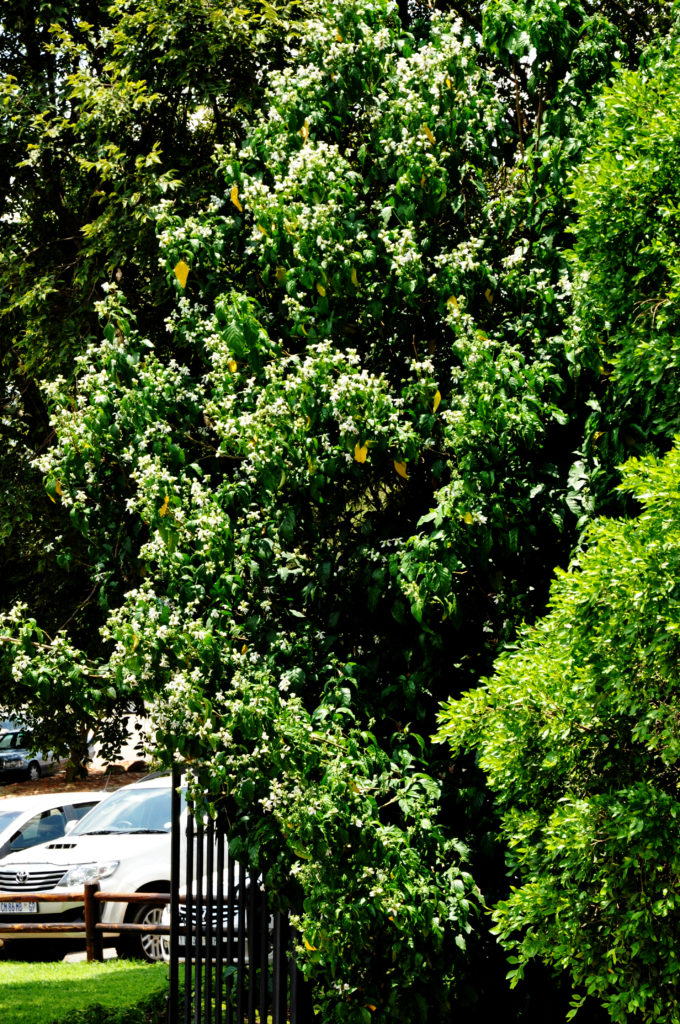
- 731. 2014/12/23. Walter Sisulu NBG. Photo: David Becking.
-
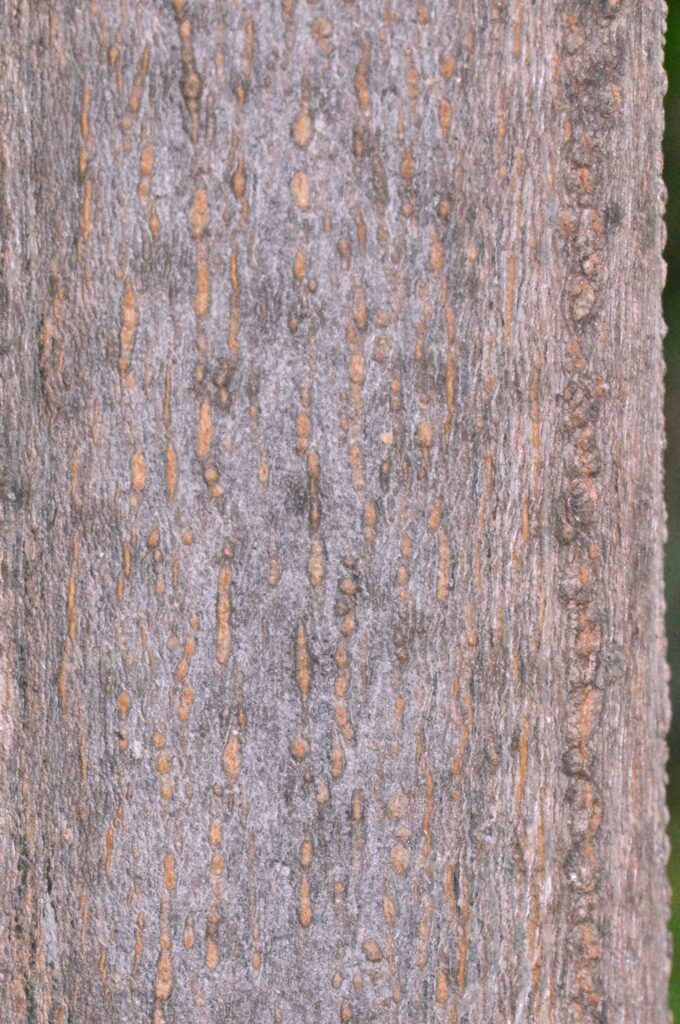
- 575. 2016/02/16. Walter Sisulu NBG. Photo: David Becking.
-
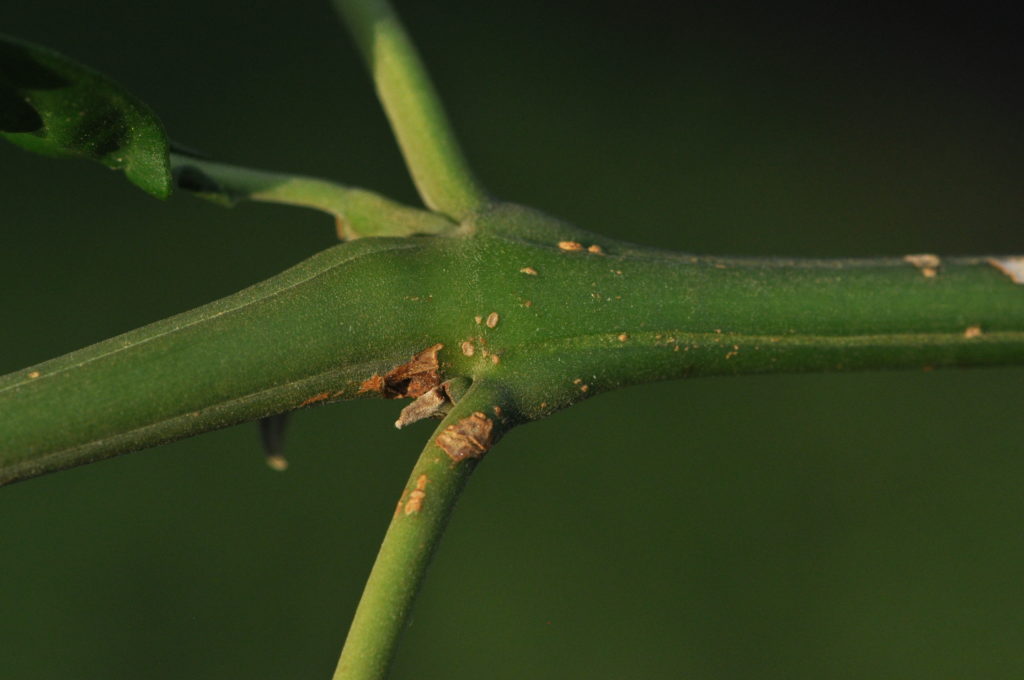
- 976. 2018/03/07. Walter Sisulu NBG. Photo: David Becking.
Leaves
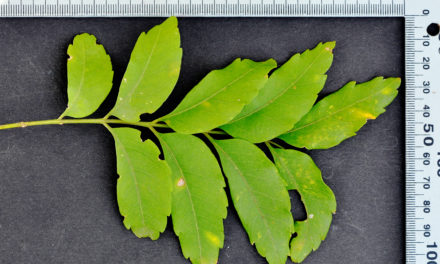
This evergreen plant has large Leaves that are dark glossy green above, lighter below (photo 733) and simple (have a single blade, which may have incisions that are not deep enough to divide the leaf into leaflets). They are opposite, or almost so and are more or less oval to lanceolate or even elliptic. Leaves are firm to the touch and up to 23 x 15cm: usually smaller. The Midrib is prominent on both surfaces – slightly sunken above but protrudes below and reaches the apex (photo 697). On this lower side, the lateral veins are raised and distinctly visible. They move towards the apex but do not contact the margin (photo 733). The margin and midrib are hairy. Smaller veins are best seen when the leaf viewed against a strong light – using a hand lens (photos 697 & 643. The leaf Apex may taper broadly or is attenuate (showing a long gradual taper) and form a drip-tip. Petiole (leaf stalk) is short and sturdy and up to 2cm long. The tapering Base is distinctly Decurrent (leaf blades that partly wraps or has wings around the petiole forming a wing (photo 733). Here the shrivelled leaf base may curve around and partly surround the upper part of the petiole. The Margin is entire (with a continuous margin, not in any way indented) and may be wavy – especially near the base (photo 733). It is rolled under – particularly next to the petiole.
-
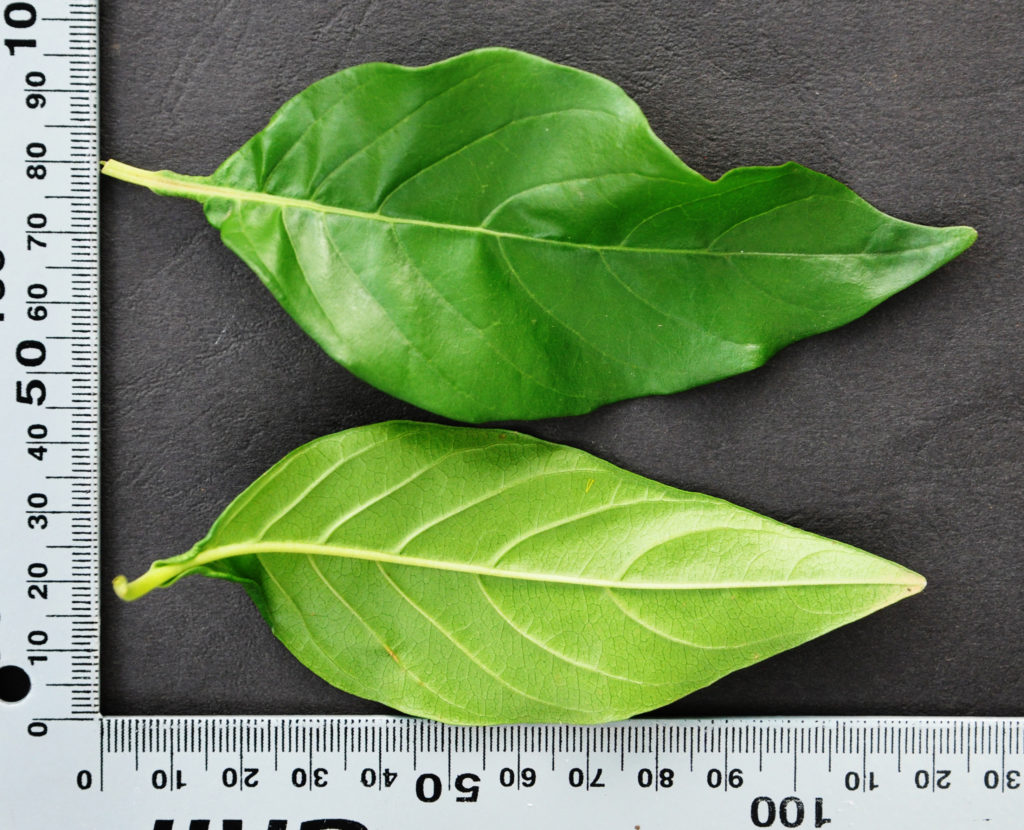
- 733. 2014/12/23. Walter Sisulu NBG. Photo: David Becking.
-
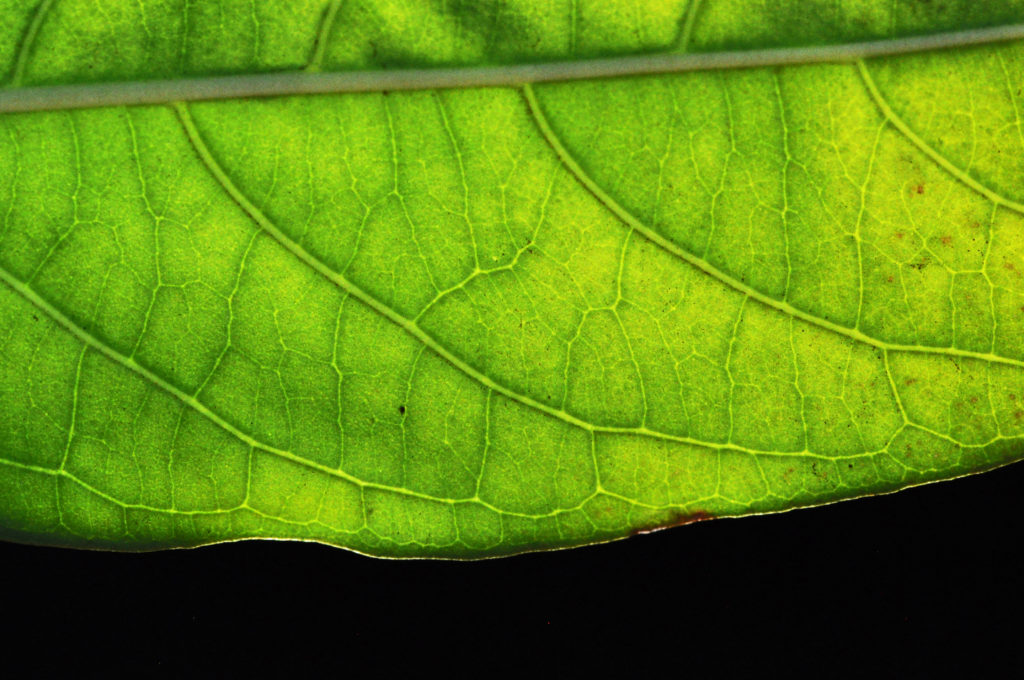
- 643. 2018/05/29. Pretoria NBG. Photo: David Becking.
-
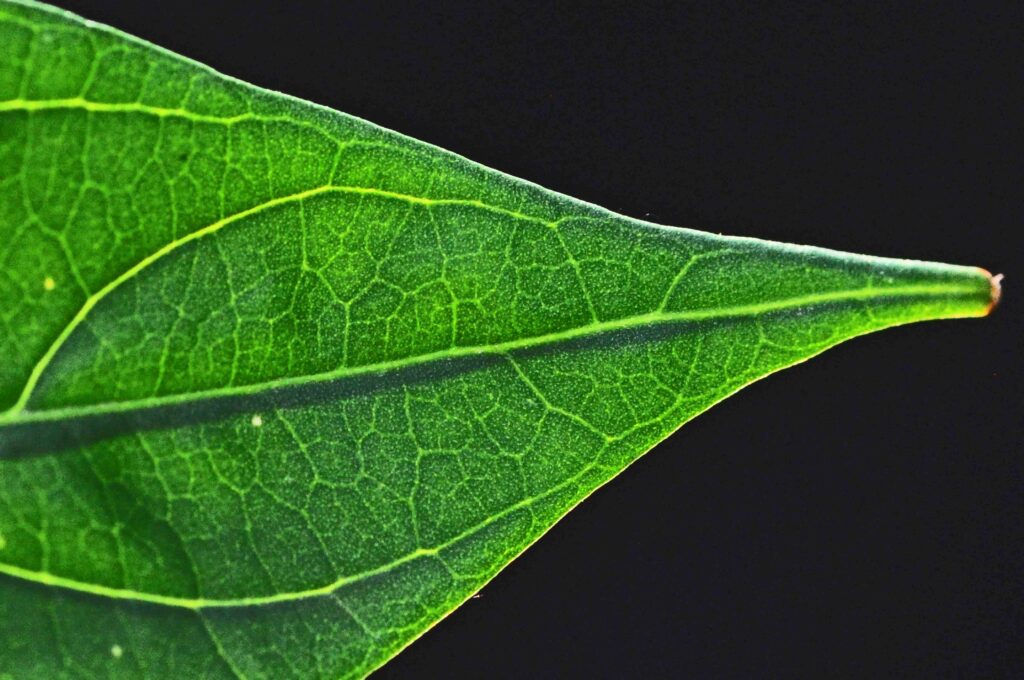
- 697. 2018/03/07. Walter Sisulu NBG. Photo: David Becking.
Flowers
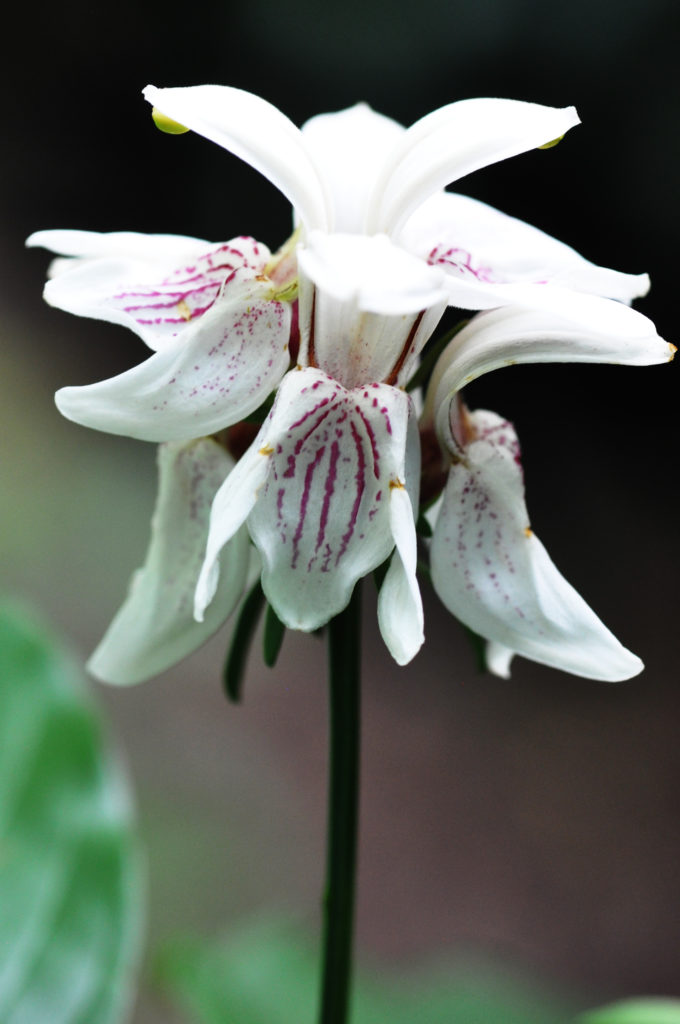
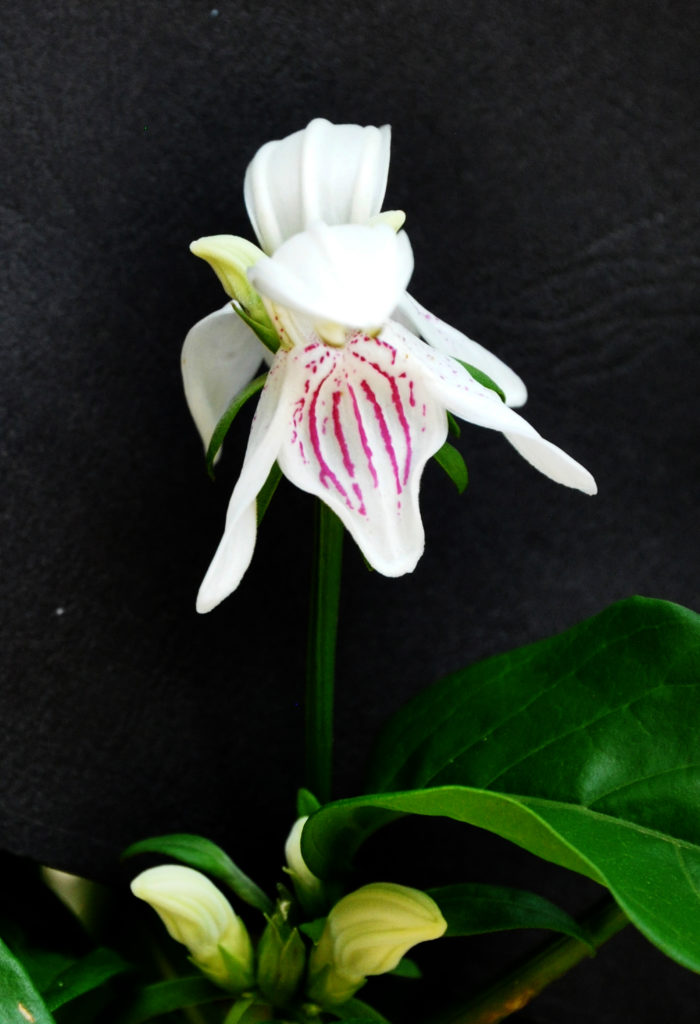
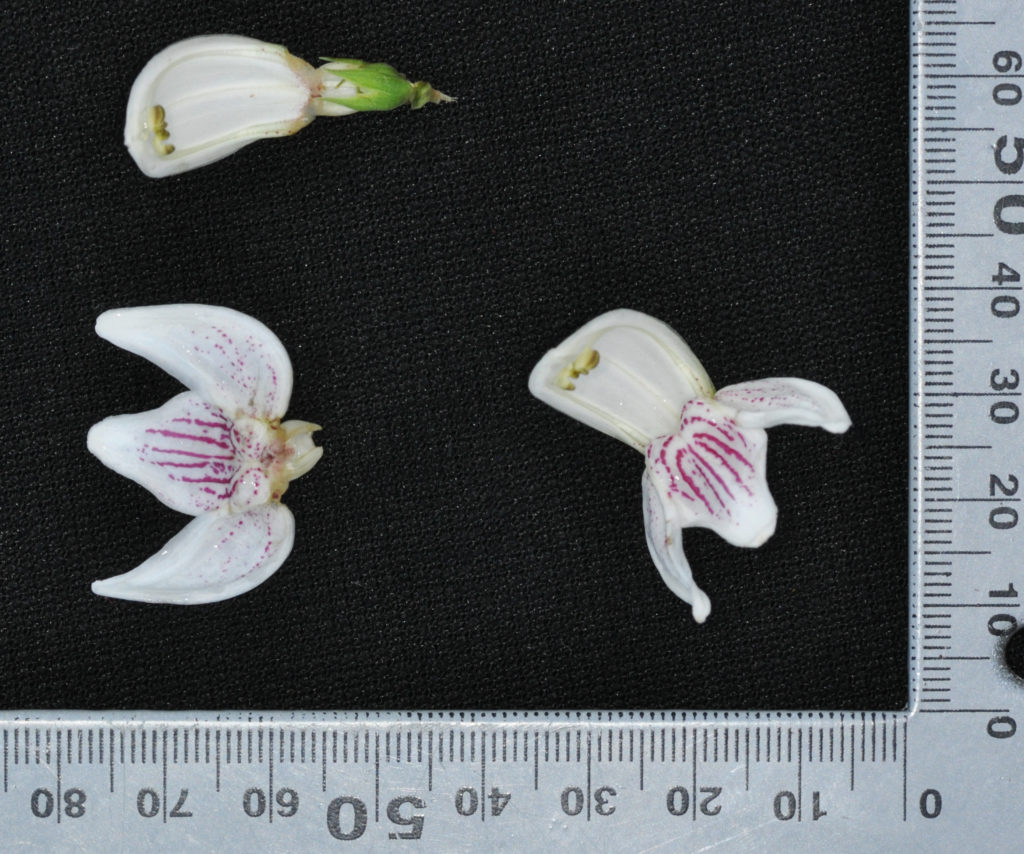
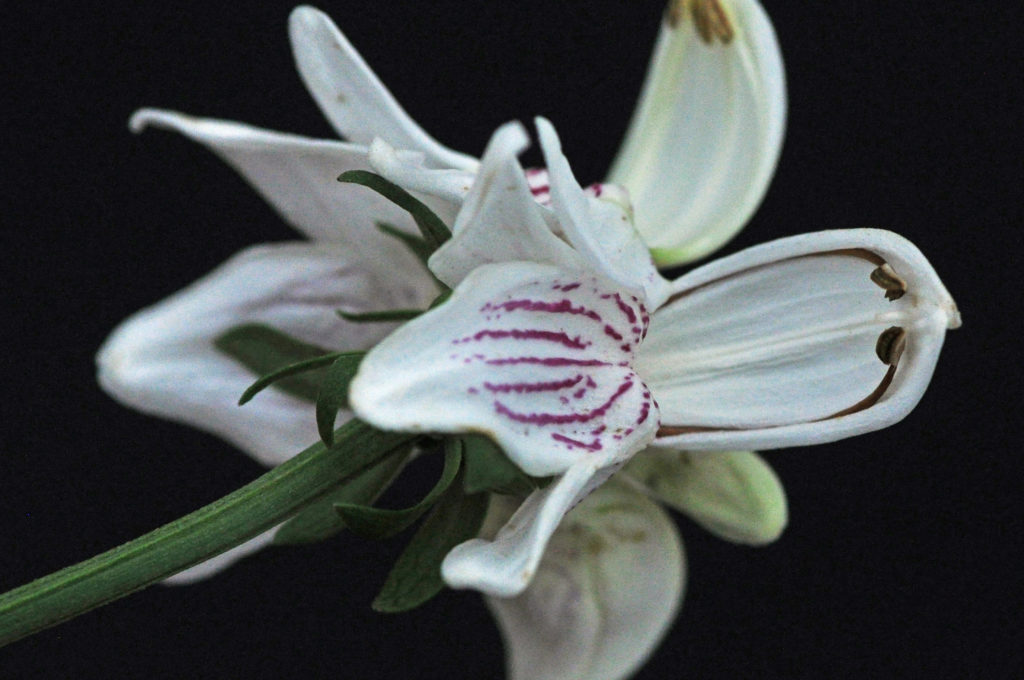
These impressive bisexual orchid-like and 5-merous Flowers appear in threes in late summer and may be sweet scented. Each flower is zygomorphic (an irregular flowers with the corolla divisible into 2 equal halves in one plane only). Groups of flowers appear in Racemes (simple, unbranched, indeterminate inflorescences with nearly circular – stalked (here – up to 4cm long) flowers (photo 991) that occur along the axis and open in succession towards the apex). The Buds are shell like and slightly curved (photo 732). The white petals are marked with purple throats. They occur in upper leaf axils in closely packed erect 6cm long Spikes (simple indeterminate inflorescence with sessile flowers on a single unbranched axis opening in succession towards the apex) that are up to 6cm long. Flowers are up to 2,5cm in length and have long Peduncles (stalk holding the whole inflorescence) that are up to 8cm long (photo 991). Bracts (much-reduced leaves, particularly the small scale-like leaves in a flower cluster or associated with flowers) occur between the flowers (photo 46 – under Fruit). They are oblanceolate (broader at the apical third than at the middle and tapering towards the base), up to 2cm long and persistent. The bell-shaped glabrous (hairless) Calyx has 5 pointed lobes (photo 46 – under Fruit). These lobes are shorter than the supporting tube. The Corolla tube is about 7mm long and ends with a 2-lipped opening and 5 unequal lobes. The upper lip has 2 short lobes and appears hooded (photo 991). The lower lip is 3-lobed and here the tube is shorter than the lobes. The wider centre lobe is noticeably marked with attractive purple almost parallel lines and dots, which appear mainly outside the throat (photo 96). They are also slightly visible on the remaining 2 lower lobes (photo 96). Staminodes (sterile stamens) are absent. There are 2 fertile Stamens (photo 241) (photo 241) that arise in the mouth of the corolla and are partly hidden by the hooded upper lip. The 2 Filaments are terete (circular in cross section). The Anthers each have 2 parallel thecae (pollen sacs) and the tiny pollen grains are shaped like rugby balls. The superior Ovary is densely hairy and has 2 ovules in each Locule. The terete (usually cylindrical but usually tapering at both ends) Style runs in a rugula (a small fold) and has 2 equal branches (photo 241). (Feb – Aug).
-
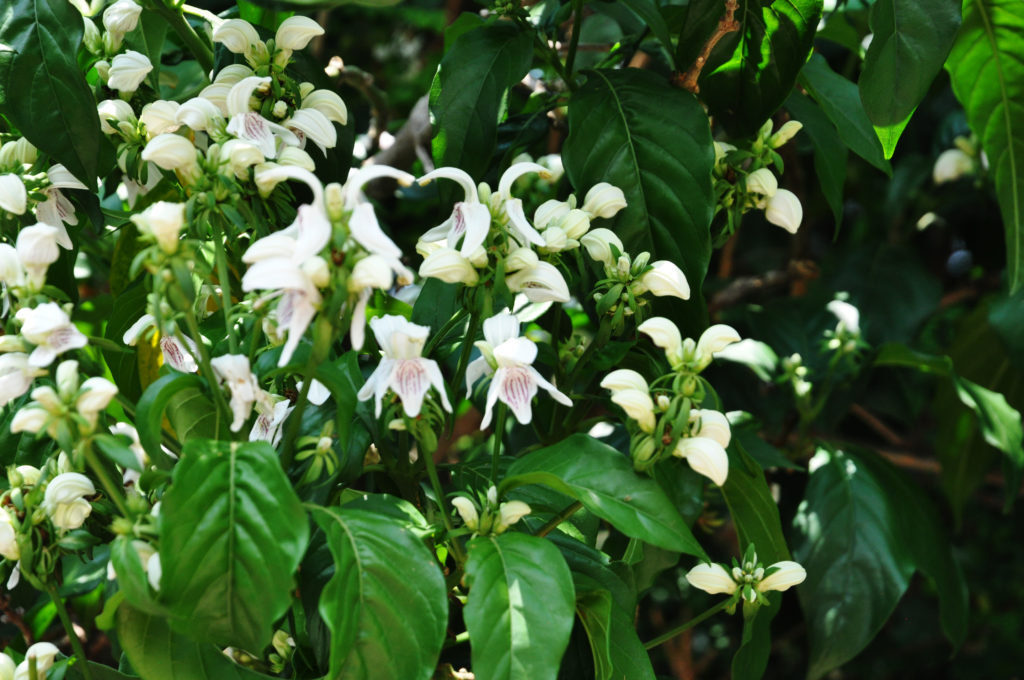
- 736. 2014/12/23. Walter Sisulu NBG. Photo: David Becking.
-
- 991. 2015/01/27. Walter Sisulu NBG. Photo: David Becking.
-
- 732. 2014/12/23. Walter Sisulu NBG. Photo: David Becking.
-
- 96. 2016/12/13. Walter Sisulu NBG. Photo: David Becking.
-
- 241. 2018/01/11. Walter Sisulu NBG. Photo: David Becking.
Fruit
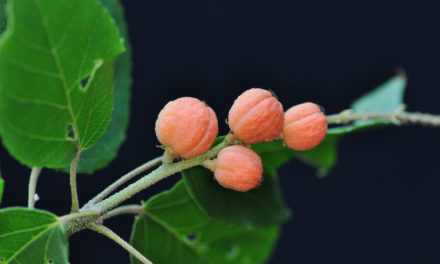
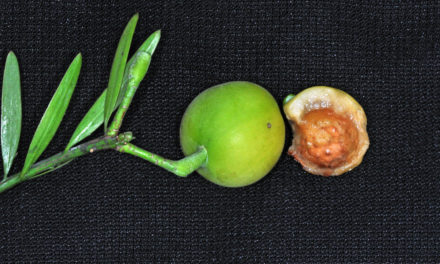
The distinctly club-shaped Fruit (photo 46) is a woody Capsule (a dry fruit resulting from the maturing of a compound ovary which usually opens at maturity by one or more lines of dehiscence) – about 3 x 1cm. The young fruit still has the Calyx clearly visible (photo 46). It is initially green and turns brown when mature. Several disc-like, 5mm wide, rough Seeds develop (photo 250). The capsule dehisces (the method or process of opening the seedpod), rupturing explosively with a loud crack, (hence the common name “Pistol Bush”) dispersing the discoid seeds some distance (May-Dec). Each seed has a rough surface and is about 5mm wide. At least one distinct ridge is present (photo 250).
-
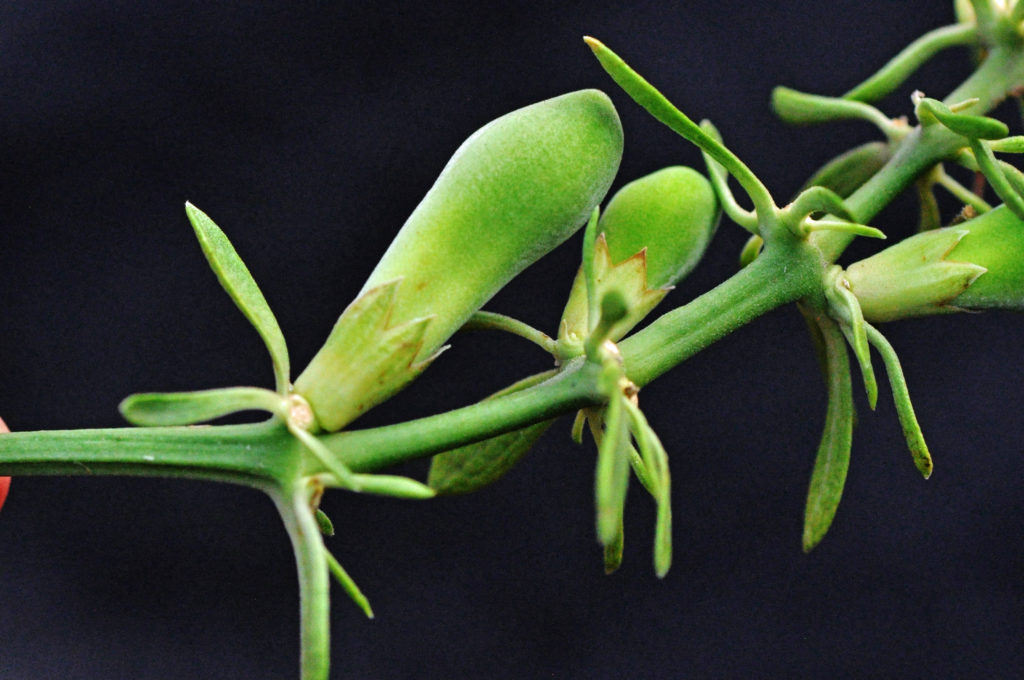
- 46. 2018/03/14. Pretoria NBG. Photo: David Becking.
-
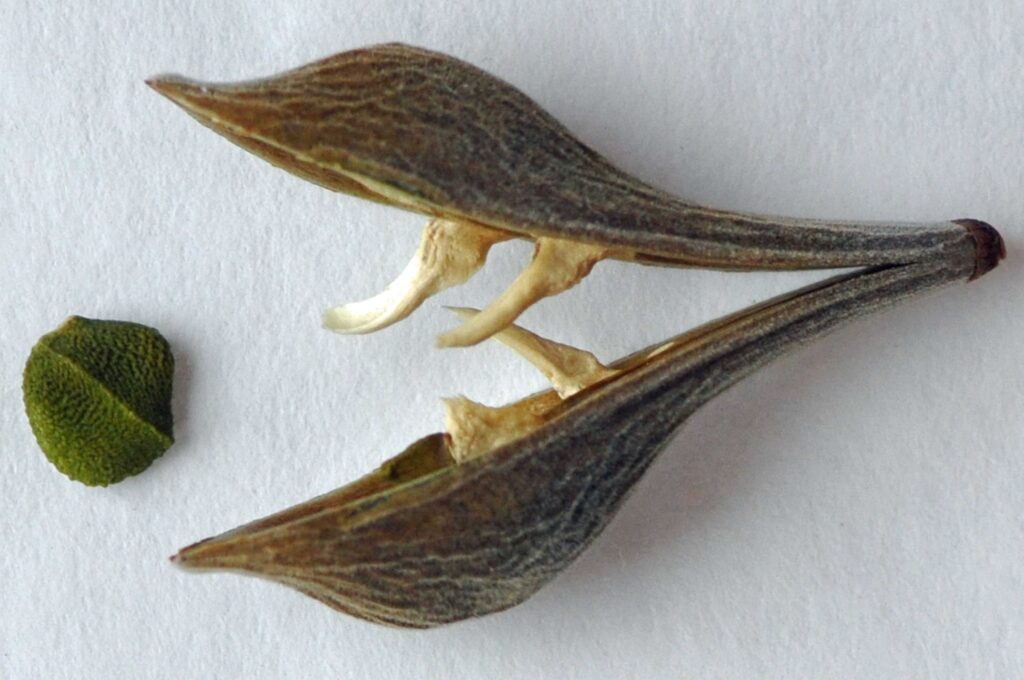
- 250. 2015/08/26. Walter Sisulu NBG. Photo: David Becking.
Distribution & Ecology
This Plant is Endemic (restricted to a particular geographic location) in southern Africa. It is often an undershrub within or close to forests and is located on rocky outcrops, and adjacent to forested rivers – up to an altitude of 1 900m. It also occurs the margins of evergreen forests. In South Africa these plants are located in the Eastern Cape, KwaZulu-Natal, Gauteng, and Mpumalanga. They also occur in Eswatini (Swaziland). They do not occur naturally in the Western Cape. Carpenter bees in the family Xylocopa are involved in pollination.
Ethnobotany
This low maintenance Plant is slightly frost sensitive. The Sapwood is white and narrow. The Heartwood is dense, yellow, and close-grained. It can be fashioned into an attractive finish. This plant is easily Grown from cuttings or seeds and makes a useful hedge. It is fast growing and will grow in full sun (more flowers) or semi-shade (more leaves).
References
Boon, R. 2010. Pooley’s Trees of eastern South Africa. Flora and Fauna Publications Trust, Durban.
Coates Palgrave, M. 2002. Keith Coates Palgrave Trees of Southern Africa. edn 3. Struik, Cape Town.
Kamundi, D.A. 2006. Justicia adhatodoides (E.Mey. ex Nees) V.A.W.Graham. National Assessment: Red List of South African Plants version 2024.1. Accessed on 2026/01/04
Palmer, E. & Pitman, N. 1972. Trees of southern Africa. Balkema, Amsterdam, Cape Town.
Schmidt, S. Lotter, M. & McCleland, W. 2002. Trees and Shrubs of Mpumalanga and the Kruger National Park.
van Wyk, B. & van Wyk, P. 1997 Field guide to Trees of Southern Africa. Struik, Cape Town.
http://plantzafrica.com/plantcd/duvernoiaadhat.htm
http://pza.sanbi.org/duvernoia-adhatodoides
http://www.operationwildflower.org.za/index.php/albums/trees/duvernoia-adhatoides-flower-by-jw-1434
http://posa.sanbi.org/flora/browse.php?src=SP
https://armorial.library.utoronto.ca/node/39964