
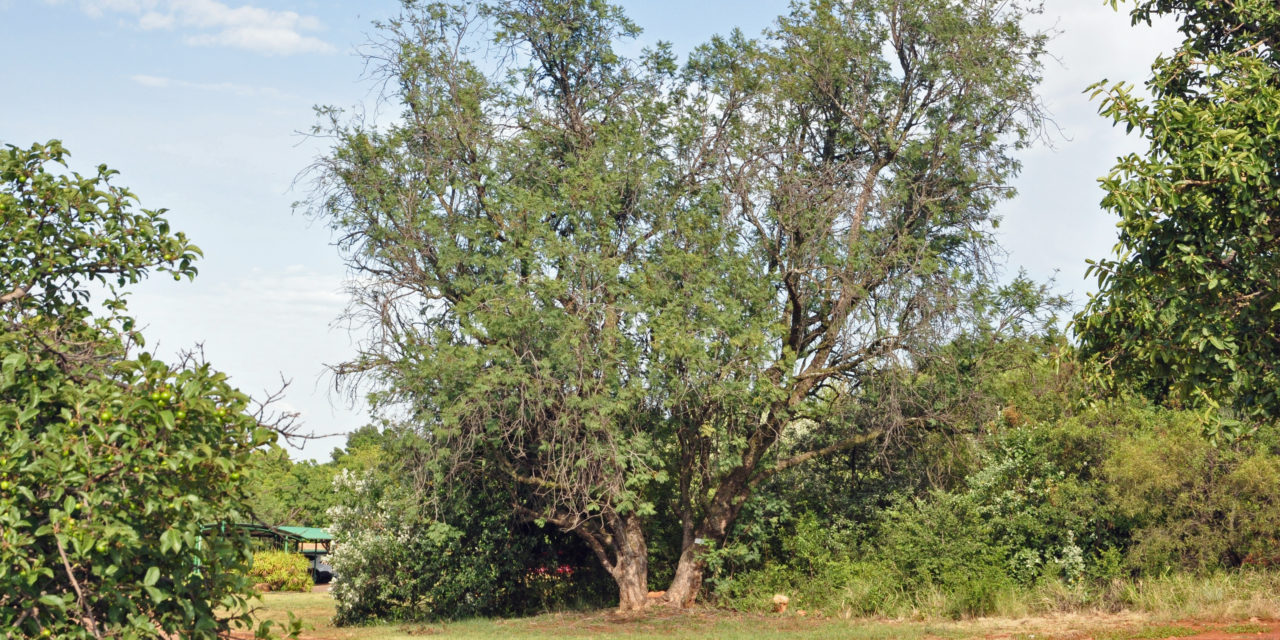
Senegalia caffra
General Info – Summary
This deciduous, drought, frost resistant Tree is up to 14m high. It has short, curved, paired spines. Big bipinnate Leaves have many small-paired leaflets. Stipules lack spines. Yellowish, regular, bisexual Flowers are in spikes. The male free, initially white, filaments are exerted. The female has a superior ovary with a belatedly extended style. Fruit is a flattish dehiscent pod with round compressed seeds.
Description
Previous Names: Acacia caffra, Acacia caffra var. longa, Acacia caffra var. namaquensis, Acacia caffra var. tomentose, Acacia caffra var. transvaalensis, Acacia fallax, Acacia multijuga, Acacia fallax, Mimosa caffra.
SA Tree No. 162.
Common names: (Afr) Amaquasdoornboom, Gewone Haakdoring, Hakiesdoring, Katdoring, Wag-‘n-bietjie, Wag-‘n-bietjie-doring. (Eng) Cat Thorn, Cat-thorn, Common Hook-thorn, Common Hook-thorn, Hook-thorn, White Thorn. (isiXhosa) Umnyamanzi, Umtholo. (isiZulu) Umtholo. (Northern Sotho) Moroba Diepe, Moroba-diêpe, Mositsana, Motholo, Radiepane. (Setswana) Morutlhare. (siSwati) umtfololwane. (Tshivenda) Muvunda-mbado (the axe breaker). (Xitsonga) Mbvhinya-xihloka.
Family: Fabaceae, or Leguminosae (Pea, bean or legume family). After the Orchidaceae and the Asteraceae, the Fabaceae is the third largest Angiosperm (flowering plants) family with 700+ genera and close to 20 000 species. Local Tree genera on this website include Acacia (Vauchellia, Senegalia), Albizia, Bauhinia, Bolusanthus, Burkea, Calpurnia, Colophospermum, Cordyla, Cyclopia, Dichrostachys, Erythrina, Erythrophleum, Faidherbia, Indigofera, Mundulea, Peltophorum, Philenoptera, Piliostigma, Schotia and Xanthocercis. The Fabaceae are recognisable by their fruit and their pinnately compound Leaves. Leaves may also be simple – even bilobed and usually have stipules – some of which may be spinescent. Leaflets are usually entire. Flowers are bisexual and bracteate. Regular flowers usually have 4-5 sepals and the same number of petals. Irregular flowers have 4-5 sepals and 5 or less petals. Stamens have anthers that have 2 pollen sacs and there are usually at least twice the number of stamens as petals – often 10. The superior Ovary has 1 locule containing 1 or more ovules. The Stigma and Style are simple. The single carpel develops into the Fruit, which is usually a pod. The mature pods may dehisce or break into segments. Seeds vary.
Name derivation. Species of the genus Vachellia and Senegalia were considered members of the genus Acacia until 2005. New Names. The genus Vachellia was named after George H. Vachell (1789 – 1839), chaplain and plant collector in China. Here the inflorescence is capitate (head like) and spinescent stipules are present. Plants in the genus Senegalia – (from Senegal) usually do not have spinescent stipules and the inflorescence is usually a Spike. caffra – from the eastern Cape.
Conservation: National Status: L C. (Least Concern). Assessment: 2005/06/30. (W. Foden and L. Potter).
Tree
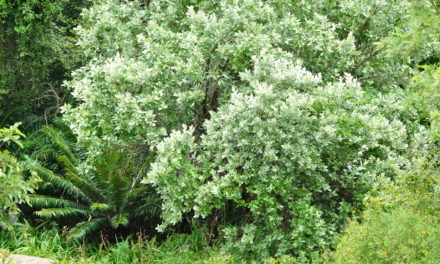
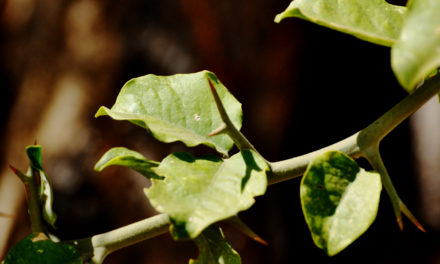
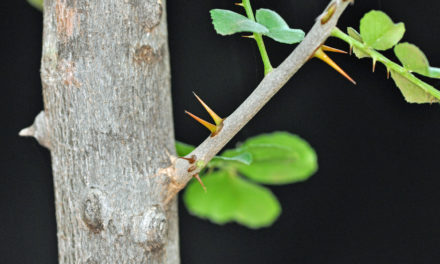
This often fast-growing Tree has an open crown (photo 323) and is usually up to 14m high. In harsh environments like parts of the Eastern Cape, it may remain a bushy shrub. The Trunk is single or multi-stemmed and often twisted. The tree ends in a spreading, often-rounded crown. Vertical fissures may be present in the brown to blackish, rough Bark that may flake and is deeply furrowed (photos 607 & 55). The small paired (photo 523), relatively few, recurved or almost straight Spines (photo 523 and 63) are up to 9mm long and end in a sharp tip. These widely spaced apart spines are grey/brown to black and occur in pairs just below the nodes. Older branches often have even less spines. Occasionally spines may be absent. This is one of the least spiny of the Senegalia species. In photo 523, Lenticels (usually raised corky oval or elongated areas on the plant that allows the uncontrolled interchange of gases with the environment) are visible. In Acacia ataxacantha there are single red to brown hooked spines scattered among the branches between internodes. These single spines are absent in Senegalia caffra.
-
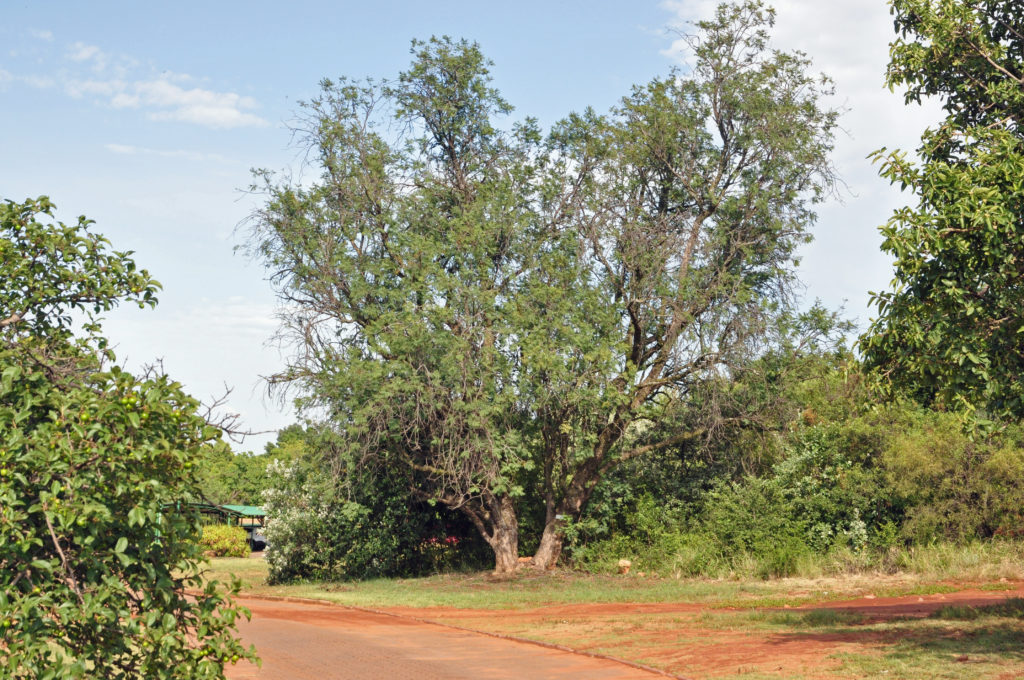
- 323. 18/01/16. Pretoria NBG. Photo: David Becking.
-
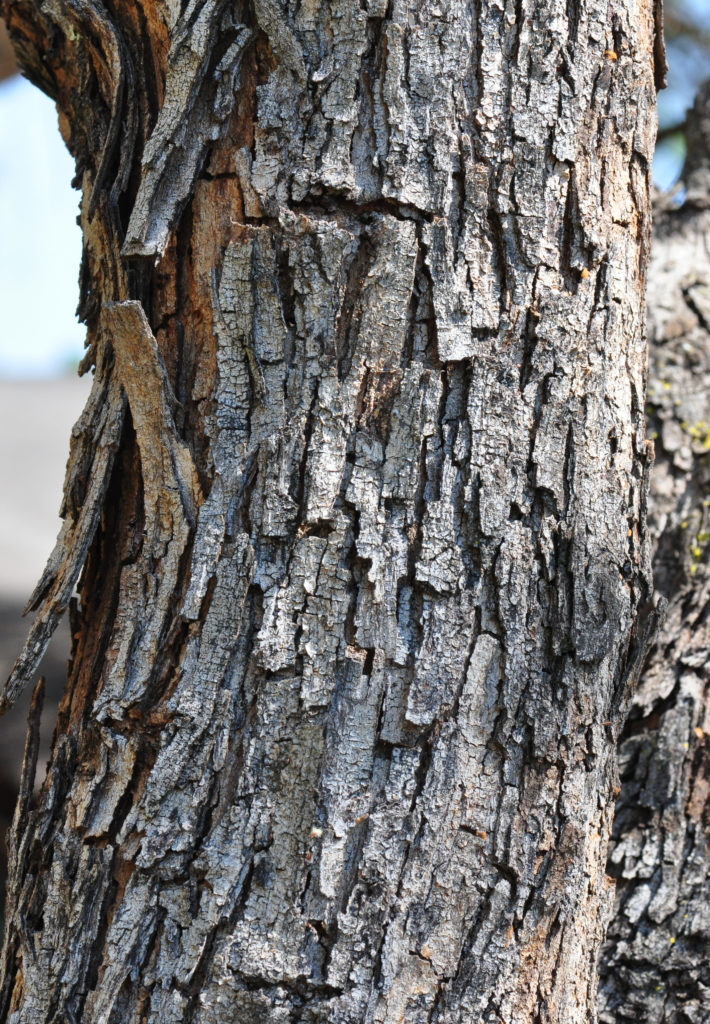
- 607. 2014/10/30. Pretoria NBG. Photo: David Becking.
-
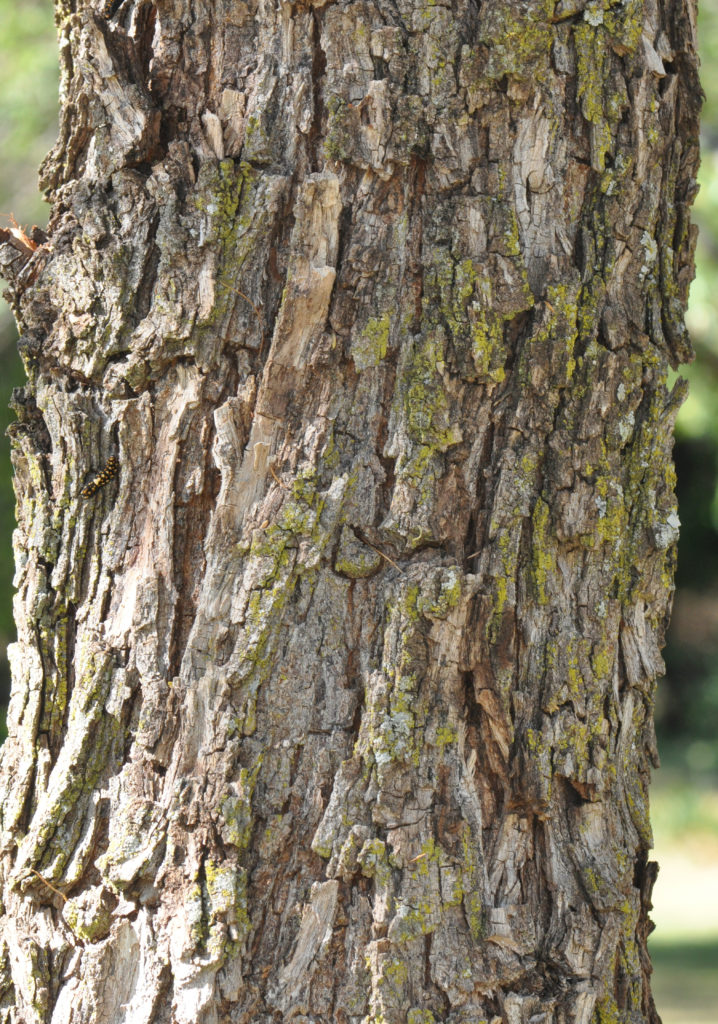
- 55. 2014/09/30. Walter Sisulu NBG. Photo: David Becking.
-
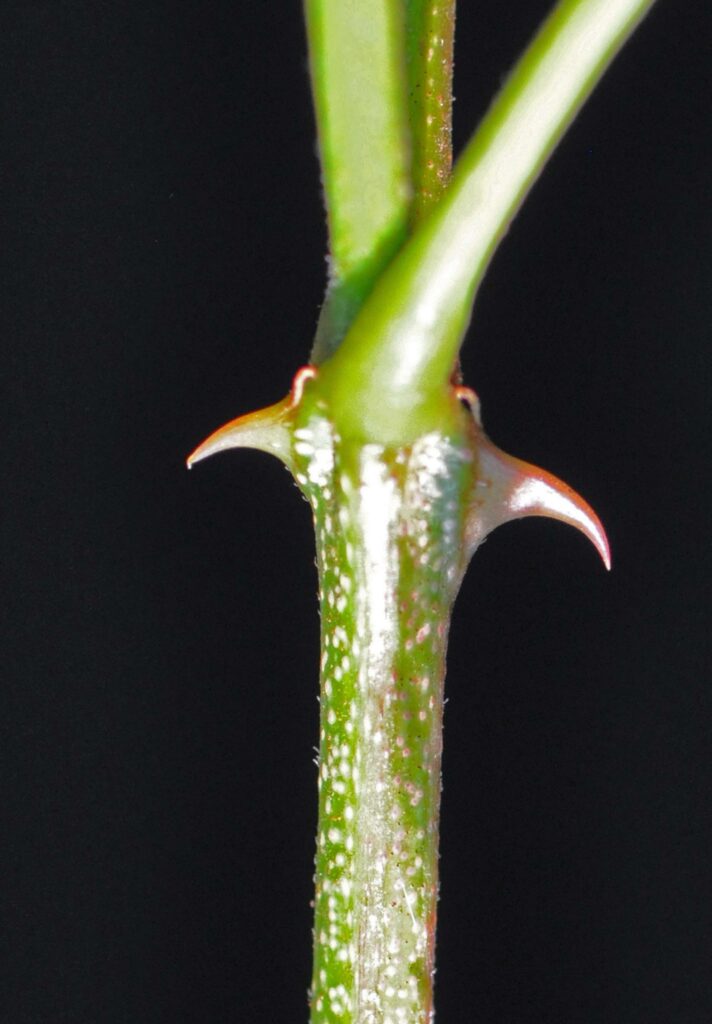
- 523. 2016/09/27. Walter Sisulu NBG. Photo: David Becking.
-
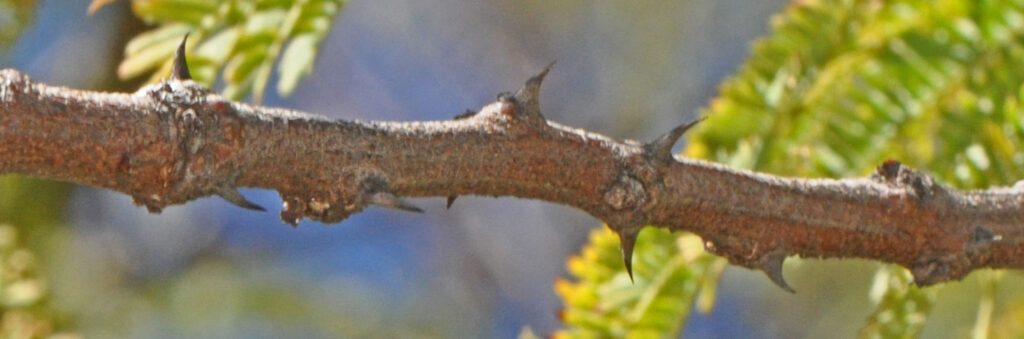
- 63. 2014/09/30. Walter Sisulu NBG. Photo: David Becking.
Leaves
On this deciduous tree, the new Leaves are bright green and may be the first tree with new leaves in early spring. The mature large drooping leaves (photo 890) are each up to 23cm long (including Petiole – leaf stalk). Leaves are Bipinnate (Compound: twice pinnate. The central leaf axis or Rachis (an extension of the Petiole) of a compound leaf that eventually bears the leaflets. The rachis has lateral Pinnae “branches” not leaflets and the Pinnules (leaflets) are on these “side branches”. The rachis is grooved above (photo 100). Each Leaf has up to 26 pairs of lateral pinnae – each of which has up to 50 pairs (usually less) of very small, smooth, feathery and light green Leaflets (photos 890 & 100). Each leaflet is up to 8 x 2mm and is asymmetric (not equal to the opposite side as in the bases of some leaves or leaflets – photo 14) and may be hairy in the foothills of the Drakensberg mountains and northern KwaZulu Natal. The veins are prominent on the lower surface of each leaflet (photo 14). The petiole is up to 3cm long (photo 510), is grooved above (photo 100), and may have prickles below. The upper slightly lighter petiole leaf surface has a small Gland more than halfway up the petiole (photo 510). Additional glands are usually found on the groove between 4 pairs of pinnae (photo 100). Each Petiolule (base of leaflet – photo 14) are very short. Small Stipules (the basic basal appendages of the petiole – photo 523 under Tree) are not spinescent and fall early.
-
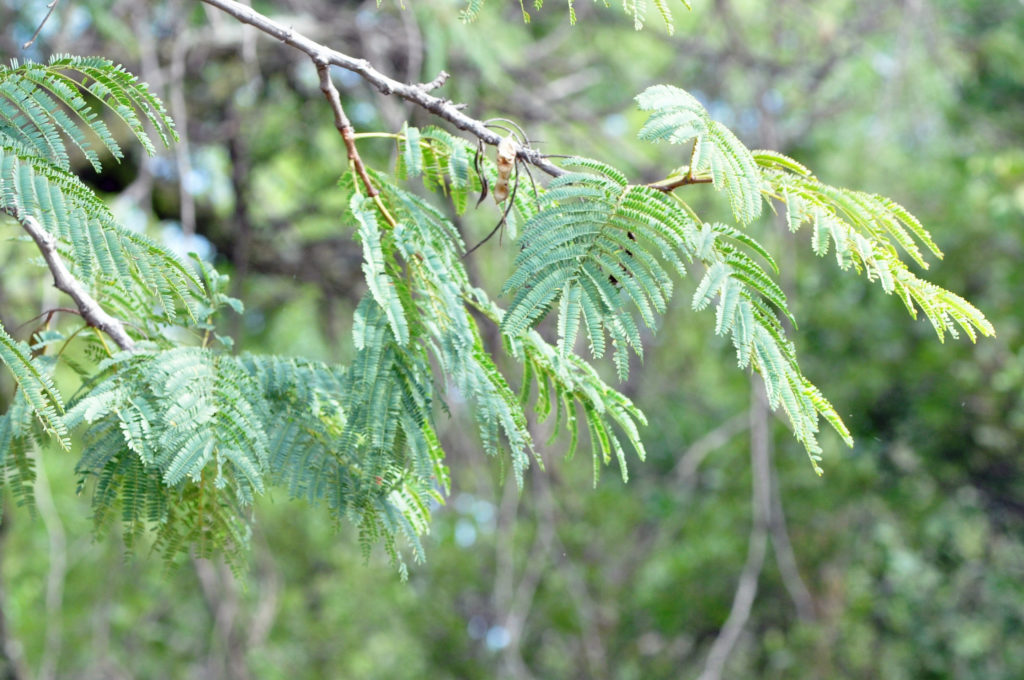
- 890. 2018/03/01. Pretoria NBG. Photo: David Becking.
-
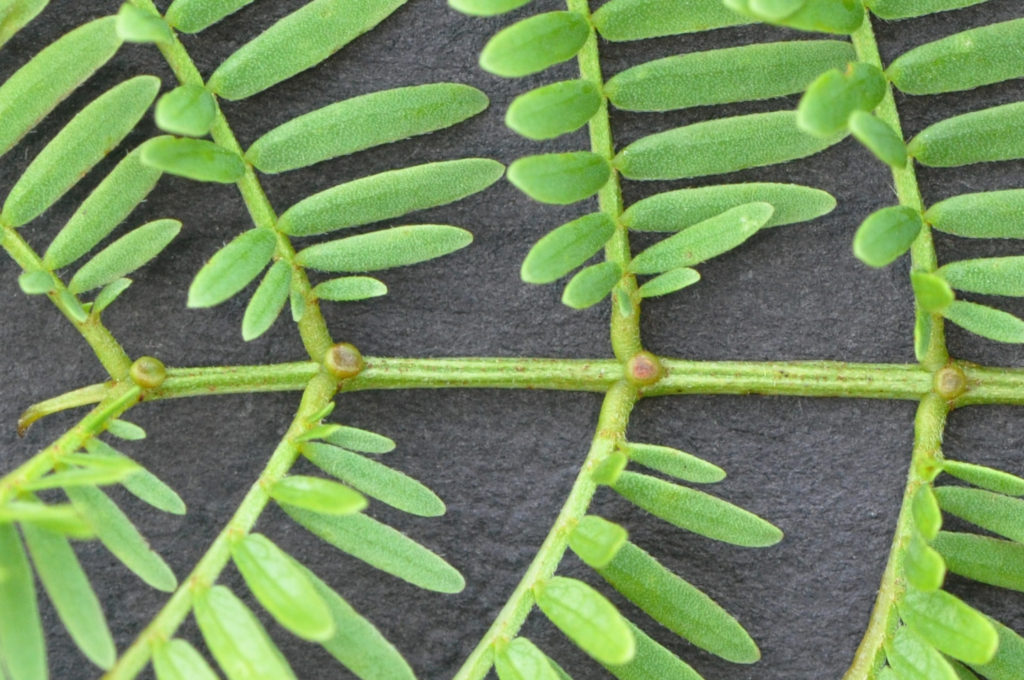
- 100. 14/12/02. Walter Sisulu NBG. Photo: David Becking.
-
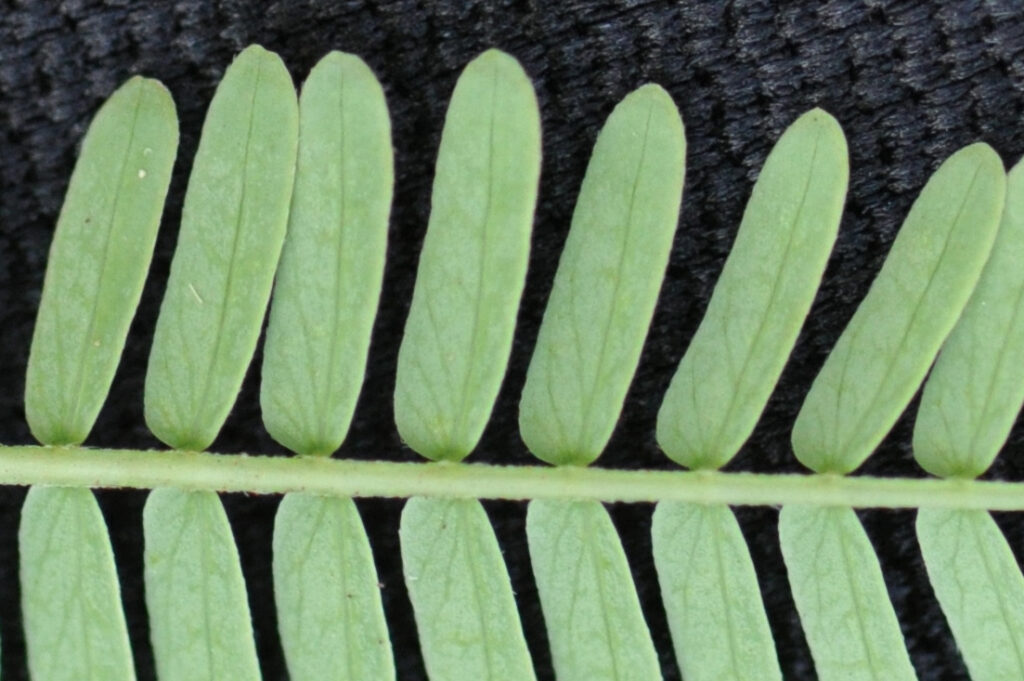
- 14. 2016/10/25. Pretoria NBG. Photo David Becking.
-
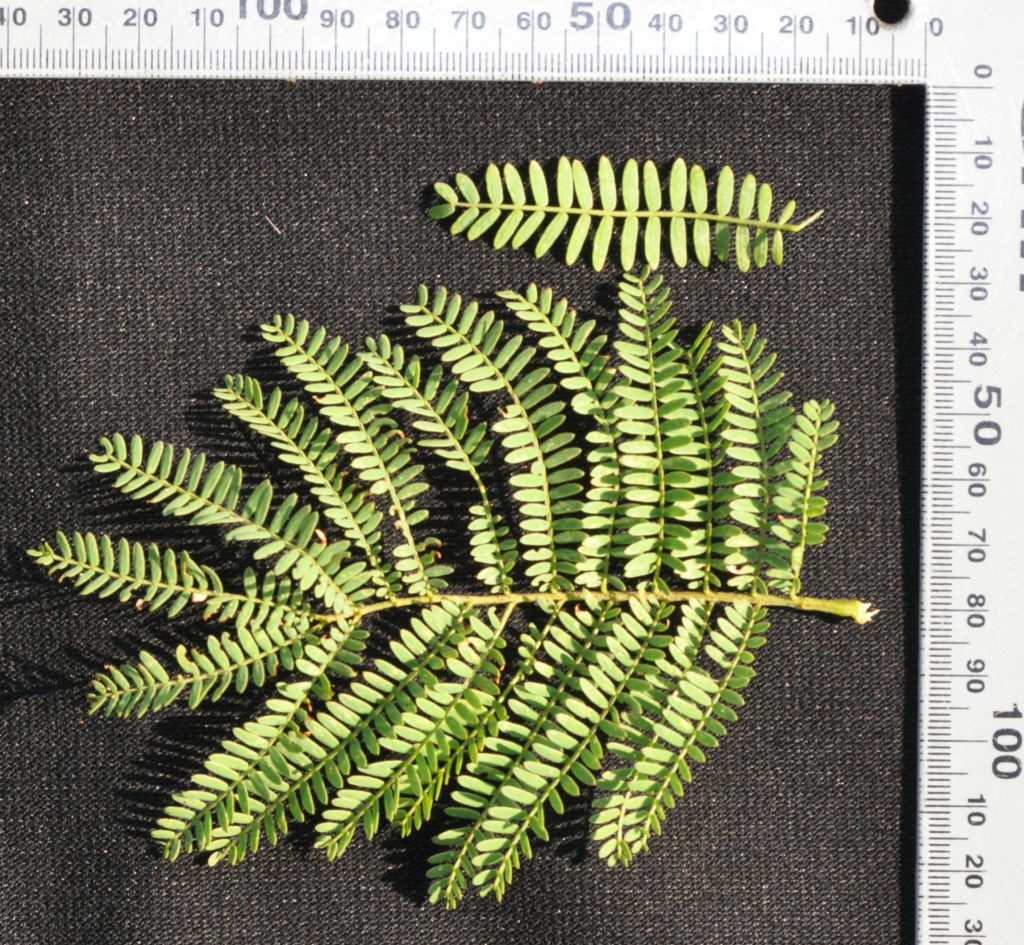
- 510. 2016/09/27. Walter Sisulu NBG. Photo: David Becking.
Flowers
The creamy to yellowish-white Flowers occur in hanging clustered Spikes (photo 635). A spike is a simple indeterminate inflorescence with sessile flowers on a single unbranched axis that open in succession towards the apex – photo 853). Each spike is up to 13cm long and spikes emerge from leaf axils. A Peduncle (stalk of flower cluster) attaches to base of each spike (green in photo 215). Each flower is bisexual and actinomorphic (Regular, symmetrical. Flowers are vertically divisible into similar halves by more than 1 plane passing through the axis). They have a strong fragrance and are one of the first trees to flower in spring. The Calyx is up to 3mm long and the initially greenish–yellow buds turn red (photo 853). The yellowish Corolla (photo 853) is up to 3,5mm long and has 4 united Petals. The many relatively long and distinctly exserted (sticking out; projecting beyond) Stamens have long free Filaments (the slender stalks that supports each anther (where the pollen grains are formed – photo 859) and are initially straight and clearly white. They provide the white or cream colour to the young flowers (photo 215). The filaments become yellowish and crinkled with age (photo 853 LHS). There is a single Pistil (a unit of the Gynoecium, the female element of the flower, composed of the Ovary, Style and Stigma). Here the superior Ovary has a single locule. A small filiform (thread or filament like) Style is present. Once the pollen has been shed, the style elongates and extends the single terminal Stigma beyond the now older and somewhat curled up, yellowish stamen filaments (photo 853 – esp. lower LHS). The stigma now becomes receptive to pollen. This delayed development helps to enable cross-pollination. (Sep-Dec).
-
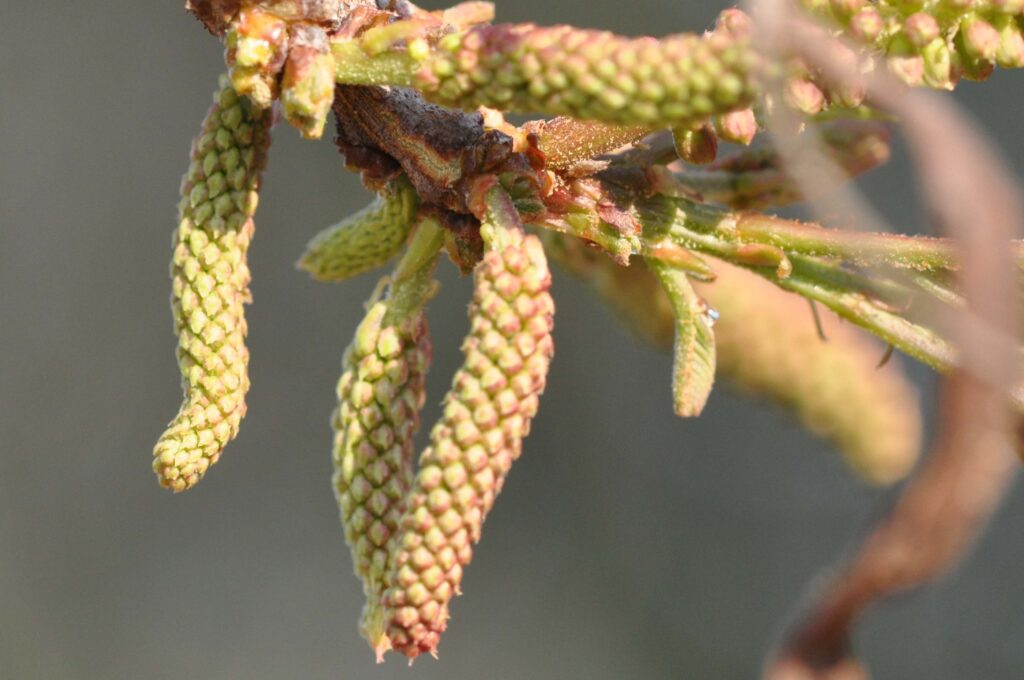
- 635. 2017/08/29. Pretoria NBG. Photo: David Becking.
-

- 853. 2016/10/11. Pretoria NBG. Photo: David Becking. Disected.
-
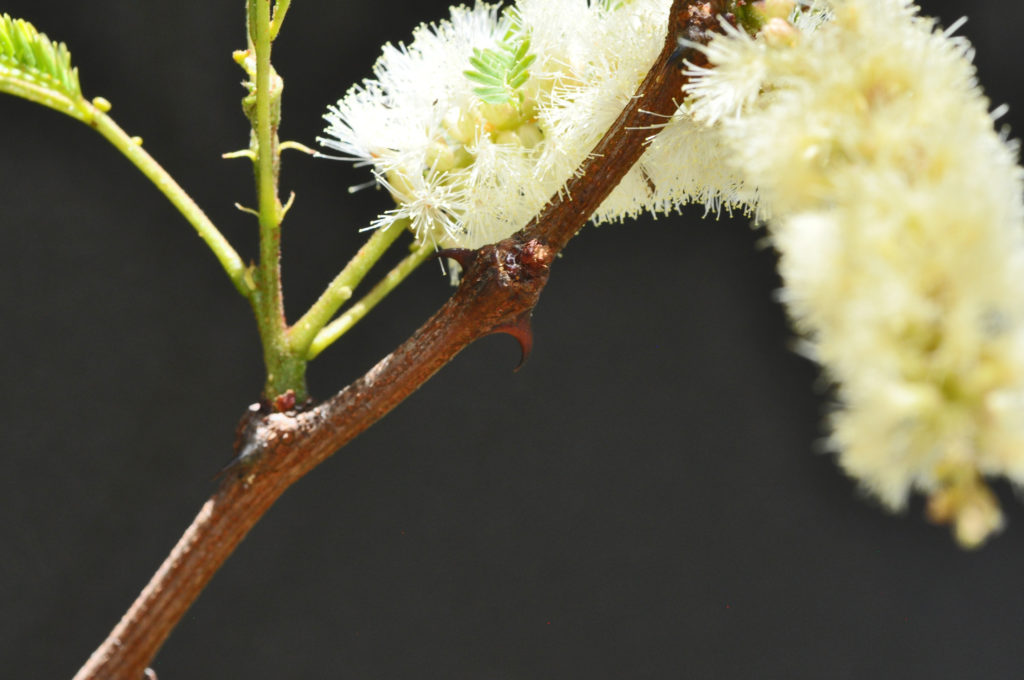
- 215. 2014/10/21. Walter Sisulu NBG. Photo: David Becking.
-
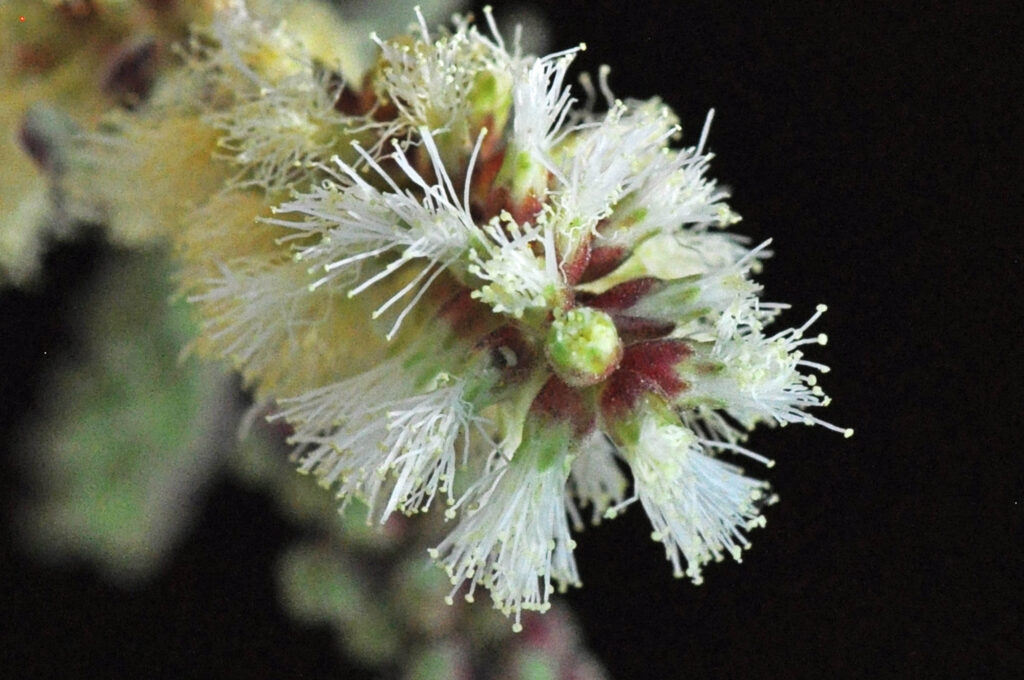
- 859. 2016/10/11. Pretoria NBG. Photo: David Becking.
Fruit
The long, velvety, pale or dark brown Fruit is a flattish, dehiscent Pod. It is up to 15 x 1,5cm and may be curved or straight (photo 749 & 540). The round Seeds are compressed (photo 579), and the pods are somewhat constricted between seeds and tend to hang down (photo 749). Parasitic insects may damage the seeds (photo 579). Dehisced pods, still with visible seeds, may remain on the tree for some time (photo 540). (Dec-Mar+).
-
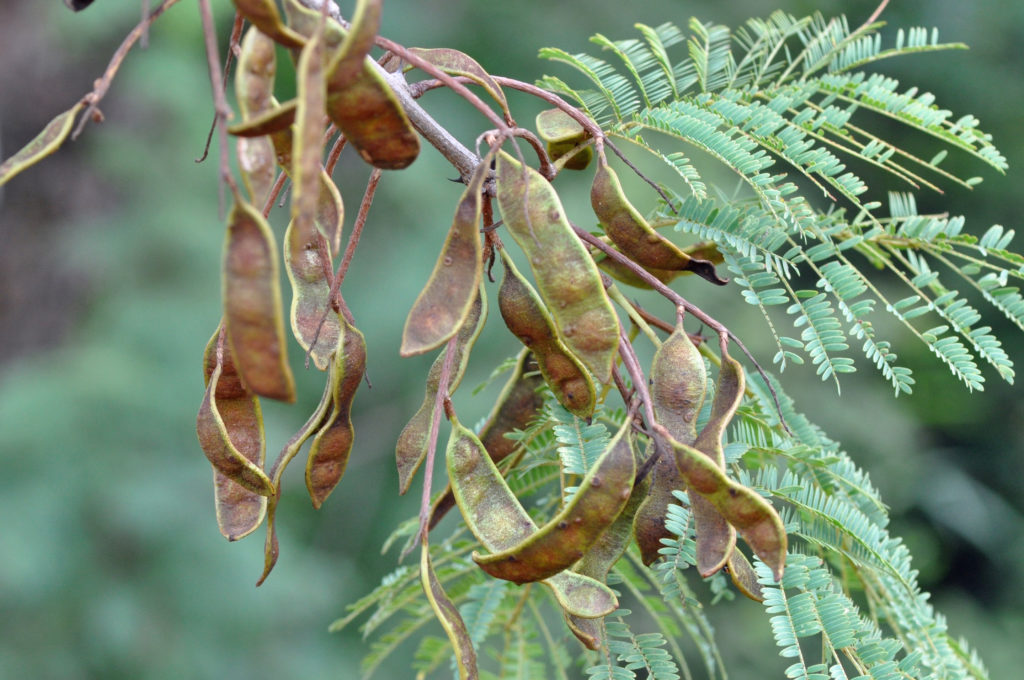
- 749. 2017/01/31. Walter Sisulu NBG. Photo: David Becking.
-
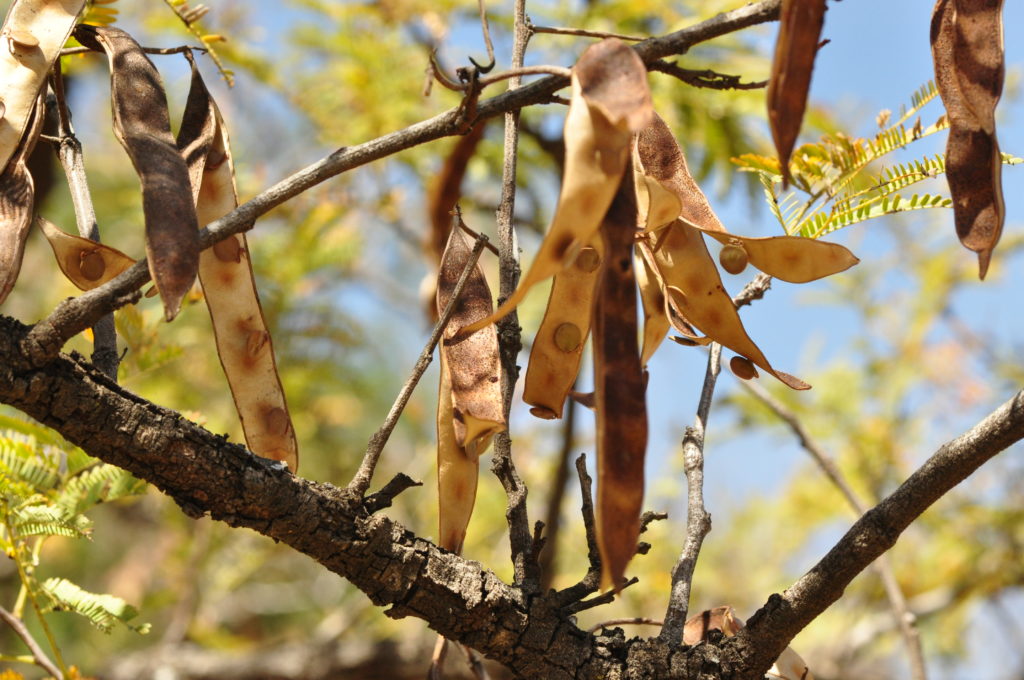
- 540. 2016/08/23. Pretoria NBG. Photo: David Becking.
-
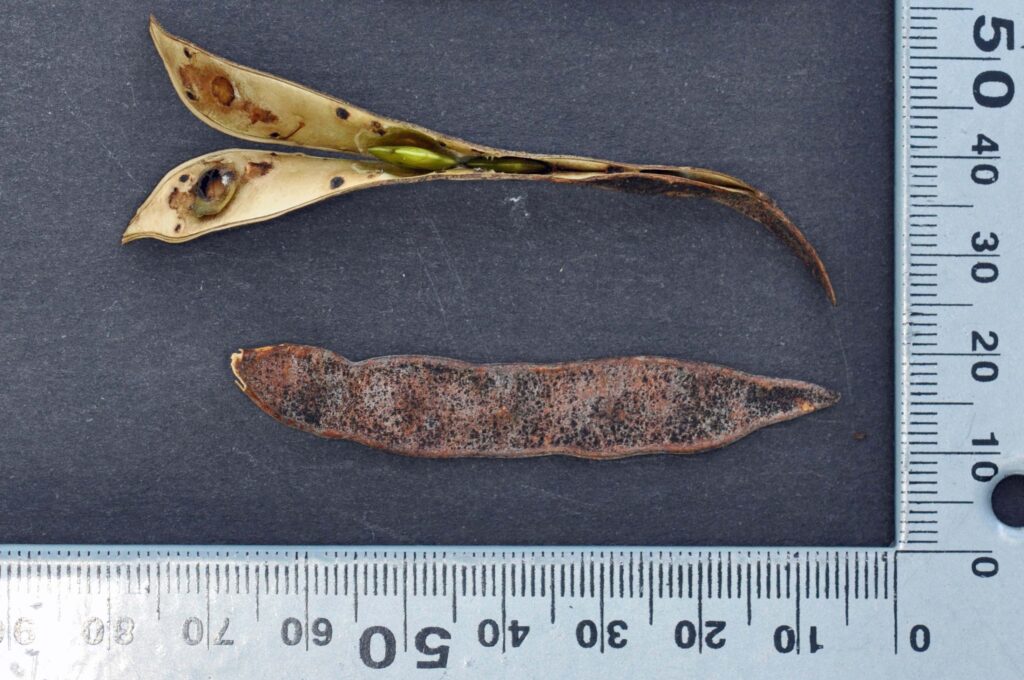
- 579. 2015/04/14. Walter Sisulu NBG. Photo: David Becking.
Distribution & Ecology
Only subsp. campylacantha occurs in Africa. These Trees grow in deep, relatively moist soils or alluvial soils near rivers, in thorn veld, subtropical bushveld and open parkland. They can survive both dry weather and low temperatures. This tree is found in Limpopo and Mpumalanga e.g. in Northern Kruger National Park – Punda Maria and Pafuri areas. Beyond South Africa, it occurs in central and northern Mozambique and as far north as Gambia and Ethiopia. The tree Roots have compounds that repel animals e.g. rats, snakes and crocodiles. The leaves allow sunlight penetration and thus grass can grow underneath the trees. Larvae of the scarlet Butterfly Axiocerses tjoane feed on the Leaves. These butterflies are located in eastern and southern Africa. Larvae of the Crawshay’s Hairtail Butterfly (Anthene crawshayi) feed on young terminal Shoots. The Speckled Emperor Moth (Gynanisa maia) has larvae that feed on the leaves of this plant and on leaves of Mopane and Combretum. These moths occur from South Africa to eastern Africa. Another associated moth is the African wild silk moth (Gonometa postica). This silk producing moth has larvae that feed on the leaves on this and other members of the Fabaceae (the legume family).
Ethnobotany
The attractive, close-grained dense Wood has a dark heartwood and lighter sapwood. The sapwood is not termite resistant. The heartwood is very hard, both borer and termite proof and is used for fence posts. It also makes an excellent fuel. Long whippy twigs are used to make baskets. Young leaves are nutritious and grazed by stock and Black Rhino. This mature tree is frost and drought resistant. A number of biggish trees survive because the twisted nature of the wood makes it unsuitable for planks. Xhosa women use the Roots for making long smoking pipes. For this purpose, the roots are collected from trees close to streams. The roots can be invasive. Local medicine makes use of the bark, roots and leaves of this tree. This is not a great shade tree and, as a result, it allows plants including grass to grow close to the trunk. It is a good tree to grow as a Bonsai. Being resistant to drought and frost and having impressive early spring leaves makes this an impressive garden tree.
References
Boon, R. 2010. Pooley’s Trees of eastern South Africa. Flora and Fauna Publications Trust, Durban.
Burrows, J.E., Burrows, S.M., Lotter, M.C. & Schmidt, E. Trees and Shrubs Mozambique. Publishing Print Matters (Pty) Ltd. Noordhoek, Cape Town.
Coates Palgrave, M. 2002. Keith Coates Palgrave Trees of Southern Africa, edn 3. Struik, Cape Town.
Foden, W. & Potter, L. 2005. Senegalia caffra (Thunb.) P.J.H.Hurter & Mabb. National Assessment: Red List of South African Plants version . Accessed on 2025/07/09.
Lawrence, G. H. M, 1951. Taxonomy of Vascular Plants. The Macmillan Company, New York. Tenth Printing 1965.
Palmer, E. & Pitman, N. 1972. Trees of southern Africa. Balkema, Amsterdam, Cape Town.
Ross, J. H. A conspectus of the African Acacia Species. 1979. Botanical Research Institute.
Schmidt, S. Lotter, M. & McCleland, W. 2002. Trees and Shrubs of Mpumalanga and the Kruger National Park. Jacana, Johannesburg.
van Wyk, B. & van Wyk, P. 1997 Field guide to Trees of Southern Africa. Struik, Cape Town.
https://en.wikipedia.org/wiki/Senegalia_caffra
http://plantzafrica.com/plantab/acaciacaffra.htm


Awesome blog, thanks a million for showing us
Thank you. Still a great deal to do.
Stay safe.
David Becking.
Thank you. Take care
David Becking.