
Found 303 Results
Page 48 of 51
Page 48 of 51
Anthocleista grandiflora
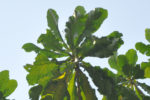
Anthocleista grandiflora General Info – summary This tall straight Tree has a light grey usually unbranched stem to 35m high. The stem ends with huge stiff, leathery, simple, decussate, and stipule lacking Leaves. Initially white, bisexual, regular, 4-merous Flowers resembling white crowns occur in cymose panicles. Stamens have a united base. The single pistil has […]
Anastrabe integerrima
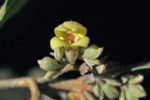
Anastrabe integerrima General Info – summary This Tree is up to 12m high with a trunk up to 16cm wide. Stiff, opposite, decussate and shiny Leaves are simple, opposite and entire. Interesting, yellow, bisexual zygomorphic Flowers are in cymes. The corolla is 2 lipped and the 4 stamens have didynamous anthers. A staminode replaces the […]
Alsophila dregei
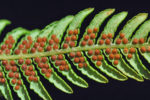
Alsophila dregei General Info – summary This spineless, unbranched and erect Fern caudex is furry and up to 7m high. Long, arching, elliptic tripinnate Fronds fall without leaving scars. Reproductive Structure has no flowers or seeds. Haploid sori house dehiscent haploid sporangia with wind dispersed diploid Spores that grow into a tiny, haploid, free-living Prothallus […]
Aloidendron dichotomum
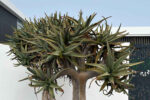
Aloidendron dichotomum General Info – summary This Tree is up to 7m high with a narrowing trunk. The dense rounded crown has simple spear-shaped Leaves with an amplexicaul base and marginal yellow spines. Terminal, cylindrical, 3-merous Flowers are in racemes. Each has tepals in 2 whorls. 6 exerted stamens have subulate filaments. A superior ovary […]
Aloidendron barberae
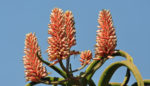
Aloidendron barberae General Info – summary This, the tallest Tree of the genus, is up to 22m high with thin bark. Leaves do fall. They are recurved, amplexicaul, rosulate, and lack stipules. Only the margins are dentate. Reddish Flowers are in racemes. They are regular, 3-merous, bisexual, and produce nectar. Buds have green tips. Stamens […]
Aloe speciosa
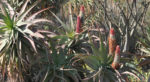
Aloe speciosa General Info – summary This Tree is up to 6m high with some tilted leaf rosettes. Succulent amplexicaul long, thin Leaves have small pale red marginal sides. Red Flower buds are in thick racemes. Regular cylindrical bisexual 3-merous flowers are in up to 4 broad cylindrical racemes in each rosette. The now white tepals […]